Drilling-Services Rental Tracking: Energy-Services Equipment Visibility Without Per-Site Overhead
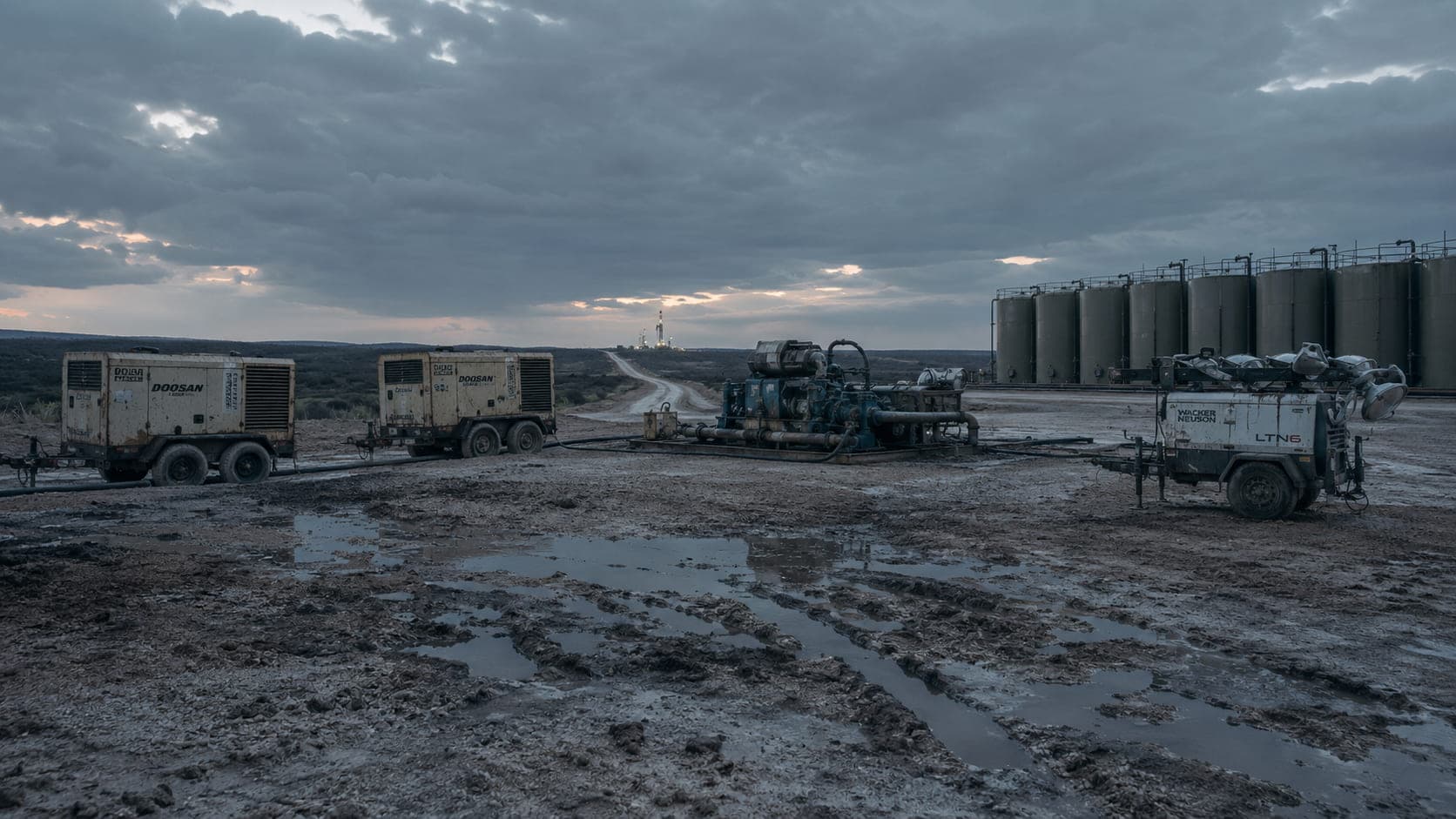
Drilling-services rental tracking is the practice of monitoring rental equipment — pumps, generators, light towers, compressors, tanks, and trailers — as it scatters across remote well pads, lease roads, and staging yards, so you can bill on real runtime, recover stolen units, and see utilization across an entire spread from one screen. The catch for energy-services operators is economic: your "sites" aren't a handful of yards, they're dozens of transient pads that appear and disappear with the drilling schedule. Most rental and asset software charges per site — which means the more spread-out your fleet gets, the more you pay just to watch it. Hapn charges per asset instead, so a pump moving between three pads and a yard is one line on your bill, not four.
Key Takeaways
- Per-site pricing punishes the drilling-services model. Energy-services fleets operate across dozens of transient pads, not 3–5 fixed yards, so per-location billing scales with your geography instead of your equipment.
- Hapn bills per asset from $10/mo. $10 for non-powered assets (tanks, trailers, light stands), $13 for GPS + runtime on powered iron, $18 for full engine telematics — the same rate whether a unit sits in the yard or on a pad 200 miles out.
- Runtime data ends billing disputes. Timestamped engine hours give you defensible proof of exactly when a rented pump or genset ran, instead of arguing over a hand-read hour meter at pickup.
- Heavy equipment theft runs ~$1B/year in the U.S., with under 25% recovered. Remote, unattended lease sites are among the softest targets — geofencing and after-hours alerts flag a unit the moment it moves.
- All hardware is free on a 3-year plan. No upfront capex on trackers, telematics harnesses, or BLE gateways — the strongest reason to switch off a per-site quote-and-deploy vendor.
Why drilling-services rental is the worst possible fit for per-site pricing
Most equipment-tracking and rental-management platforms were priced for a business with a fixed footprint: a company with three or four yards, or a contractor working out of a home base. Their pricing counts locations because, for that buyer, locations are stable and few. Drilling-services rental breaks that assumption completely.
An energy-services operator's fleet doesn't live at yards — it lives at well sites. A single active program can put your pumps, power generation, light towers, and tanks across dozens of pads spread over a basin, each one a "site" that exists for a few weeks and then moves. If your tracking bill counts sites, every new pad is a new charge, and the software you bought to control cost becomes a cost that grows with your success. You end up either paying the location tax or leaving equipment untracked at exactly the remote sites where theft and unbilled runtime hurt most.
The per-asset model inverts that. You pay for the pump, the generator, the tank — once — and it stays one line on your bill whether it's staged in the yard, running on a pad, or in transit between the two. This is the core economic wedge behind equipment rental tracking the way Hapn does it, and it's covered in depth in the per-asset vs per-site pricing breakdown. For a spread-out energy-services fleet, it's not a rounding difference — it's the difference between tracking everything and tracking only what you can afford to.
Per-asset vs per-site pricing
Per-asset pricing charges a flat monthly rate for each tracked unit, wherever it physically sits. Per-site pricing — common in rental and asset software — charges by location, so an operator working across many sites pays a premium for every one. For drilling-services fleets whose "sites" are transient well pads, per-asset pricing means adding a pad never adds a charge; you only pay for the equipment you own.
The equipment on a drilling-services rental spread — and how each piece gets tracked
"Drilling-services equipment" is a broad category, and it doesn't all track the same way. The practical split is between powered surface iron, non-powered assets, and the downhole-adjacent gear that supports the hole itself. Matching the tracker to the asset is what keeps the whole spread visible without overspending on units that don't need engine data.
Powered surface equipment — pumps, generators, compressors, light towers
This is the high-value, high-runtime iron, and it's where tracking pays for itself fastest. Mud pumps, power-generation units, air compressors, and light towers all run on engine hours you should be billing and maintaining against. A GPS device with runtime capture — Hapn's equipment tracking tier at $13/mo — reports location plus real engine on/off and cumulative hours. For the most valuable units, stepping up to $18/mo telematics adds fault codes, fuel level, and load data read straight off the controller, so you diagnose a down unit remotely instead of dispatching a truck 150 miles to find out it's a sensor.
Non-powered assets — tanks, trailers, containers, light stands
Frac tanks, mud tanks, transport trailers, and storage containers have no engine to report, but they still walk off, sit idle, and get lost across a basin. A battery-powered asset tracker at $10/mo bolts or magnet-mounts to the frame, checks in on a schedule, and fires an alert the moment the unit leaves its geofence. It's the cheapest line item on the spread and often the one that recovers the most stolen steel.
Downhole-adjacent gear — track the surface, stage the string
Be honest about physics: GPS doesn't work downhole, and it doesn't work through a steel tool joint in a pipe rack. You don't track a bit or a downhole motor a mile underground. What you do track is everything around the hole — the surface handling equipment, the transport that moves tools between the yard and the pad, and the staging where high-value downhole tools sit before and after a run. Visibility on the transport-and-staging layer is where downhole-adjacent inventory actually goes missing, and it's fully trackable.
Downhole-adjacent equipment
The surface and transport equipment that supports downhole operations — handling tools, transport trailers, and the staging of tubulars and downhole tools — as distinct from the tools that actually go in the hole. GPS and BLE track the downhole-adjacent layer (where and when it moves, sits, and stages); they don't track a tool while it's downhole. For rental accountability, the adjacent layer is where the loss and the unbilled time live.
Track your whole spread for one flat per-asset rate
Pumps, gensets, tanks, and trailers across every pad — billed per asset, not per site. Hardware free on a 3-year plan.
What drilling-services operators actually need from tracking
Strip away the feature lists and there are four jobs an energy-services rental operator hires tracking to do. All four are harder because the fleet is remote and spread out — which is exactly why per-site pricing makes them more expensive to solve, not less.
Bill on real runtime, not a hand-read meter
When a genset runs a pad for three weeks, the invoice shouldn't depend on a field tech remembering to read the hour meter at pickup, or on the customer's honesty about overnight runtime. Timestamped engine hours give you a defensible record of exactly when and how long every unit ran, catch off-contract overtime, and end the disputes that eat collections. That runtime feeds straight into your field-ticketing or ERP system through Hapn's open API, so the billing loop closes without a clipboard.
Recover units off remote, unattended sites
Remote lease sites sit unattended for nights and weekends, which makes them among the softest theft targets in the rental economy. U.S. heavy-equipment theft runs an estimated $1 billion a year with under 25% recovered — and the recovery rate collapses further when the asset was 200 miles from anyone who'd notice it gone. Geofences per pad and after-hours movement alerts flag a unit the moment it moves, with live location for recovery and a backup battery that keeps reporting if a thief cuts primary power.
See utilization across the whole basin
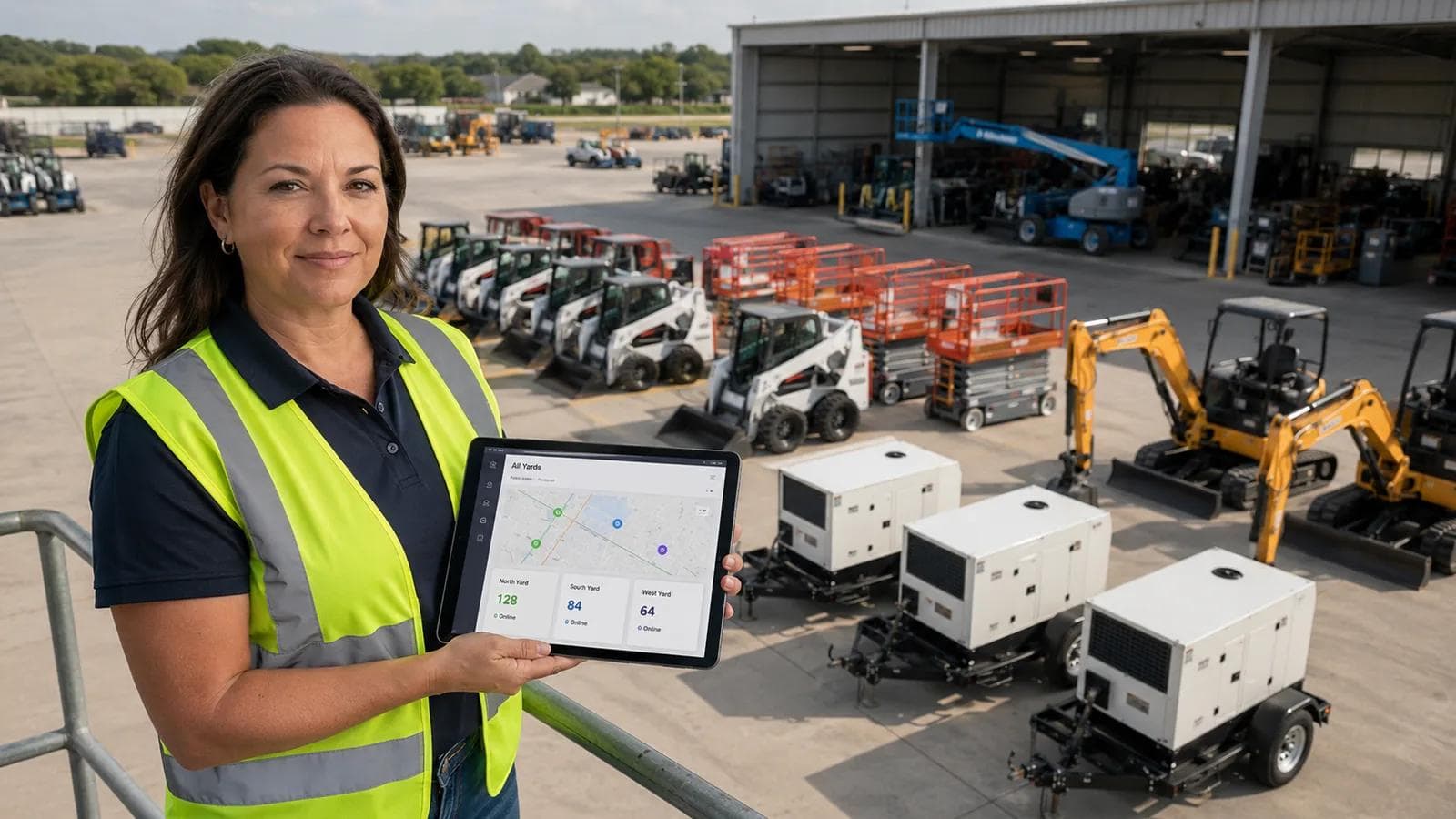
The most expensive equipment on any spread is the unit sitting idle at one pad while another program turns away a rental because nobody knew it was free. Runtime and on-rent status across every site, on one map, tells you what share of the fleet is actually earning versus staged and cold — so you redeploy iron you already own instead of renting in or buying more. The operating model for running that visibility across many locations is the same one in the multi-yard equipment tracking playbook.
Keep visibility in the yard and covered storage
Between programs, high-value units come back to the yard — and covered storage, pipe racks, and shop buildings block GPS. Hapn Sites uses Bluetooth Low Energy beacons to hold visibility on equipment stored indoors or under cover, no WiFi build-out required, so a unit doesn't go dark the moment it's off a pad and back under a roof.
The per-site penalty, in numbers
Here's the economics made concrete. Treat this as an illustrative shape, not a quote — but the mechanism is real. Say you run 120 rental assets across an active program that touches 20 pads plus 2 yards in a given month.
On a per-asset model at a blended ~$13/mo, you pay for 120 units: about $1,560/month, flat, no matter how many pads those units touch. Add a 21st pad and the bill doesn't move. On a per-site model, your cost is a function of the 22 locations — and every new pad you light up adds another location charge on top. The per-asset operator's bill tracks the fleet they own; the per-site operator's bill tracks the geography they can't control. In a business where the whole point is to chase work wherever the rig goes, paying by the site is paying a penalty for doing your job. See current per-unit rates on the Hapn pricing page.
That accountability holds up when someone outside the company is checking, too — lender audits, insurance claims, floor-plan financing. A defensible, asset-level record of where every unit is and what it's doing turns those from a scramble into a report, the same pattern behind the C3 Rentals story on keeping financed, distributed equipment accountable.
Written by the Hapn Team
Hapn provides GPS equipment and asset tracking for equipment rental businesses, multi-yard dealers, and energy-services operators. Our platform monitors 463,000+ assets across construction, rental, and 50+ other industries, with per-asset pricing and no per-site fees. For a head-to-head on rental-fleet tracking economics, see Hapn vs Tenna.
Frequently Asked Questions
How do you track drilling-services rental equipment across remote well sites?
You attach a GPS device to each unit — one with runtime capture for powered iron like pumps and generators, and a battery-powered asset tracker for non-powered gear like tanks and trailers. Each unit reports its own location, engine hours, and geofence status back to one map, so you see the whole spread across every pad and yard without calling the field. Because tracking lives on the asset, adding a remote site never adds a charge.
Does Hapn charge per site or per asset for energy-services fleets?
Per asset. Hapn bills a flat monthly rate for each tracked unit — $10/mo for non-powered assets, $13/mo for GPS plus runtime on powered equipment, $18/mo for full engine telematics — regardless of how many pads or yards that unit moves between. For a drilling-services operator whose sites are transient well pads, per-asset pricing means your bill scales with the fleet you own, not the geography you cover.
Can you track downhole tools with GPS?
Not while they're downhole — GPS signal doesn't reach through rock or steel. What you track is the downhole-adjacent layer: the transport that moves tools between yard and pad, the surface handling equipment, and the staging where high-value tools sit before and after a run. That's where rental accountability and loss actually happen, and it's fully trackable with GPS and BLE.
How does runtime tracking improve rental billing on generators and pumps?
A tracker with runtime capture logs every engine on/off event with a timestamp, producing a verifiable record of exactly when and how long a rented unit ran. That lets you bill on actual hours instead of a flat day rate, catch off-contract overtime, and settle disputes with data the customer can see. The runtime feeds your field-ticketing or ERP system through Hapn's open API, so billing closes automatically.
What's the best way to prevent theft on unattended lease sites?
Set a geofence around each pad and enable after-hours movement alerts, so any unit that moves when it should be still triggers an immediate notification with live location for recovery. A backup battery keeps the tracker reporting even if a thief cuts primary power, and a hidden secondary tracker on high-value units adds a recovery layer if the primary is found. This matters most on remote sites, where theft goes unnoticed longest.
Do I need different trackers for powered and non-powered equipment?
Yes, and matching the tracker to the asset is how you avoid overpaying. Powered iron with engine hours to bill and maintain uses a GPS-plus-runtime device ($13/mo) or telematics ($18/mo); non-powered assets like tanks and trailers use a battery-powered asset tracker ($10/mo). All of them report to the same platform and one map, so a mixed spread stays on a single per-asset bill.
See every unit on every pad — for one per-asset rate
Tell us how many assets you run and across how many sites. Quotes turn around in about 24 hours, with volume discounts for larger spreads.
Last Updated: July 2, 2026
Explore Hapn on a live equipment fleet
Click around the real platform — a live mixed fleet with dummy data. No sales call, takes a few minutes.
Get the latest news straight to your inbox.
Share Article
