← BlogArticles
Construction Asset Management: A Practical Guide for Rental Yards and Dealers
TJ Chasteen
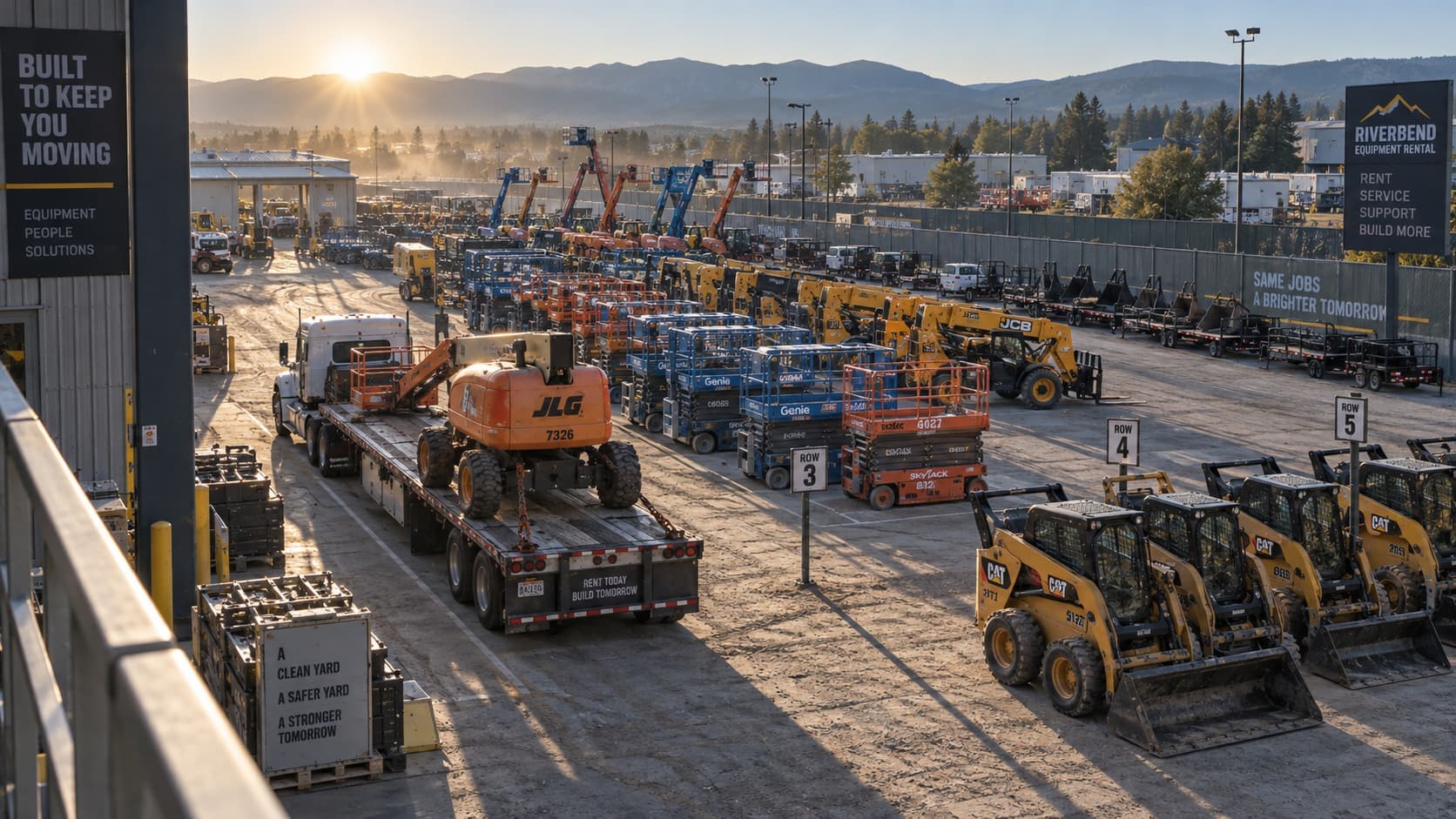
Construction asset management is the discipline of knowing what construction equipment you own, where every unit is, what condition it is in and what it is earning, and using that record to decide what to buy, rent out, service and sell. For a rental yard or a dealer network the practical version is one register per asset, with location, hours, status and the current contract attached, that updates itself instead of waiting for someone to walk the lot. This guide covers what the discipline includes, how the three classes of construction asset get tracked, how to build the register, and where the software fits alongside the rental management system you already run. One disclosure: we make asset and equipment tracking software, and we say where a spreadsheet or your RMS is enough.
Key Takeaways
- Construction asset management answers four questions per asset: what it is, where it is, what state it is in, and what it is earning. Most yards can answer the first one and guess at the other three.
- Construction assets fall into 3 classes that need different tracking: powered machines (engine hours, from $13 per asset per month), unpowered assets like trailers and attachments (battery trackers, from $10), and machines with factory telematics (OEM feeds from 53 brands, from $4).
- The asset register lives in your rental management system; the tracking layer feeds it. Hapn integrates with 7 rental systems, including Point of Rental, Quipli and Texada, so hours and location land on the contract.
- The National Insurance Crime Bureau puts US construction equipment theft at over $1 billion a year, and under 25% of stolen machines are recovered. A managed asset is a recoverable asset.
- Per-asset billing matters for multi-yard operators: a 120-unit yard with 40 powered machines and 80 unpowered assets runs about $1,320 a month in tracking software (illustrative), and opening a second yard with no new units adds nothing.
What construction asset management covers
Asset management is broader than asset tracking. Tracking tells you where a unit is. Management adds three more things: what state it is in (hours since service, open faults, damage), what it is doing (on rent, in the shop, idle in a yard, on a customer site past the return date) and what it is worth to you (utilization, revenue per hour, remaining life). The four questions below are the whole job. Everything else is how you answer them at scale.
| Question | What you need | Where it usually lives today | Where it should live |
|---|---|---|---|
| What do we own? | Unit ID, make and model, serial, purchase date, yard, financing status | Spreadsheet, RMS inventory, the finance file | RMS inventory, one record per asset |
| Where is it? | Live location, geofence status, last movement, current contract or site | Whoever drove it last, a phone call, a site visit | GPS or OEM feed, shown inside the RMS record |
| What state is it in? | Engine hours, fault codes, service interval, inspection results, damage notes | The hour meter on the machine, the shop whiteboard | Hours and faults from the device, work orders from the RMS |
| What is it earning? | Time and financial utilization, hours billed vs hours run, cost per hour | Quarterly reports, if anyone builds them | A weekly utilization view by category and yard |
Construction asset management
The practice of maintaining an accurate, current record of every piece of construction equipment an organization owns or finances (its identity, location, condition, utilization and financial status) and using that record to run rental, service, purchasing and disposal decisions. Asset tracking (knowing where a unit is) is one input to it.
Asset register
The single list of record for the fleet: one row per asset with its identifiers, ownership or financing details, home yard, current status and the fields that change daily (location, hours, contract). In a rental business the register is the inventory module of the rental management system; the tracking platform keeps its live fields current.
Why rental yards and dealers feel this harder than contractors
A contractor that owns its fleet mostly moves machines between its own sites with its own operators. A rental company hands the asset to a customer and does not see it again until it comes back. That changes what management has to do:
- Billing depends on data you do not control. Overage charges rest on the hour meter reading at return. If that number comes from the customer's memory or a scratched meter photo, revenue leaks. Reading hours from the machine closes the gap; see telematics-based overage billing.
- Assets change hands and yards. A telehandler rented from the north yard gets returned to the south yard, and the register says it is somewhere else. Multi-yard operators need the record to follow the asset, which is the subject of our multi-yard equipment tracking playbook.
- Service intervals run on customer hours. A machine on a long-term rental can blow through a 250-hour service interval without anyone in the shop knowing, because nobody at the yard has seen it in six weeks.
- Dealers manage three fleets at once. Rental units, units sold on service contracts, and units financed to customers. Each needs a different view of the same record; dealer-network asset visibility covers the accountability side.
- Financed assets are someone else's collateral. A lender or lessor wants proof the machine exists, where it is and that it is running. C3 Rentals tracks a financed, distributed installed base for exactly this reason.
The three classes of construction asset, and how each gets tracked
The most common mistake in construction equipment asset management is treating every asset the same way. A scissor lift, a trailer and a 20-ton excavator with factory telematics need three different answers to the same question.
| Asset class | Examples | What you need to know | How it is captured | Hapn tier |
|---|---|---|---|---|
| Powered equipment | Skid steers, telehandlers, scissor and boom lifts, compressors, light towers | Location, engine hours, utilization, ignition events; fault codes on CAN bus machines | A wired tracker reading power and ignition, or the machine's CAN bus for hours and diagnostics | Equipment tracking from $13; full equipment telematics from $18 |
| Unpowered assets | Trailers, attachments, buckets, scaffolding, fencing, containers, generators between jobs | Location, movement, dwell time, whether it came back | Battery tracker, no wiring; Hapn's smallest is 2.5" × 1.5" and reports for months per charge | Asset tracking from $10 |
| Machines with factory telematics | Cat, Deere, Komatsu, JLG, Genie, Terex, Volvo and other OEM-connected units | The same hours, location and faults, already being sent by the manufacturer | AEMP / ISO 15143-3 data feed pulled into one platform, no second device | OEM data integration from $4 |
Two rules follow. First, put hardware only where you need it: a machine already reporting through its manufacturer's portal does not need a second tracker, it needs its feed pulled into the same register as everything else. Hapn reads feeds from 53 OEM brands through OEM integration. Second, do not skip the unpowered class because it is cheap. Attachments and trailers are where rental yards lose the most units, and a $10 battery tracker on a $9,000 breaker attachment is the easiest math in the business.
AEMP / ISO 15143-3
The industry standard format equipment manufacturers use to share telematics data such as hours, location and fault codes. A platform that reads AEMP feeds can pull data from machines with factory telematics into the asset register without installing another device.
Utilization
The share of available time an asset is earning. Time utilization is days on rent divided by days available; financial utilization is revenue earned divided by the revenue the asset could earn at list rate. Both depend on knowing, per asset, when it went out and when it came back.
How to build the asset register in five steps
- Inventory and identify. One row per asset, with make, model, serial, unit number, home yard, and whether it is owned, financed or consigned. If the RMS already has this, clean it there rather than starting a parallel sheet. Duplicate registers are how units go missing on paper.
- Give every asset a data source. Powered: a tracker on the machine, or the OEM feed if it has one. Unpowered: a battery tracker. Decide this per class, not per unit, so a new arrival gets the right device on day one.
- Connect the source to the register. This is the step most yards skip. Hours and location that sit in a separate tracking dashboard get looked at when something goes wrong, not on every contract. Hapn's rental software integrations put meter readings and location into Point of Rental, Quipli, Texada, Alert Rental, DynaRent, EZRentOut and Renterra, so the counter and the shop see them where they already work.
- Set the rules that replace walking the lot. A geofence per yard and per active job site; an alert when a unit moves off a customer site or after hours; a service task when hours cross the interval; an exception list of on-rent units with no movement in seven days.
- Review utilization weekly, by category and yard. This is where management pays for itself: the category at 35% time utilization gets thinned or moved, the one at 85% gets more units, and the machine with 900 hours and no service record gets pulled. Our utilization benchmarks give a starting point for what good looks like.
For the day-to-day process around check-out, on-rent exceptions and off-rent verification, see how to keep track of rental equipment.
See your whole fleet in one register
Tell us your unit mix and which rental system you run. Per-asset pricing, hardware included on 3-year terms.
Construction asset management software: what it is and what it is not
Searches for construction asset management software usually mean one of three different things, and buying the wrong one is expensive.
- A rental management system (RMS). Point of Rental, Quipli, Texada, Wynne, Renterra and their peers. This is the system of record: inventory, contracts, check-out and return, invoicing, service. If you rent equipment and do not have one, start here, not with tracking.
- A tracking and telematics platform. The layer that knows what is physically happening: location, hours, faults, movement. It does not replace the RMS; it feeds it. We compared 8 platforms on how well they do that in best GPS tracking for equipment rental companies.
- Enterprise asset management (EAM) suites. Built for plants, utilities and large contractors that own thousands of fixed and mobile assets. Heavier than a rental yard needs, and usually priced per user or per site.
For a rental yard or dealer, the working combination is an RMS as the register plus a tracking platform that pushes live fields into it. The RMS knows what should be happening with the asset. Telematics knows what is actually happening. Management is the practice of keeping the two in agreement, and an open API is what makes that possible when your system is not on the integration list yet.
The numbers a managed fleet produces
Once the register is live, four numbers become available that were guesses before. The figures below are illustrative, for shape rather than signature; run your own mix on the pricing page.
- Hours billed vs hours run. If a machine ran 62 hours on a contract that allowed 40 and the invoice shows 40, the difference is revenue the register can recover. Machine-read hours make the overage a fact rather than an argument.
- Service on time. Interval alerts triggered by hours, not by calendar, on units the shop has not seen. Fewer failures on rent, which are the most expensive failures a rental company has.
- Recovery and loss. The National Insurance Crime Bureau puts US construction equipment theft at over $1 billion a year, with under 25% of stolen units recovered; our post on construction equipment theft walks through the figures and what changes with a tracker on the unit.
- Depreciation that matches use. With hours per asset you can depreciate by units of production instead of straight-line, which is covered in calculating depreciation on construction equipment.
What it costs to run, and why per-asset matters
A 120-unit yard with 40 powered machines on the $13 equipment tier and 80 trailers, attachments and towables on the $10 asset tier runs 40 × $13 + 80 × $10 = $1,320 a month in tracking software, with hardware included on a 3-year agreement (illustrative). Opening a second yard with the same units costs nothing more, because Hapn bills per asset; most rental and dealer software bills per site, so the same expansion doubles the bill. The per-asset vs per-site pricing post works through the multi-yard math. A 1-year agreement is also available, with hardware purchased at cost.
Five mistakes that undo the work
- Two registers. A tracking dashboard and an RMS inventory that disagree. Pick the RMS as the record and feed it.
- Tracking only the expensive units. Loss concentrates in the cheap, unpowered class that nobody tracked.
- Hours from the customer. Any billing number a customer reports is a negotiation; a number the machine reports is an invoice.
- A second device on an OEM-connected machine. Pull the feed instead.
- Per-site pricing on a growing dealer network. The tool that costs $400 a month at one yard costs $2,000 at five before you add a single asset.
About the author
TJ Chasteen is the product manager for Hapn's enterprise platform, including its rental management software integrations with Point of Rental, Quipli, Texada, Alert Rental and others. He works directly with rental operators and dealers on how tracking data should flow into contracts, service and billing. Hapn builds GPS tracking and telematics for equipment rental businesses, multi-yard dealers and equipment financing companies, and publishes per-asset pricing.
Frequently asked questions
What is construction asset management?
Construction asset management is the practice of keeping an accurate, current record of every piece of construction equipment an organization owns or finances: what it is, where it is, what condition it is in and what it is earning. Rental companies and dealers use that record to run contracts, service, purchasing and disposal. Asset tracking, which reports location, is one input to it.
What does construction asset management software do?
The term covers three different products. A rental management system such as Point of Rental, Quipli or Texada is the system of record for inventory, contracts and invoicing. A tracking and telematics platform such as Hapn captures live location, engine hours and fault codes from the equipment and pushes them into that record. Enterprise asset management suites are heavier tools built for plants and large owner-operators. For a rental yard the working combination is an RMS plus a tracking platform that integrates with it.
How is construction asset management different from asset tracking?
Asset tracking answers one question: where is the unit. Asset management also answers what state it is in, whether it is on rent or idle, and what it is earning, then uses those answers to make decisions. You cannot manage construction assets well without tracking, but tracking alone leaves the register out of date the moment a machine is delivered to a customer.
How do rental companies manage construction equipment across multiple yards?
They keep one asset register, usually the inventory module of their rental management system, and attach a data source to every unit: a tracker on powered machines, a battery tracker on trailers and attachments, and the manufacturer's telematics feed on OEM-connected equipment. Location and hours flow into the register automatically, so a unit returned to the wrong yard shows up where it is rather than where the paperwork says. Per-asset pricing keeps the cost flat as yards are added.
Does Hapn charge per asset or per site for construction asset management?
Per asset. Asset and vehicle tracking starts at $10 per asset per month, equipment tracking with engine hours at $13, full equipment telematics at $18, and OEM data integration at $4 per machine that already has factory telematics. Hardware is included at no cost on a 3-year agreement. A 1-year agreement is also available, with hardware purchased at cost. Adding a yard does not add a fee.
Put every construction asset on one register
Hours, location and status on every contract, inside the rental system you already run.
Last Updated: September 22, 2026
Explore Hapn on a live equipment fleet
Click around the real platform — a live mixed fleet with dummy data. No sales call, takes a few minutes.
Get the latest news straight to your inbox.
Share Article
