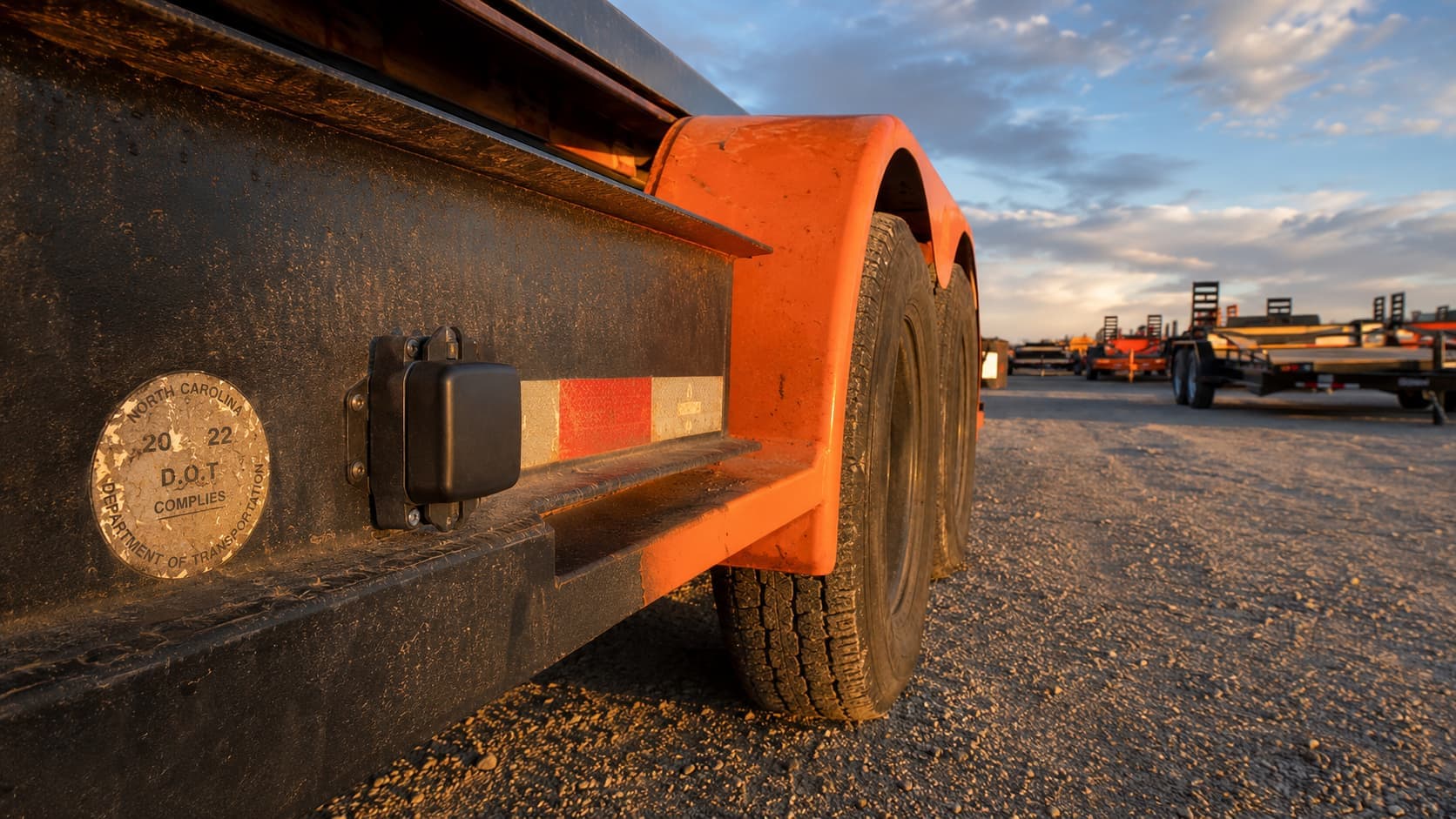
Trailer rental tracking is the fix for the asset class rental operators lose most casually: trailers have no engine to telematize, no cab to secure, and they spend their working lives parked at customer sites — hitched and gone in under a minute. The answer is battery-powered GPS built for non-powered assets: multi-year battery trackers from $10/month per trailer, geofence-exit alerts the moment one moves when it shouldn't, and utilization data that tells you which trailers actually earn. Here's the model.
Key Takeaways
- Trailers are the easiest asset in a rental fleet to steal — no keys, no immobilizer, towable by any pickup with a ball hitch.
- Battery-powered GPS trackers run for years without wiring, mount covertly on the frame, and track from $10/month per trailer.
- Geofence-exit alerts turn theft response from "discovered at Monday walk-around" into a same-hour recovery call.
- Turn-rate data typically shows a spread: in a 40-trailer fleet, the top half often does the large majority of the work while bottom units sit (illustrative — run your own numbers).
- Hardware is included at no upfront cost on a 3-year agreement — and pricing is per asset, so adding a yard doesn't add a license fee.
Why trailers are the blind spot in rental fleets
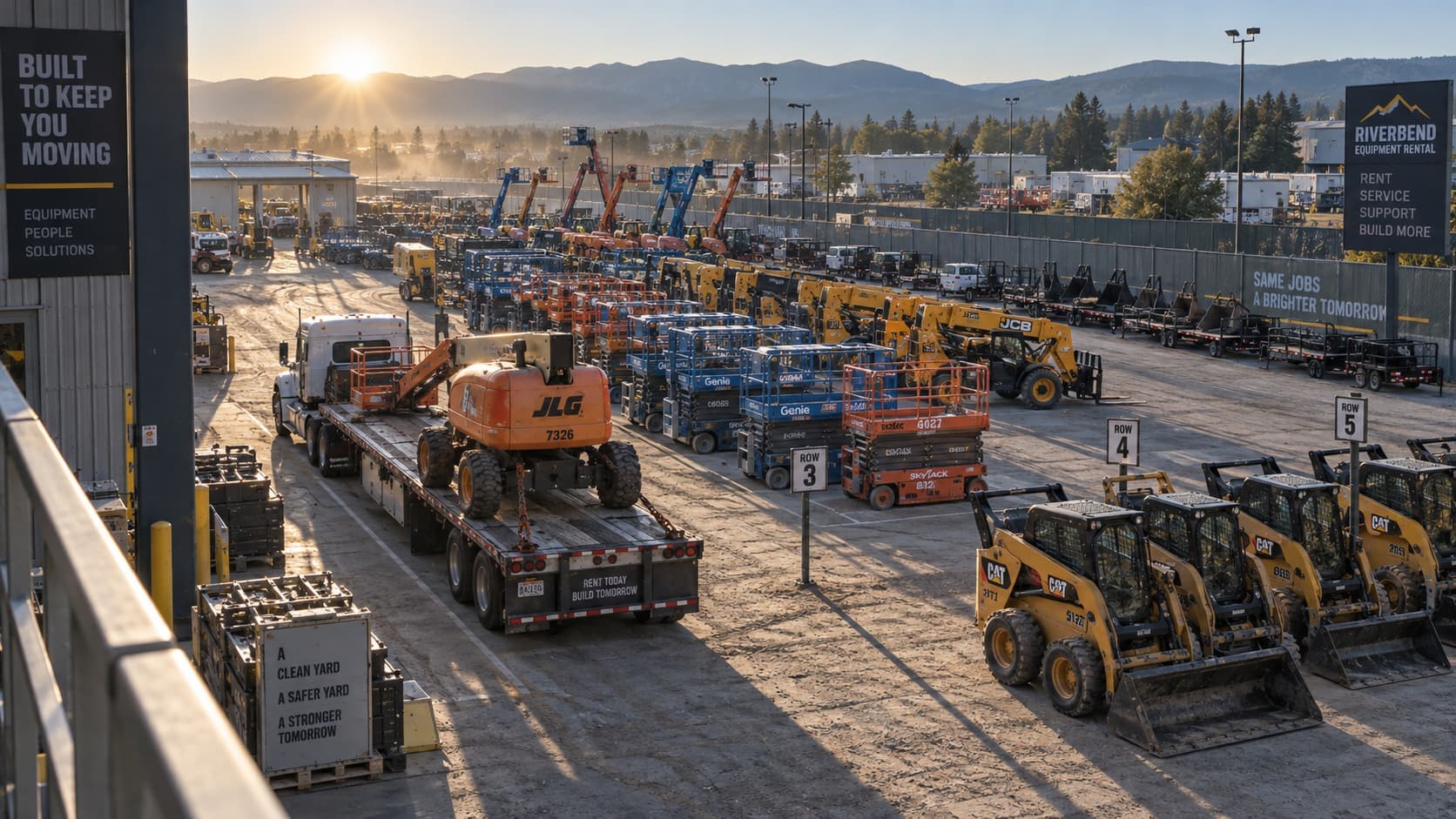
Powered equipment gets attention because it's expensive and it has an engine — hour meters, telematics ports, service schedules. Trailers have none of that, so they get run off spreadsheets and memory. But look at how they're actually deployed: dropped at customer sites for days or weeks, staged in unfenced corners of jobsites, moved between yards by whoever has a truck free. Nobody signs a trailer out the way they sign out an excavator.
That's exactly the profile thieves like. Equipment theft is a billion-dollar problem, and trailers are its lowest-effort target — no keys to defeat, no ignition to bypass, just a hitch and a taillight check. And because a missing trailer is often not noticed until the next scheduled use, the recovery window is usually gone before anyone knows it's open. It's the same dynamic that makes scaffolding the highest-loss category in rental: untracked, distributed, and easy to move.
Tracking an asset with no power source
Vehicle trackers assume a battery or an OBD port. Trailers offer neither — which is why trailer tracking runs on a different hardware class entirely.
Definition: Battery-Powered Asset Tracker
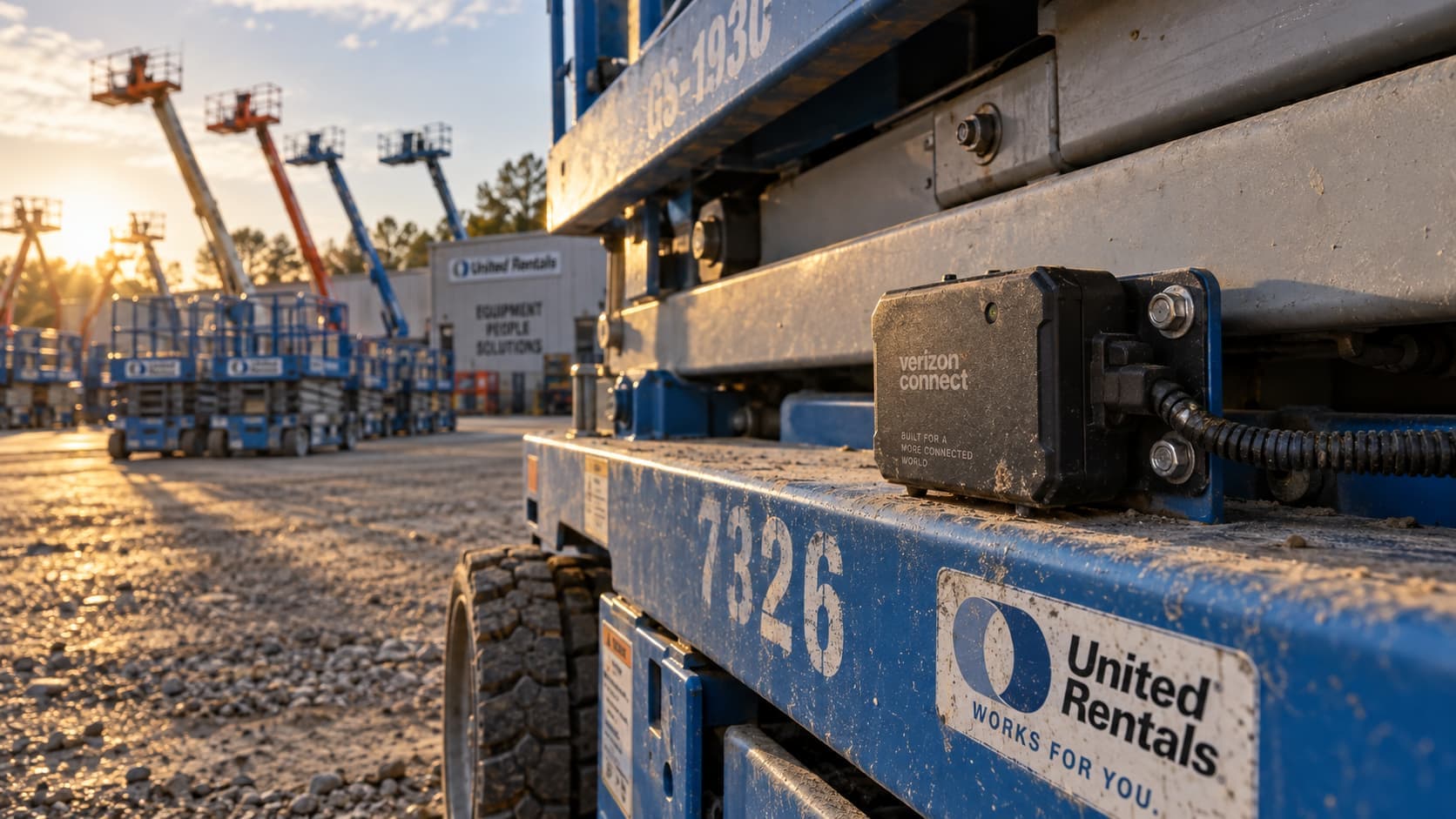
A self-contained GPS unit with a multi-year internal battery, designed for non-powered assets. It mounts covertly on a frame member or inside a box channel, reports position on a schedule, and switches to frequent updates when motion is detected — so battery life is measured in years, not weeks.
Hapn's asset tracking tier is built for exactly this: trailers, attachments, containers, and everything else in the yard that doesn't have an engine. Mount it where a thief won't look for it, and the trailer reports home for years without a service visit.
The rental workflow: geofences do the watching
Definition: Geofence-Exit Alert
A virtual boundary drawn around a yard, jobsite, or customer location. When a tracked asset crosses the boundary, the platform sends an immediate alert — turning an unauthorized move into a real-time event instead of a discovery days later.
The working pattern for trailer rental tracking is simple: when a trailer goes on rent, drop a geofence around the customer site. For the length of the rental, silence is good news. If the trailer moves at 2 a.m. on a Sunday, you know before it's on the highway — with a live position to hand to police, which is the difference between a recovery and an insurance claim. When it comes off rent, the return shows up on the map without a phone call.
The same data quietly fixes billing disputes: on-site and off-site timestamps are recorded by the tracker, not reconstructed from memory at invoice time.
How many trailers can you put on a map right now?
Tell us your trailer count and yard locations — we'll quote per-asset tracking with hardware included, usually within 24 hours.
Get Hapn pricing →Beyond theft: which trailers actually earn
Once every trailer reports position, you get utilization for free. Dwell time in the yard versus days on rent is a turn-rate report nobody had before, and the spread it reveals is usually stark. As a worked example (for shape, not signature): a 40-trailer fleet where the top 20 units do most of the renting is carrying bottom units that exist mainly to depreciate — candidates to sell, redeploy to a busier yard, or use to justify not buying the next batch. Our utilization benchmarks guide covers how to read the numbers.
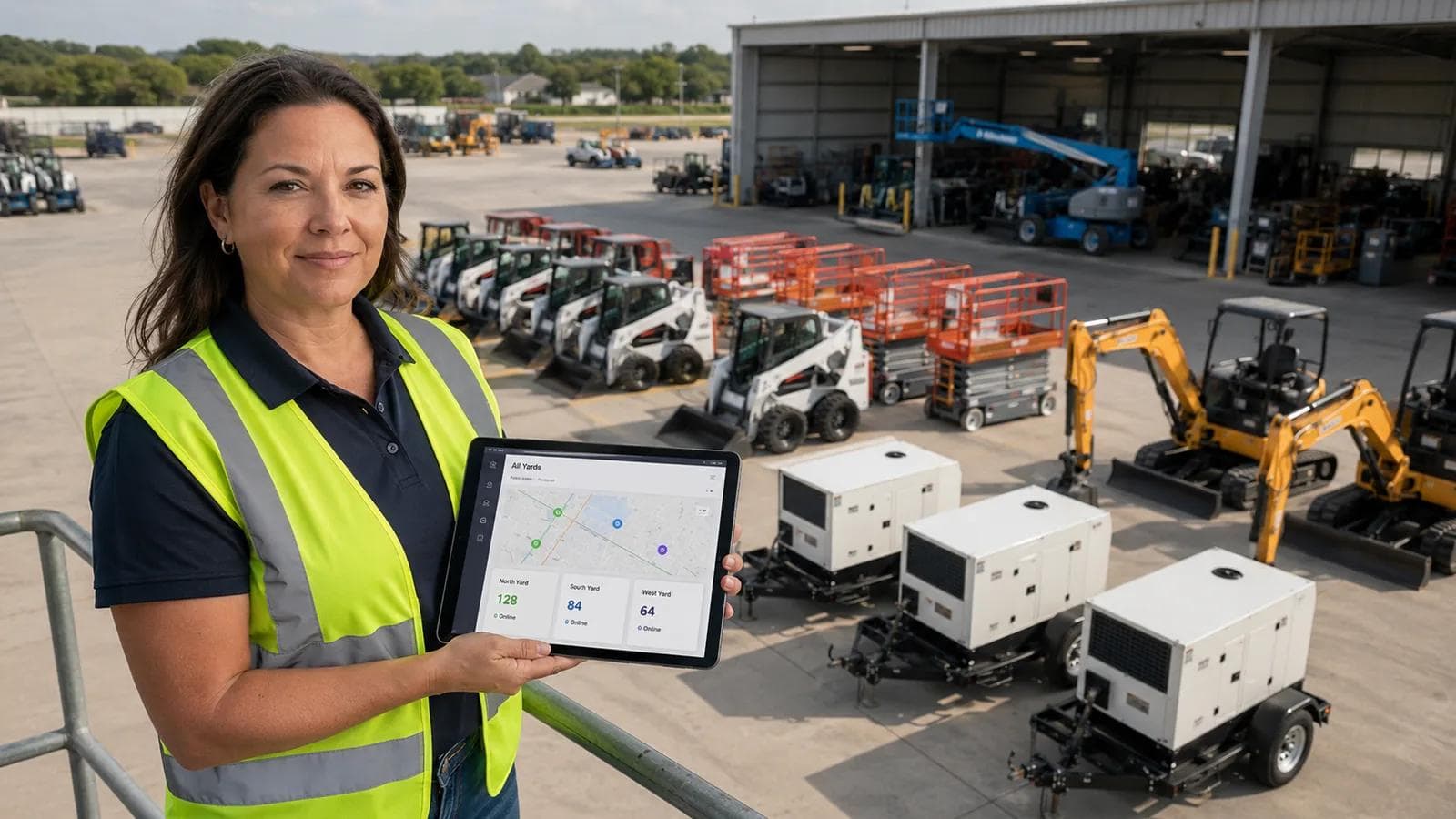
For multi-yard operators there's a second layer: trailers migrate between branches and quietly go missing from the fleet count of the yard that owns them. A single map across every yard ends the "which branch has the tilt-decks?" phone chain — and because Hapn bills per asset, not per site, tracking a trailer costs the same whether you run one yard or nine. It's the same per-asset model that lets financing operations like C3 Rentals keep visibility on a distributed installed base without per-location fees.
What trailer tracking costs
Hapn pricing is per asset, per month: battery-powered trailer tracking starts at $10/month per trailer. Two commercial models: a 3-year agreement with all tracking hardware and install kits included at no upfront cost, or a 1-year agreement with hardware purchased at cost. Volume discounts apply as the fleet grows, and the same platform covers the rest of the rental fleet — powered equipment at $13–$18/month with engine-hour telematics.
About the author: Written by the Hapn team. Hapn provides GPS and BLE asset tracking for equipment rental businesses, multi-yard dealers, and equipment financing companies — hundreds of thousands of assets tracked across North America.
Frequently Asked Questions
How do you track rental trailers without a power source?
With battery-powered asset trackers: self-contained GPS units with multi-year internal batteries that mount covertly on the trailer frame. They report position on a schedule, wake up and report frequently when motion is detected, and need no wiring, no trailer battery, and no service visits between rentals.
Can I get an alert when a trailer leaves a job site?
Yes. Draw a geofence around the customer site when the trailer goes on rent, and the platform alerts you the moment the trailer crosses it. Unauthorized after-hours movement becomes a real-time event with a live position you can hand to police — instead of a discovery at the next scheduled pickup.
What does trailer tracking cost per unit?
With Hapn, battery-powered trailer tracking starts at $10 per trailer per month. On a 3-year agreement, all tracking hardware is included at no upfront cost; a 1-year agreement is also available with hardware purchased at cost. Pricing is per asset, so it doesn't multiply with the number of yards or sites your trailers move through.
How long does the tracker battery last on a trailer?
Multi-year — battery-powered asset trackers are designed to report on a schedule and reserve frequent updates for when the trailer is actually moving, which stretches battery life across years of rentals rather than weeks. That's the key difference from vehicle trackers, which assume wired power.
Is trailer tracking different from vehicle tracking?
Yes, in hardware and in workflow. Vehicle tracking uses wired or OBD-powered devices with constant reporting; trailer tracking uses battery-powered units with scheduled and motion-triggered reporting. The workflow also differs: trailers rely on geofences and dwell-time data because there's no ignition event or driver to anchor activity.
Can trailer tracking help with rental billing disputes?
Yes. The tracker records when a trailer arrived at and left the customer site, so on-rent and off-rent timestamps come from GPS history rather than memory. That evidence settles "we returned it Tuesday" conversations quickly and keeps utilization records accurate per unit.
Every trailer, every yard, one map.
Per-asset pricing from $10/month per trailer, hardware included on 3-year agreements. Get a quote in about 24 hours.
Get Hapn pricing →Last Updated: July 21, 2026
Explore Hapn on a live equipment fleet
Click around the real platform — a live mixed fleet with dummy data. No sales call, takes a few minutes.
Get the latest news straight to your inbox.
Share Article
