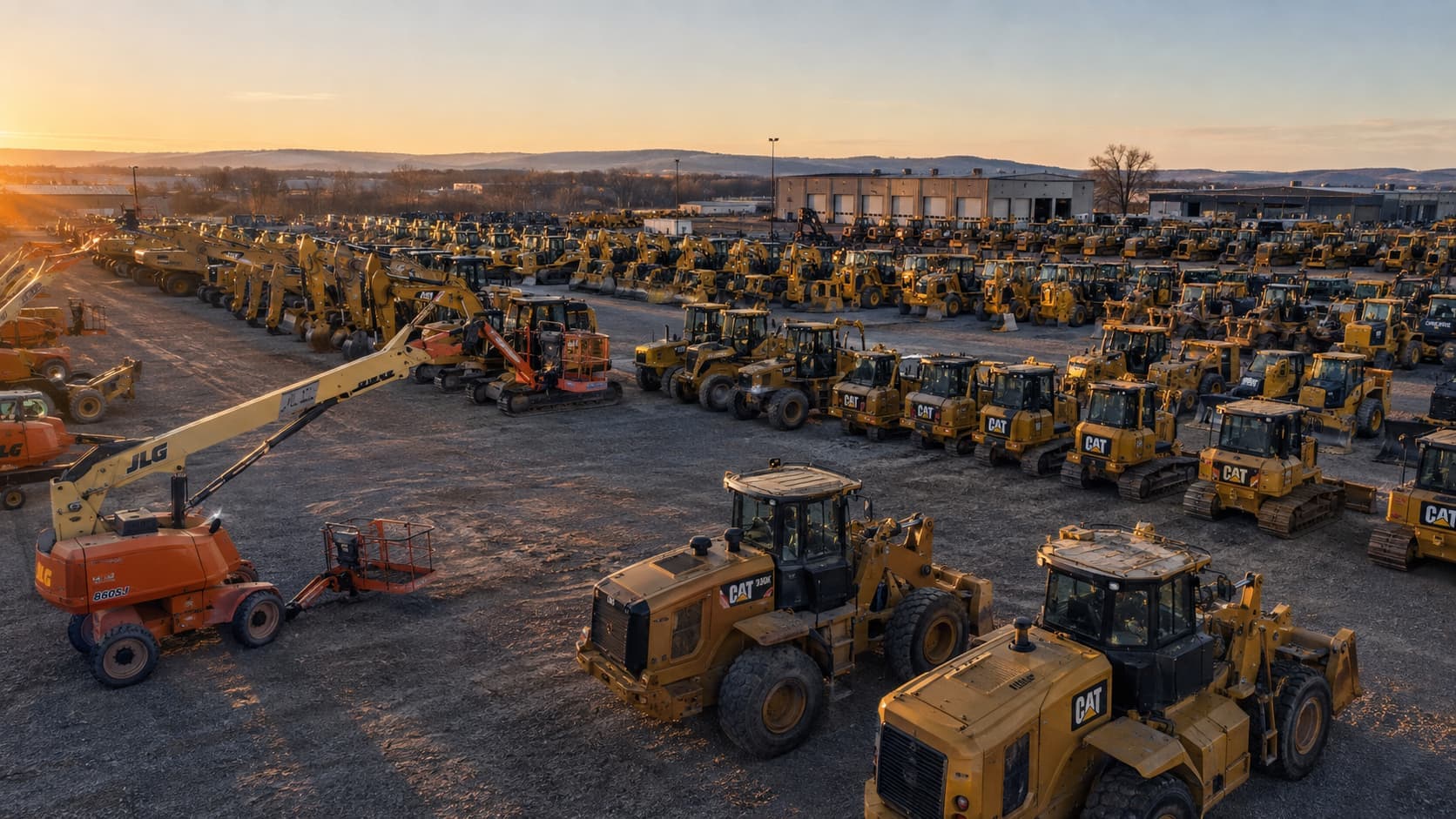
GPS tracking for equipment finance companies solves a problem a UCC filing can't: you hold the lien, but you can't see the collateral. Lenders and lessors finance heavy equipment that then scatters across job sites, yards, and third-party operators you don't control — and a paper security interest doesn't tell you whether the asset still exists, where it is, or whether it's being run into the ground. Per-asset GPS and battery-powered tracking turns a distributed, financed installed base into something you can actually monitor: existence, location, usage, and fast recovery on default.
This guide is written for equipment finance companies, lessors, and asset-based lenders whose collateral is machines, not real estate — and who need portfolio-level visibility that scales per asset, not per location.
KEY TAKEAWAYS
- A UCC-1 filing perfects your legal claim to the collateral — it does not tell you where the asset is, whether it's still in service, or whether it's been quietly relocated or subleased.
- GPS asset tracking gives a lender four things a lien can't: existence verification, live location, usage/engine-hour data, and a recovery signal the moment a loan goes bad.
- Battery-powered trackers deploy on equipment you don't physically control, with multi-year battery life and no wiring — so a financed asset stays visible across the full term.
- Hapn prices per asset — $10/mo for asset tracking, $13/mo for equipment tracking with engine hours — so monitoring a portfolio scales with the number of financed units, not the number of borrowers or sites.
- Two commercial models: a 3-year agreement with hardware included at no upfront cost, or a 1-year agreement with hardware purchased at cost. Both are per-asset, with an open API to feed your portfolio systems.
WHAT IS COLLATERAL MONITORING?
Collateral monitoring is the ongoing verification that the assets securing a loan or lease still exist, remain in the borrower's control, and hold their expected value over the term. For equipment finance, it means confirming a financed machine is where it's supposed to be, being used within agreed terms, and recoverable if the borrower defaults — the physical counterpart to the legal protection a lien provides.
The Blind Spot: A Lien Is Not Visibility
Equipment finance runs on a security interest. You file a UCC-1, you perfect your claim, and legally you have first position on the collateral. That protects your right to the asset — but it does nothing to tell you where the asset physically is, whether it's still operating, or whether it's been moved to a site, a state, or a third party you never approved.
That gap is where losses hide. A financed excavator can be relocated across state lines, informally subleased to another operator, worked far beyond its expected hours, or simply go dark when a borrower stops answering the phone. By the time a loan is 90 days past due and you send someone to recover the machine, the single most valuable piece of information — where is it right now — is the one thing your file doesn't contain. Subleasing in particular is a documented legal and recovery risk: once your collateral is in the hands of a party you have no contract with, both locating it and repossessing it get materially harder.
What GPS Tracking Gives a Lender or Lessor
Putting a tracker on a financed asset closes the gap between your legal claim and your operational reality. Four capabilities matter most across a portfolio:
1. Existence and location. Confirm at any time that the collateral is real, in service, and where the agreement says it should be. For a lender underwriting the next deal with the same borrower, "we can see all twelve machines right now" is a different risk conversation than "the borrower says they're fine."
2. Usage and condition signals. On powered equipment, engine-hour and utilization data tells you whether a financed machine is being used within reasonable limits or run hard enough to erode its value — the same asset and equipment tracking data an operator uses for maintenance doubles as an early warning on collateral condition.
3. Relocation and geofence alerts. Set a boundary around the approved job site or region and get alerted when a machine leaves it. A financed asset crossing a state line or landing at an address you never approved is exactly the signal you want before a loan sours, not after. Hapn's geofencing and zones also keep assets visible in covered yards and storage where GPS alone goes quiet.
4. Recovery on default. When a loan does go bad, live location turns repossession from a skip-trace investigation into a dispatch. The value of recovering a single stolen or defaulted machine worth tens of thousands of dollars can cover years of tracking across the portfolio — the same recovery economics that make GPS theft recovery pay for itself on a rental fleet.
Per-Asset Economics for a Financed Portfolio
A finance company's collateral isn't in one yard — it's distributed across every borrower you've funded. That's exactly the shape a per-asset model is built for. Hapn bills for each tracked machine, not for each borrower, site, or region, so monitoring cost scales cleanly with the number of financed units on the books.
WHAT IS A UCC-1 FILING?
A UCC-1 financing statement is the public filing a lender records to perfect its security interest in a borrower's collateral, establishing priority over later claims. It is the legal backbone of equipment finance — but it is a claim on paper. It does not locate, monitor, or recover the physical asset, which is the job GPS tracking does alongside it.
The pricing is published and per asset: $10/mo for battery-powered asset tracking, $13/mo for equipment tracking that adds engine hours and utilization, and $18/mo for deeper equipment telematics. Because the model is per asset rather than per site — the same reason it works for the dealer networks and multi-yard operators Hapn serves — a lender monitoring collateral across fifty borrowers pays for fifty machines, not fifty relationships (see per-asset vs per-site pricing for why that distinction drives the cost). There are two ways to buy: a 3-year agreement with all hardware included at no upfront cost, or a 1-year agreement with hardware purchased at cost.
See your collateral, not just your lien
Per-asset tracking across every financed unit — existence, location, usage, and recovery. Priced per machine, not per borrower.
Get Hapn pricing →Deploying Across a Portfolio You Don't Physically Hold
The practical challenge for a lender is that you're installing on assets in someone else's possession. Battery-powered trackers are the answer: no wiring, no install bay, and multi-year battery life, so a device can go on a financed machine at origination — or at delivery through the dealer — and stay reporting for the life of the loan without touching the borrower's operation. For powered equipment where you want usage data, a wired equipment tracker adds engine hours on top of location.
At portfolio scale, the data has to live where your team already works. Hapn's open API feeds location, geofence, and utilization data into the loan-management or portfolio-monitoring systems your risk team runs, so collateral status becomes a field in your book rather than a separate login. The same platform handles vehicles, powered equipment, and battery-powered assets together — useful when a single borrower's collateral spans several asset classes. Operators running a distributed, financed base — like C3 Rentals — already lean on this visibility to keep track of equipment across many locations.
Residual Value and End-of-Term for Lessors
For lessors, the collateral question doesn't end at default — it runs through the residual. A lease is priced on an assumed condition and usage at return, and the biggest surprise at end-of-term is an asset that came back with far more hours than expected or drifted off the map entirely. Utilization and engine-hour data over the life of the lease turns residual value from an assumption into something you've been measuring the whole time, and makes the end-of-term conversation about numbers you both already see. When a lessee goes quiet near maturity, live location is also what makes off-lease recovery a scheduled pickup instead of a hunt.
Written by the Hapn Team
Hapn provides per-asset GPS tracking for equipment rental businesses, multi-yard dealers, and equipment finance companies — vehicles, powered equipment, and battery-powered assets on one platform, with transparent published pricing and an open API.
Frequently Asked Questions
Why do equipment finance companies use GPS tracking if they already file a UCC-1?
A UCC-1 perfects the lender's legal claim to the collateral, but it doesn't locate or monitor the physical asset. GPS tracking adds the operational half: confirming the financed equipment exists, seeing where it is, knowing whether it's being used within terms, and enabling fast recovery on default. The filing protects your right to the asset; tracking protects your ability to find and recover it.
How do you track equipment you've financed but don't physically control?
Battery-powered asset trackers require no wiring and have multi-year battery life, so a device can be placed on a financed machine at origination or at dealer delivery and keep reporting for the life of the loan without involving the borrower's operation. For powered equipment where you want usage data, a wired equipment tracker adds engine hours on top of location.
How much does collateral tracking cost across a portfolio?
Hapn prices per asset: $10/month for battery-powered asset tracking, $13/month for equipment tracking with engine hours, and $18/month for deeper equipment telematics. Because billing is per machine rather than per borrower or site, monitoring cost scales with the number of financed units on the books. Hardware is included at no upfront cost on a 3-year agreement, or purchased at cost on a 1-year agreement.
Can collateral data feed our loan-management or portfolio system?
Yes. Hapn's open API pushes location, geofence, and utilization data into the systems your risk and asset-management teams already use, so collateral status is a field in your book rather than a separate login. The platform covers vehicles, powered equipment, and battery-powered assets together, which matters when a single borrower's collateral spans multiple asset classes.
How does tracking help with lease residual value?
Engine-hour and utilization data over the life of a lease turns residual value from an assumption into a measured number, so end-of-term condition holds fewer surprises. Live location also makes off-lease recovery a scheduled pickup rather than a search when a lessee goes quiet near maturity.
Turn your lien into live visibility
Per-asset tracking, battery trackers for equipment you don't hold, and an open API into your portfolio systems. Tell us your book and we'll price it.
Get Hapn pricing →Last Updated: August 7, 2026
Explore Hapn on a live equipment fleet
Click around the real platform — a live mixed fleet with dummy data. No sales call, takes a few minutes.
Get the latest news straight to your inbox.
Share Article
