
To prove on-time delivery, you need three things on record before anyone asks: the delivery window everyone agreed to, a timestamped arrival at the consignee, and a position history showing how the load got there. A signed proof of delivery shows the freight was received, not when it arrived. An ELD shows where the truck was, not the freight. A tracker traveling inside the load fills that gap with a record the receiver didn't write and the driver didn't self-report.
This guide is for carriers, brokers, 3PLs and shippers who keep losing arguments they should win: late-delivery chargebacks, unpaid detention, and claims that a load showed up after the window when it didn't.
Key Takeaways
- Walmart fines suppliers 3% of the cost of goods on every case that misses its on-time, in-full requirements, so an arrival time you can't prove becomes a deduction.
- Per ATRI, 94.5% of fleets bill detention but get paid on fewer than half of those invoices; detention cost trucking $3.6 billion in direct expenses in 2023.
- A strong delivery record has 3 parts: the agreed window, a timestamped arrival, and the route history behind it.
- A tracker's arrival time is only as precise as its reporting interval. Tighten it to every 5 minutes while moving on loads where the minute matters.
- Hapn records a date- and time-stamped arrival for every shipment, from $40 per shipment with a disposable tracker.
Why "we delivered on time" loses the argument
Delivery disputes are rarely about what happened. They're about whose record wins. When a receiver's system says the load checked in at 2:40 and your driver says 1:55, the party with independent, timestamped evidence gets paid. The party with an email thread usually doesn't.
Three disputes come up again and again:
- Retail on-time chargebacks. Large retailers score suppliers shipment by shipment. Walmart's program fines 3% of the cost of goods on each case that fails its on-time, in-full requirements (Logistics Management). Shippers often pass that cost to the carrier or 3PL that moved the freight.
- Detention billing. ATRI found drivers were detained at 39.3% of stops in 2023, and that while 94.5% of fleets charge detention, they are paid on fewer than 50% of those invoices (Food Logistics, citing ATRI). An invoice the customer can wave away is an invoice that doesn't get paid.
- Late-delivery claims and penalties. Contracts with service-level clauses, expedited freight and time-critical production loads all carry penalties for missing the window. The question in every one of them is the same: when did the freight arrive?
Definition: OTIF (on-time, in-full)
A retailer scorecard that measures whether each order arrived inside its delivery window and with every unit ordered. On-time and in-full are scored separately, so a shipment can fail either one. Missed cases are typically charged back to the supplier as a percentage of the cost of goods.
Definition: Detention
Time a truck and driver are held at a shipper or receiver beyond the free time allowed for loading or unloading, commonly two hours. Carriers bill detention by the hour, but only when they can show when the truck arrived and when it was released.
What each delivery record proves
Most operations already have several records for every load. The problem is that each proves something different, and none of the common ones prove arrival time on their own.
| Record | What it proves | Where it falls short |
|---|---|---|
| Signed POD or BOL | The freight was received, and its condition | Time is often handwritten, missing, or the time of signing rather than arrival |
| Receiver's dock or appointment system | The scheduled slot and the receiver's check-in time | It is the other side's record; check-in can lag arrival at the gate |
| Truck ELD or telematics | Where the tractor was and when | Tracks the truck, not the freight; brokers and shippers often can't access it |
| Check calls and emails | What someone said at the time | Self-reported, easy to dispute |
| Tracker inside the freight | When the load itself reached the destination, and the route it took | Doesn't prove unloading or condition; pair it with the POD |
The strongest file combines the last row with the first: the tracker establishes when the freight arrived, and the signed POD establishes that it was accepted. If your loss is the waiting rather than the dispute, our post on what unreliable freight ETAs cost covers that side.
Definition: Proof of delivery (POD)
The document, paper or electronic, that the consignee signs to confirm it received the shipment. It is evidence of receipt and condition. On its own, it is weak evidence of when the freight arrived.
Build the record before the load leaves
Proof gets assembled at dispatch, not after the chargeback lands. Four setup steps make the difference:
- Write the window into the shipment. In Hapn shipment tracking, each load is a job with an origin, a destination and an expected delivery window, plus attached files and reference numbers such as the BOL. When a dispute comes in, the agreed window and the paperwork sit next to the arrival record.
- Put the tracker in the freight, not just the cab. A disposable tracker rides with the load, so the record follows the freight through trailer swaps, cross-docks and interline handoffs. It isn't returned, which matters on one-way and cross-border lanes. Our guide to disposable GPS trackers for shipments covers when single-use beats reusable.
- Set the reporting interval for the precision you need. Hapn lets you set it per shipment, from every minute while moving to once a day. A common freight setup is every 5 minutes while moving and hourly when stopped, which runs about 1 to 1.5 months on the battery. For loads where a 15-minute difference decides the chargeback, don't save battery on the last leg.
- Share the live link with the receiver. A tracking link lets the consignee follow the load and its ETA without a login. Receivers who can see the truck coming are less likely to dispute when it got there.
Get a timestamped arrival on every load
Disposable tracker, live ETA and an arrival record for each shipment, from $40 per shipment. Volume pricing available.
Get shipment pricing →Using the record in the three common disputes
An on-time chargeback
Line up three things: the must-arrive-by date or window on the order, the arrival timestamp from the tracker, and the route history leading in. If the freight arrived inside the window, the dispute is about the receiver's check-in, not your delivery. Guidance on disputing Walmart OTIF fines makes the same point: the disputes that succeed are the ones that prove, with timestamps, that the retailer's record of the shipment is wrong (Beancount). Note that tracking only answers the on-time half; in-full is an inventory and picking question.
Detention
The arrival record starts the clock. Because the tracker stays with the freight after it's unloaded, the truck's own ELD or telematics shows when the driver was released. Together they document the full dwell. That alone is an improvement for most fleets: ATRI notes that most carriers don't track true detention time at each stop, even though they hold the GPS data to do it (HDT, citing ATRI). ATRI puts detention's 2023 toll at more than 135 million lost hours in for-hire trucking and $11.5 billion in lost productivity (ATRI).
A late-delivery claim
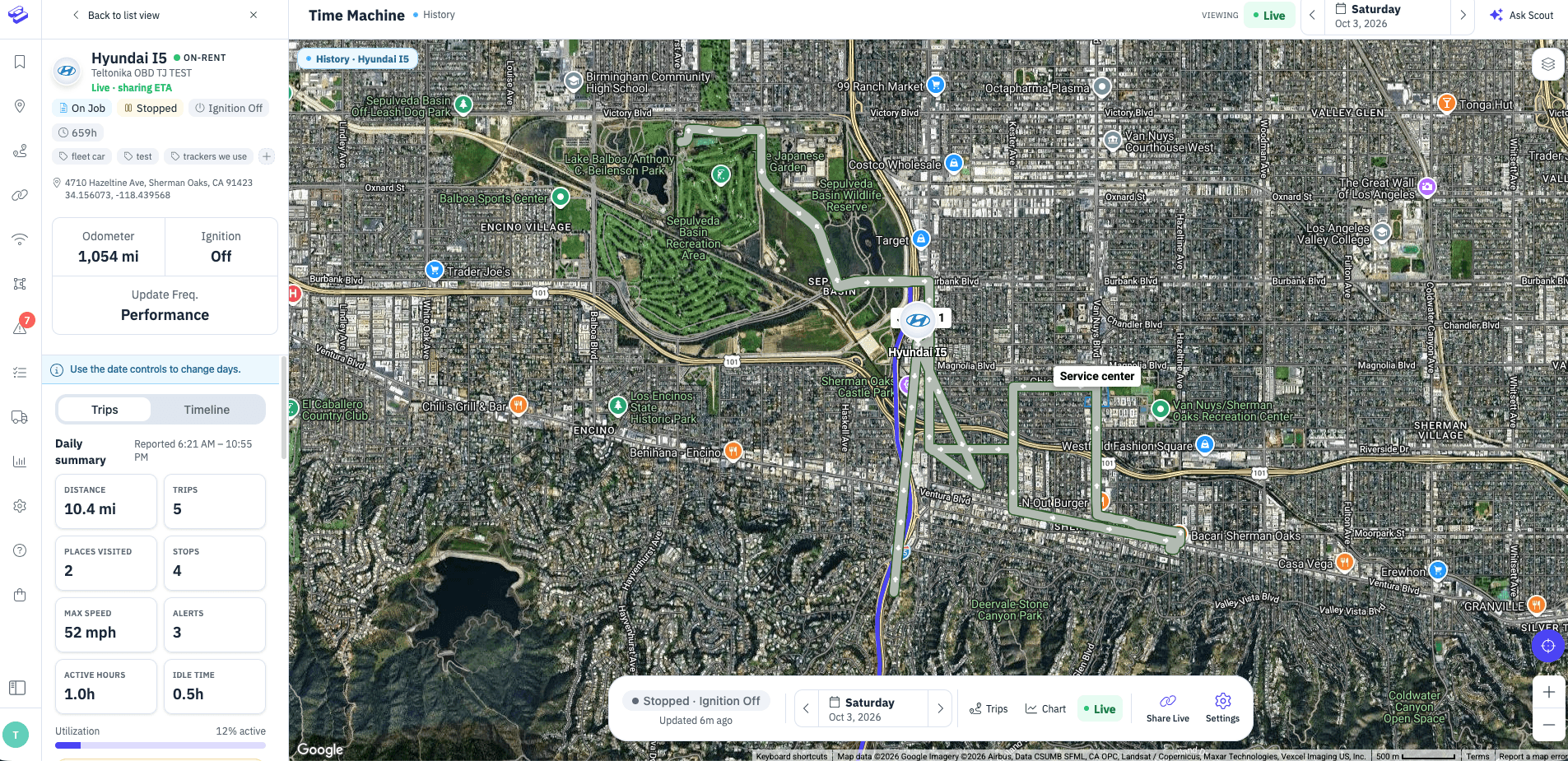
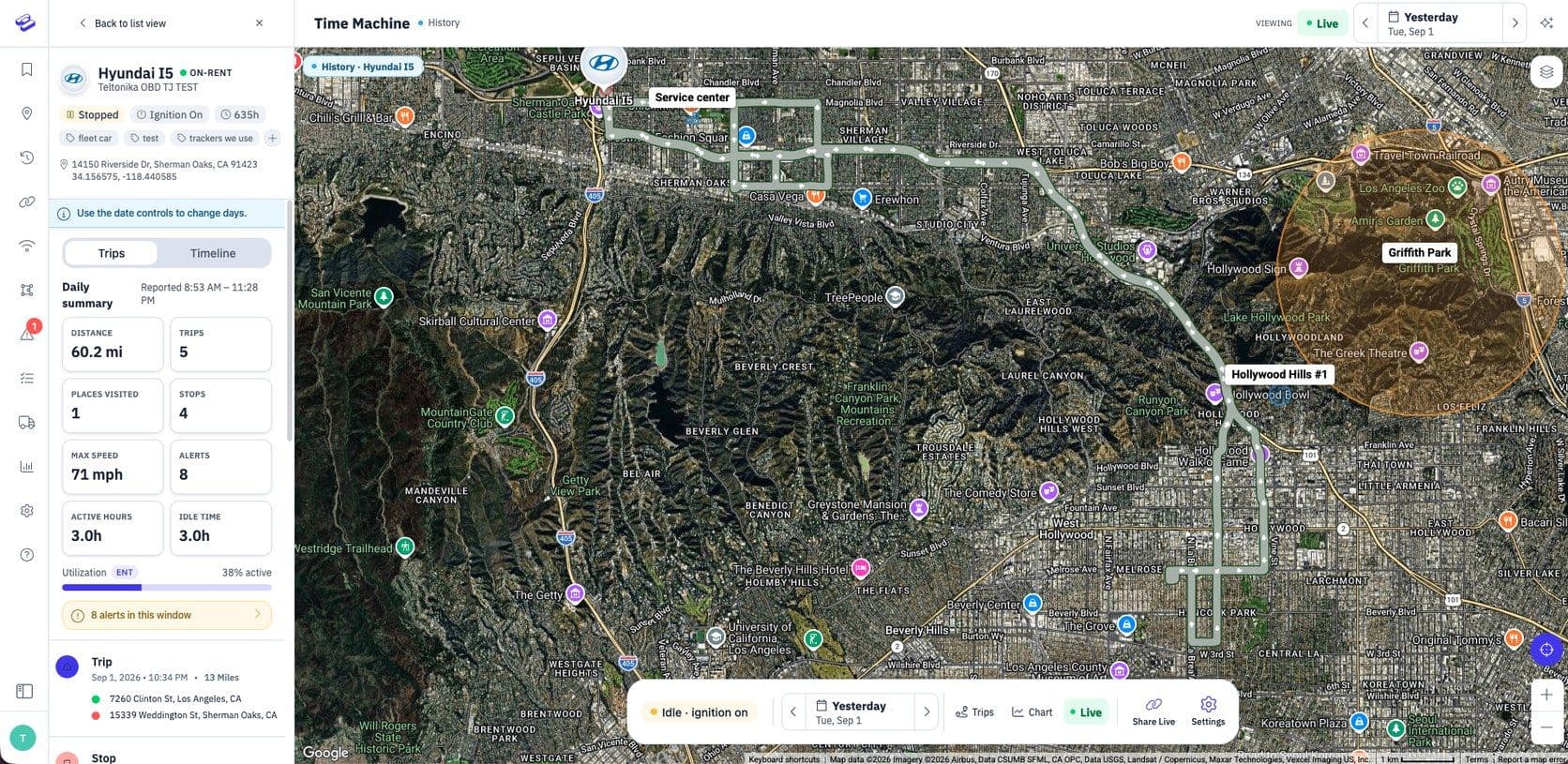
When a load really was late, the route history tells you where the time went: a late departure from origin, an unplanned stop, a detour, or a long wait at a cross-dock. Hapn's route-deviation alerts flag detours and unauthorized stops as they happen, and the late-shipment view shows which active loads are falling behind their window, so you can warn the receiver before the window closes instead of explaining afterward. The same alerts are the backbone of cargo theft prevention after pickup.
A worked example (illustrative, for shape only): a supplier ships a truckload with $60,000 in cost of goods to a retail DC. If the retailer scores it late and applies a 3% on-time fine to the whole load, the deduction is $1,800. Tracking that load costs from $40. Win one dispute a quarter and the tracking on dozens of loads has paid for itself. Your fine structure and volumes will differ.
Where Hapn fits
Hapn prices shipment tracking per shipment, from $40, covering a single-use tracker plus the software for that trip. There's no tracker to return and no per-device subscription, and pricing drops with committed volume. The tracker uses a global SIM and works in more than 240 countries, so cross-border loads keep the same record end to end. Shipments can be created one at a time or in bulk from a CSV, each carrying its own BOL or reference numbers.
For how carriers, brokers and 3PLs use it across a book of freight, see Hapn for freight and logistics, or read how GLOVIS America works with Hapn.
About the author
TJ Chasteen is a Product Manager at Hapn, where he works with carriers, logistics teams and equipment operators on tracking, alerts and proof-of-delivery workflows.
Frequently asked questions
What is the best proof of on-time delivery?
The best proof combines the agreed delivery window, a timestamped arrival recorded by a tracker inside the freight, and the signed proof of delivery. The tracker shows when the load reached the destination, independent of the receiver's check-in, and the POD shows it was accepted. Either one alone is easier to dispute.
Is a signed POD enough to prove a delivery was on time?
Usually not. A signed proof of delivery proves receipt and condition, but the time on it is often handwritten, missing, or the time of signing rather than arrival. If the freight waited at the gate or the dock, the POD time can fall outside the window even when the load arrived inside it.
How do you dispute an OTIF late fine?
Compare the order's must-arrive-by date or window with an independent arrival timestamp, and submit both with the PO, BOL and POD. Disputes that succeed show, with timestamps, that the retailer's record of the shipment is wrong. Tracking only answers the on-time part; in-full misses come from inventory and picking.
Can GPS tracking prove detention time?
It can prove the start of it. A tracker in the freight records when the load arrived at the facility, and the truck's ELD or telematics shows when the driver left. Together they document total dwell, which is the basis for a detention invoice the customer can check.
How precise is a tracker's arrival time?
As precise as its reporting interval. A tracker that reports every 5 minutes while moving pins arrival to within a few minutes; one that reports hourly can be off by up to an hour. With Hapn you set the interval per shipment, from every minute while moving to once a day.
Stop losing disputes you should win
Get per-shipment pricing for your lanes, usually within one business day.
Get shipment pricing →Last Updated: November 6, 2026
Explore Hapn on a live equipment fleet
Click around the real platform — a live mixed fleet with dummy data. No sales call, takes a few minutes.

Get the latest news straight to your inbox.
Share Article
