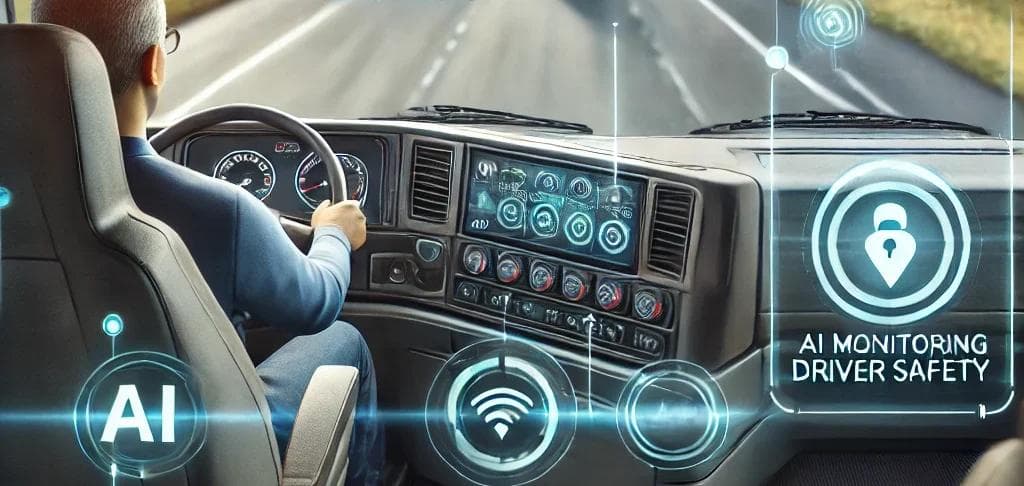
AI telematics is telematics data (location, engine hours, fault codes and, on vehicles, camera video) combined with software that reads it for you and tells you what needs attention. For an equipment rental company or dealer, that means a short list instead of a map full of dots: the unit on rent with no hours this week, the lift 40 hours from service, the trailer moving at 2 a.m. The AI is only as good as the data under it, so this guide covers both: what each layer of telematics captures, where AI earns its keep in a rental fleet, where vendor claims run ahead of the product, and what it costs per asset. One disclosure: we make equipment tracking and telematics software, and we say where the AI label adds nothing.
Key Takeaways
- AI telematics has 3 data layers to work with: GPS and engine hours (from $13 per asset per month), CAN bus diagnostics and fault codes (from $18), and factory telematics pulled from manufacturers (Hapn reads feeds from 53 OEM brands, from $4).
- The highest-value AI job in a rental fleet is exception finding: on-rent units with 0 hours, units running past contract hours, and machines approaching a service interval the shop has not seen.
- Theft is the second job. The National Insurance Crime Bureau puts US construction equipment theft at over $1 billion a year, with under 25% of stolen units recovered; after-hours movement and geofence alerts catch it early.
- AI dash cameras ($35 per month) detect distraction, phone use, fatigue and tailgating. For a rental company they matter most on your own delivery trucks.
- Per-asset pricing keeps the math simple: 60 powered machines on engine-hour tracking and 100 unpowered assets run 60 × $13 + 100 × $10 = $1,780 a month (illustrative), and a second yard with no new units adds $0.
What AI telematics is, and what it is not
Telematics is the data: where an asset is, whether its engine is running, how many hours it has, what faults it is reporting. The AI part is newer and narrower than most marketing suggests. In practice it does three things well: it classifies events (a hard brake, a phone in a driver's hand, a machine idling for four hours), it finds exceptions across hundreds of units that no person would spot scrolling a map, and it answers questions in plain language instead of making you build a report.
It is not a replacement for good data. A battery GPS tracker on a trailer cannot tell you engine hours, no matter how smart the software is. And it is not a replacement for your rental management system; it feeds it.
Telematics
The collection and transmission of data from a vehicle or machine, typically GPS location, ignition status, engine hours, speed and diagnostic codes, to a software platform over a cellular connection. Equipment telematics refers to the same data from off-road machines such as lifts, loaders and generators.
The data layers AI telematics works with
Match the data source to the asset before comparing AI features. Paying for full diagnostics on a light tower you only need to locate is waste.
| Data layer | What it captures | What AI can do with it | Hapn tier |
|---|---|---|---|
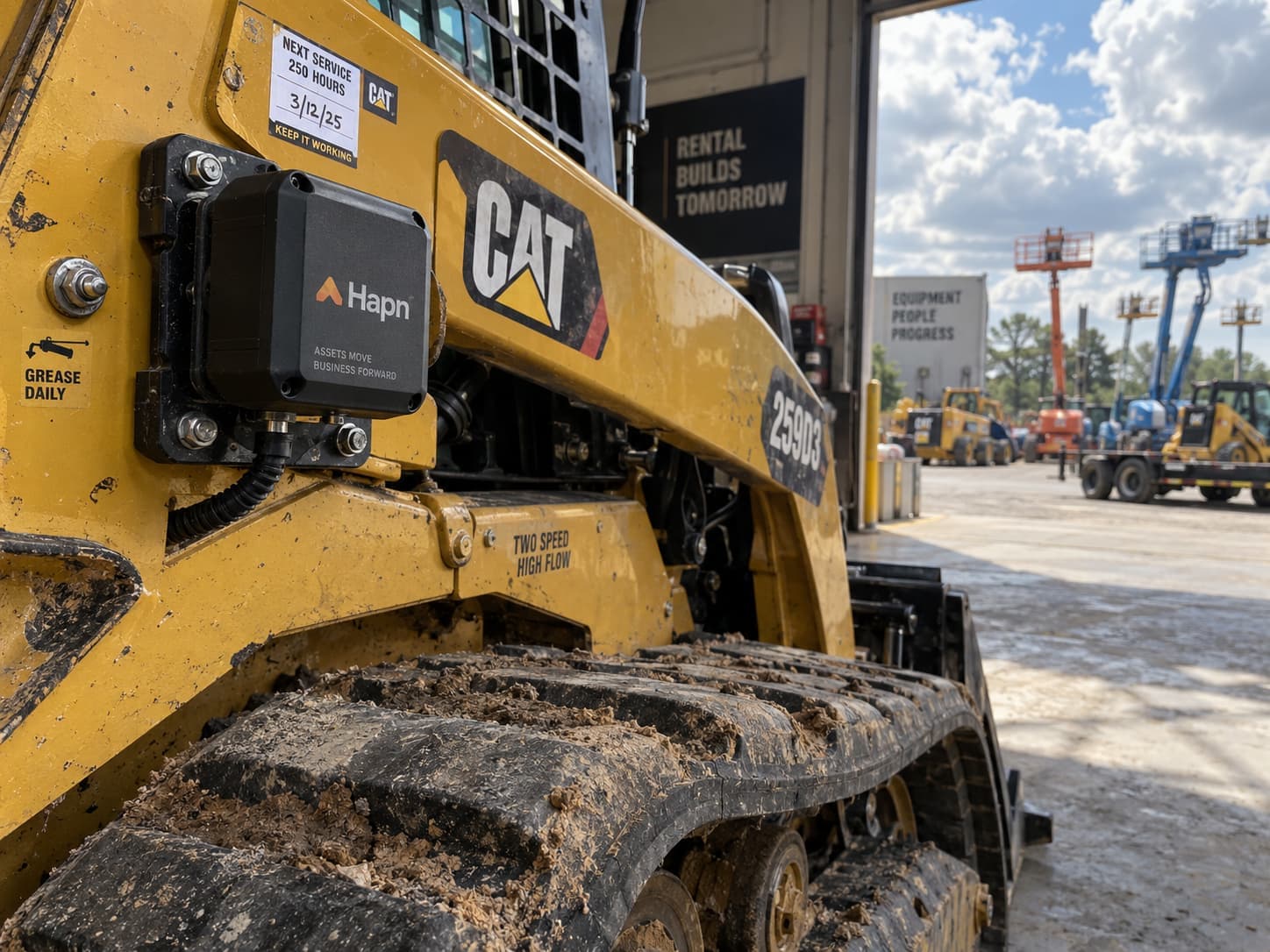
| GPS + engine hours | Location, ignition on/off, cumulative hours, idle time, geofence activity | Find idle on-rent units, flag after-hours movement, bill on machine hours | Equipment tracking from $13 |
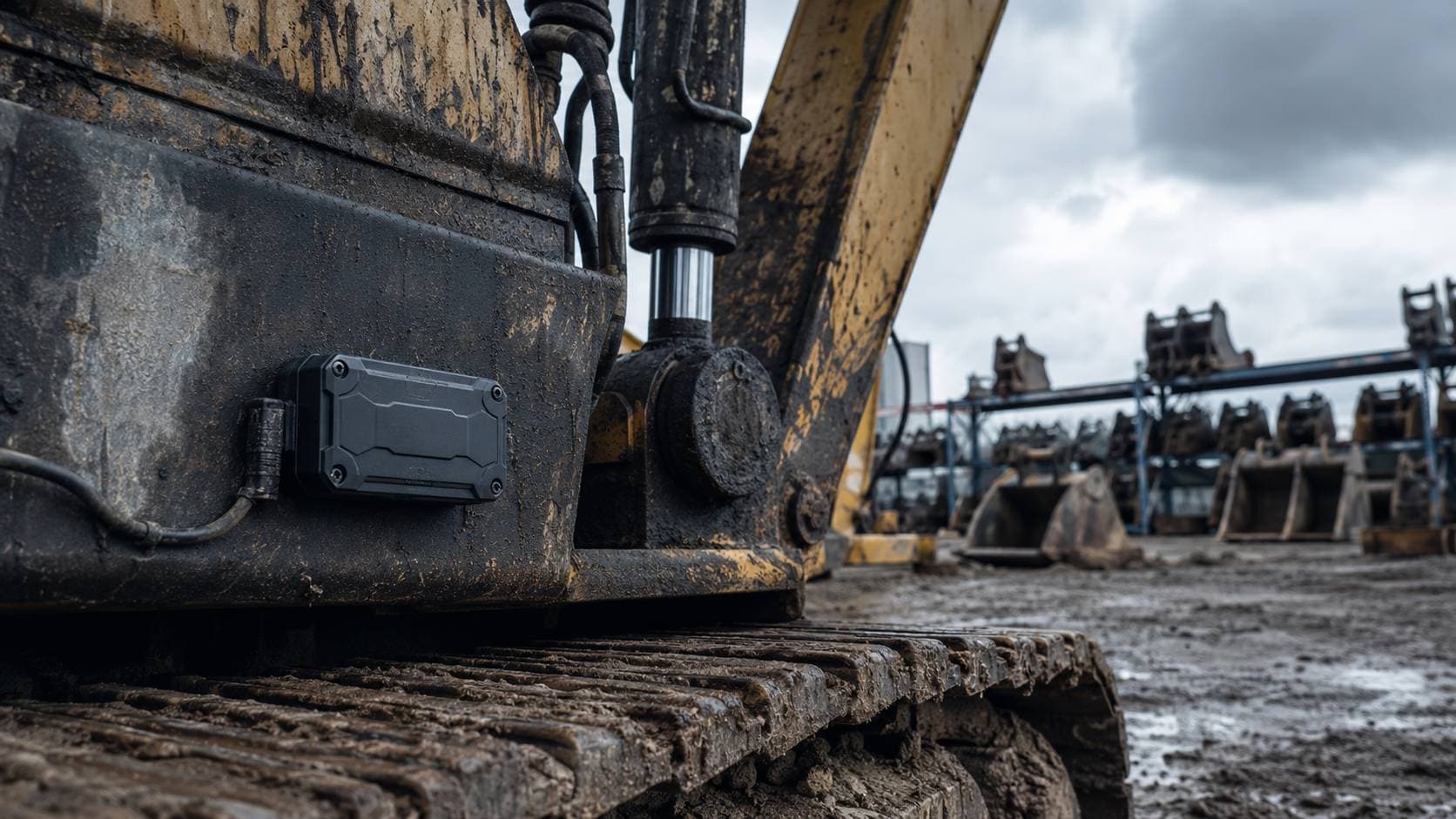
| CAN bus diagnostics | Everything above plus fault codes (DTCs), fuel, detailed engine data | Trigger service from diagnostics, not only hours; spot a fault before the customer calls | Equipment telematics from $18 |
| Factory (OEM) feed | Hours, location and faults the manufacturer already collects | Same alerts on OEM-connected machines with no second device | OEM data integration from $4 |
| Battery GPS | Location, movement, dwell time on unpowered assets | Flag assets that never came back, or left a site | Asset tracking from $10 |
| AI dash camera | Road and driver video, AI event detection | Flag distraction, phone use, fatigue and tailgating on delivery trucks | AI dash cameras $35 |
CAN bus / J1939
The internal network a machine's engine and controllers use to talk to each other. J1939 is the standard protocol on most diesel equipment. A telematics device that reads the CAN bus gets engine hours, fuel data and fault codes directly from the machine rather than inferring them from the ignition wire.
Machines that already report through their manufacturer need their feed pulled into the same platform, not another device; our guide to OEM telematics integration and the AEMP standard explains how that works.
Where AI earns its keep in a rental fleet
1. Utilization exceptions
The most expensive asset in a rental fleet is one that is not earning: on rent but not running, past its return date, or idle in the wrong yard while another branch turns customers away. AI telematics turns engine hours and location into a weekly exception list rather than a quarterly surprise. Start with fleet utilization benchmarks to see what good looks like by category.
2. Maintenance on hours, not the calendar
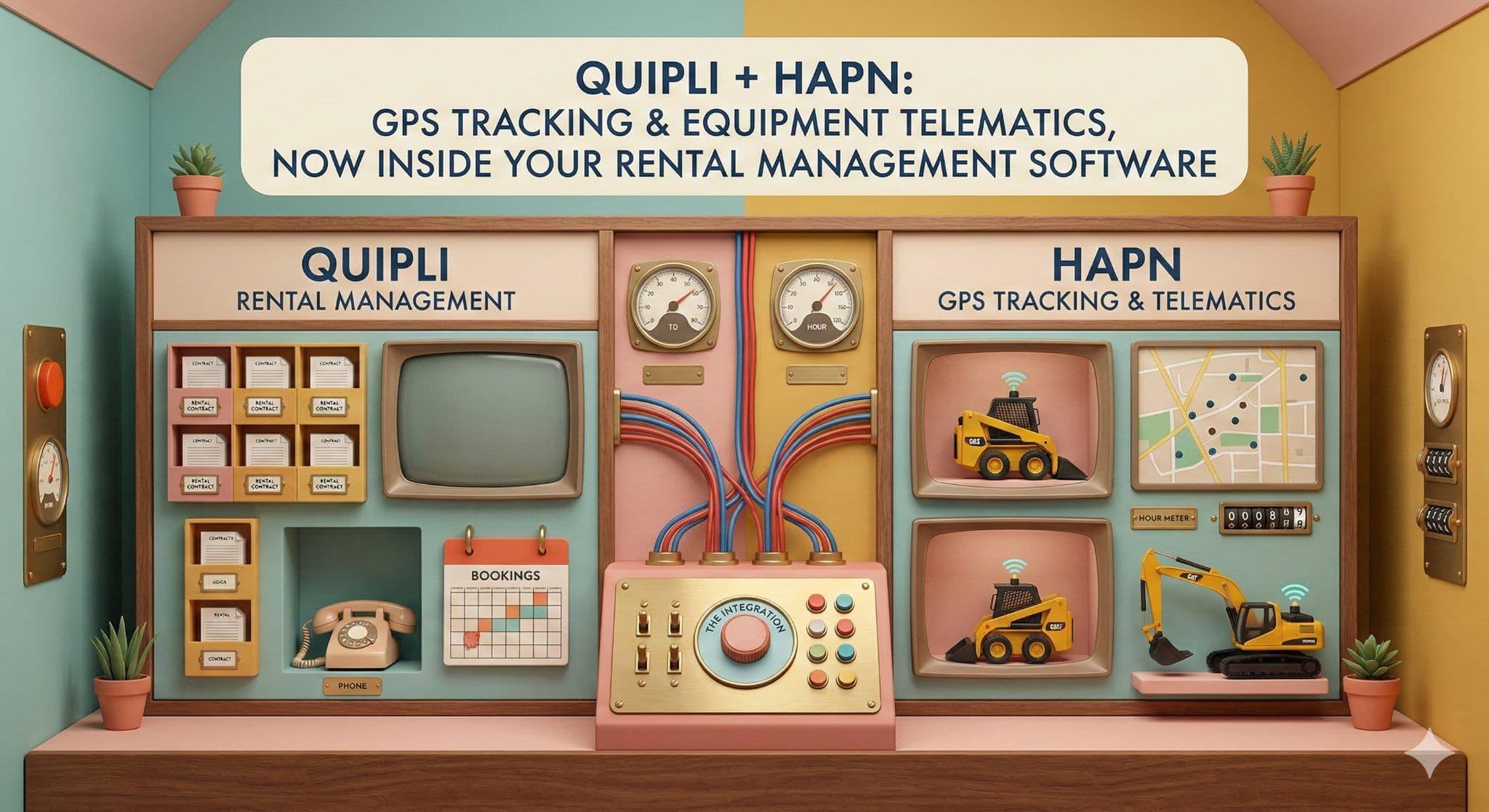
A unit on a six-week rental can blow through a 250-hour service interval before anyone at the yard sees it. With hours read from the machine, service intervals can be set by engine hours, calendar or diagnostic triggers, and the alert fires before the threshold, not after something breaks. Hapn's Point of Rental integration can open the maintenance task in the rental system when hours cross the interval, and the Quipli integration pulls hour meter readings at on-rent, return and inspection. More on the method in engine-hour-based maintenance.
3. Theft and misuse patterns
A machine moving at night, a trailer leaving a geofence it should never leave, a skid steer running on a Sunday. These are simple rules, and they are where most real-world value comes from. A starter interrupt on high-risk units lets you stop the machine, not just watch it go. The numbers are in our post on construction equipment theft.
4. Billing on what the machine ran
Overage billing is where hours become revenue. If a contract allowed 40 hours and the machine ran 62, the invoice should say 62, and a machine-read number is an invoice rather than a negotiation. See telematics-based overage billing.
5. Asking the fleet a question
The newest layer is conversational. Scout, the AI assistant built into the Hapn app, answers questions about the fleet in plain language, so a branch manager can ask about a unit or a category without building a report first. It works on the same data as everything above; it does not invent hours a tracker never collected.
See what AI telematics would flag in your fleet
Tell us your unit mix and which rental system you run. Per-asset pricing, hardware included on 3-year terms.
Where the claims outrun the product
Three claims in AI telematics marketing to press on:
- Precise failure prediction. Hour-based and diagnostic-triggered service is dependable. Forecasting a specific failure weeks out needs rich CAN bus or OEM data and a long history per model. Ask what data the model uses and on which machine classes.
- Blanket fuel or ROI percentages. A fixed savings figure quoted without your fleet mix, rental rates and utilization is a sales line. Ask for the calculation, not the percentage.
- AI that replaces your systems. The rental management system stays the record for contracts, invoicing and service. Telematics is the live layer that keeps it honest. If a vendor cannot show which fields move into your system, and when, the AI will live in a dashboard nobody opens.
For a side-by-side of how eight platforms handle rental software integration, see best GPS tracking for equipment rental companies.
Questions to ask any AI telematics vendor
- Which data layer does each alert need, and which of my assets have it today?
- Do you read the CAN bus on off-road machines, or only power and ignition?
- Can you pull my OEM feeds so I do not install a second device?
- Which fields sync into my rental system, at which step of the rental cycle?
- Is AI detection included in the per-unit price, or a paid add-on?
- Do you bill per asset or per site, and what happens to the bill when I open a yard?
What AI telematics costs
Hapn prices per asset, with the AI features included in each tier rather than sold as add-ons. Equipment tracking with engine hours starts at $13 per asset per month, full equipment telematics with CAN bus data at $18, AI dash cameras at $35, battery asset tracking at $10, and OEM data integration from $4. Hardware is included at no upfront cost on a 3-year agreement. A 1-year agreement is also available, with hardware purchased at cost. Full detail is on the pricing page.
A 160-unit yard with 60 powered machines on engine-hour tracking and 100 trailers, attachments and towables on battery trackers runs 60 × $13 + 100 × $10 = $1,780 a month (illustrative). Most rental and dealer software bills per site, so opening a second yard multiplies the bill; per-asset billing does not. The per-asset vs per-site pricing post works through the multi-yard math, and the equipment rental page shows how Hapn fits each equipment class, from aerial lifts to generators.
About the author
TJ Chasteen is the product manager for Hapn's enterprise platform, including its rental management software integrations with Point of Rental, Quipli, Texada, Alert Rental and others. He works directly with rental operators and dealers on how tracking data should flow into contracts, service and billing. Hapn builds GPS tracking and telematics for equipment rental businesses, multi-yard dealers and equipment financing companies, and publishes per-asset pricing.
Frequently asked questions
What is AI telematics?
AI telematics is telematics data (GPS location, engine hours, fault codes, and sometimes camera video) combined with software that finds the pattern for you. Instead of a fleet manager reading every ping and hour meter, the system flags the exceptions: a unit on rent with no engine hours, a machine past its service interval, after-hours movement, a distracted driver. For an equipment rental company the value is faster decisions on utilization, maintenance, billing and theft.
What is the role of AI in telematics for equipment rental companies?
Its role is to turn per-asset data into a short list of things to act on. In a rental fleet that means surfacing idle on-rent units, units running more hours than the contract allows, machines approaching a service interval, and assets moving when they should not. It also lets staff ask questions in plain language rather than building reports; Hapn's in-app assistant, Scout, answers questions about the fleet this way.
Can AI telematics predict equipment failures?
Partly. The dependable part today is hour-based and diagnostic-triggered maintenance: the system reads engine hours and fault codes from the machine and alerts before a service threshold is crossed. True failure prediction needs rich machine data from the CAN bus or the manufacturer's feed and a long history per model, so treat vendor claims of precise failure forecasts with care and ask what data the model uses.
Do you need new hardware for AI telematics?
Not always. Machines with factory telematics can send hours, location and fault codes through the manufacturer's AEMP feed, so they need a data connection rather than a second device. Powered equipment without it needs a wired tracker for engine hours, or a CAN bus device for full diagnostics, and unpowered assets use battery trackers. AI features can only work on the data the hardware collects.
How much does AI telematics cost for an equipment fleet?
Hapn prices per asset per month: asset and vehicle tracking from $10, equipment tracking with engine hours from $13, full equipment telematics with CAN bus data from $18, AI dash cameras at $35, and OEM data integration from $4. Hardware is included at no upfront cost on a 3-year agreement. A 1-year agreement is also available, with hardware purchased at cost. Because billing is per asset, adding a yard does not add a fee.
Put AI telematics on every asset you rent
Hours, faults, location and alerts on every contract, inside the rental system you already run.
Last Updated: September 28, 2026
Explore Hapn on a live equipment fleet
Click around the real platform — a live mixed fleet with dummy data. No sales call, takes a few minutes.
Get the latest news straight to your inbox.
Share Article
