A pallet tracker or container GPS tracker is a battery-powered device that reports where a pallet or container is over cellular. The right one depends on the job. For one-way freight you ship and don't get back, a disposable tracker goes inside the load and is priced per shipment; Hapn's starts at $40. For pallets, racks and containers you own and reuse, a tracker stays mounted on the asset and is priced per asset per month; Hapn's starts at $10.
This guide helps you pick the right setup, then covers placement, what steel containers do to signal, how to size battery life to ocean transit, and what each option costs.
Key Takeaways
- "Pallet tracking" covers 3 different jobs: one-way freight, returnable assets you own, and inventory inside your warehouse. Only the first two are GPS jobs.
- One-way loads: from $40 per shipment, tracker included. On a $50,000 pallet that is 0.08% of the load's value (illustrative).
- Returnable pallets, racks and containers: per-asset tracking from $10 per month, which only pays on assets worth more than a wooden pallet.
- China to US East Coast ocean freight took about 66 days from cargo-ready date to US port departure in August 2026, per Flexport. Hapn's tracker lasts about 4 months at a 3-hour reporting setting.
- Steel weakens GPS and cellular signal, so run 1 test shipment on a container lane before rolling out.
First, which pallet or container problem do you have?
Search for "pallet tracker" and you get two very different products: tags for pooled pallets that circulate between sites, and trackers that ride along with a valuable shipment. Container trackers split the same way. Picking the wrong type is the most common reason a tracking project disappoints, so start here.
| Your problem | Tracker | Priced |
|---|---|---|
| One-way freight: a pallet or container load you ship and don't get back | Disposable tracker inside the load | Per shipment (Hapn: from $40) |
| Returnable assets: pooled pallets, steel racks, totes, shipping or jobsite storage containers you own | Reusable tracker mounted on the asset | Per asset, per month (Hapn: from $10) |
| Warehouse inventory: which aisle or bay a pallet is in | Barcode, RFID or Bluetooth inventory system | Not a GPS job |
Tracking one-way freight on a pallet
Most freight visibility tells you where the truck is. That works when one truck carries one load from pickup to delivery. It stops working when the freight changes hands: an LTL pallet moves through two cross-docks, a container is transloaded into a domestic trailer, or a load is misdirected after pickup. At that point the truck's position says nothing about your cargo, and only a tracker inside the load keeps reporting.
Definition: Pallet-level tracking
Putting a tracker on or inside an individual pallet so its location is reported independently of the truck, trailer or container it rides in. It matters most for LTL and cross-docked freight, where pallets from many shippers share equipment and can be loaded onto the wrong truck.
Because the tracker isn't coming back, a single-use device avoids the recovery loop: nothing to ship back, recharge or reassign. The full disposable-versus-reusable math is in disposable GPS trackers for shipments. What's specific to pallets:
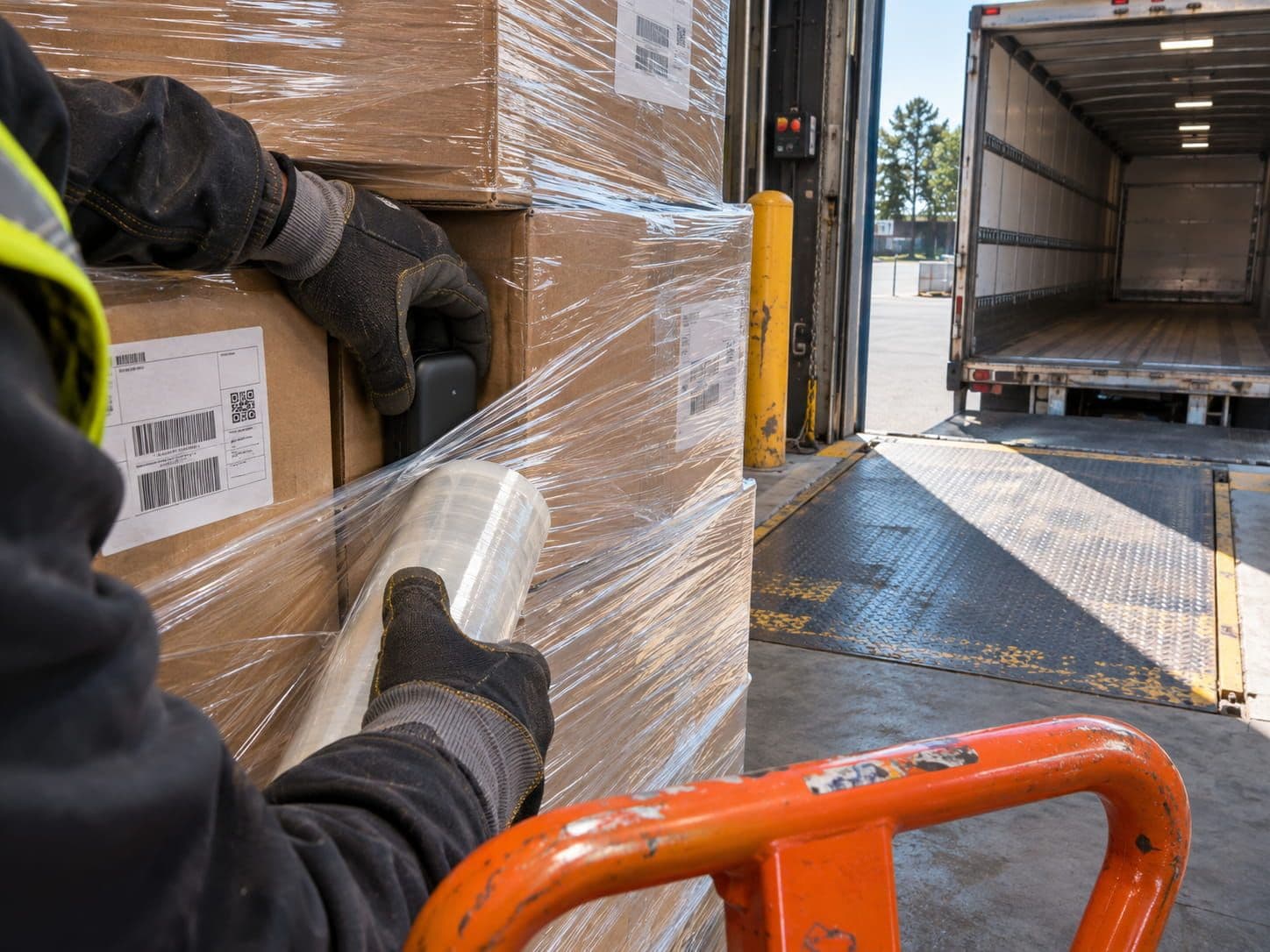
- Put it inside the stretch wrap, not taped to the outside, so a forklift doesn't knock it off and nobody spots and removes it.
- Place it high on the pallet, near an outer face. A tracker buried at the base under metal or dense product struggles to get a fix.
- Track the pallets that matter. On a multi-pallet shipment, put a tracker on the highest-value pallet, or on each pallet that will be split off at a cross-dock.
- Track by value and risk. As an illustrative example, $40 is 0.08% of a $50,000 pallet of electronics but about 2.7% of a $1,500 pallet of paper goods.
In Hapn shipment tracking, each pallet or shipment is a job with an origin, destination and delivery window, plus any reference numbers or a BOL. You set the route and alert rules, and Hapn flags the exceptions: leaving the route, sitting too long at a location, speeding and more. The receiver can follow along on a link without a login, and a date- and time-stamped arrival confirmation closes out the job. If late-delivery claims are your recurring problem, that record is the point; see how to prove on-time delivery.
Tracking freight inside a shipping container
When your cargo rides in someone else's container, the tracker belongs in the load, and it keeps reporting after the freight leaves the box. The catch is the box itself. Metal weakens both GPS reception and cellular transmission, and a poorly placed device, or a container parked deep in a dense yard, can report inconsistently (Ctrack).
Definition: Faraday cage effect
A closed metal enclosure blocks or weakens radio signals passing in and out of it. A sealed steel container behaves like a partial Faraday cage, so a tracker inside gets fewer GPS fixes and fewer chances to send a report than one in a trailer with a composite roof or on an open flatbed.
- Place it near the doors and as high in the load as you can. The area around the door seals is the weakest point in the steel box.
- Expect gaps while the container is sealed and stacked. Judge the tracker on the moments that matter, such as departure, transload and arrival, not on a continuous trail across the ocean.
- Run one test shipment on the lane before committing. Check how often it reported, where the gaps were, and whether the arrival was captured.
Size the battery to the whole trip, not the sailing. Flexport's Ocean Timeliness Indicator, measured from the cargo-ready date at origin to the container's departure from the destination port, put China to US West Coast at 37.6 days and China to US East Coast at 66.1 days for the week to August 10, 2026 (Flexport). Final delivery comes on top of that. Hapn's tracker reports anywhere from every minute while moving to once a day, set per shipment:
| Reporting setting | Approximate battery life | Use it for |
|---|---|---|
| Every 5 minutes moving, hourly stopped | About 1 to 1.5 months | Truckload, LTL, cross-border road and air freight |
| Every 3 hours | About 4 months | Ocean lanes, where even Asia to the US West Coast runs past a month, and freight with long dwell |
The tracker uses a global SIM, works in more than 240 countries, and travels by road, air and ocean. It also has a light sensor.
Track your next pallet or container load for one price
Disposable tracker, software and proof of arrival, from $40 per shipment. Volume pricing available.
Get shipment pricing →Tracking returnable pallets and containers you own
The other "pallet tracker" problem is assets that circulate: pooled pallets, steel racks, totes and reusable transport frames that travel to customers and are supposed to come back, plus shipping containers and jobsite storage containers you own. Here the tracker stays on the asset across many trips, so you want a long-life device mounted on the asset and a per-asset plan, not a per-shipment tracker.
Start with the economics. A standard wooden pallet isn't worth a monthly tracking fee. Higher-value returnables often are, especially when units sit at customer sites or go missing. A simple test: if replacing one lost unit costs more than a year of tracking it, track it. At Hapn's $10 per asset per month, that line is about $120 a unit.
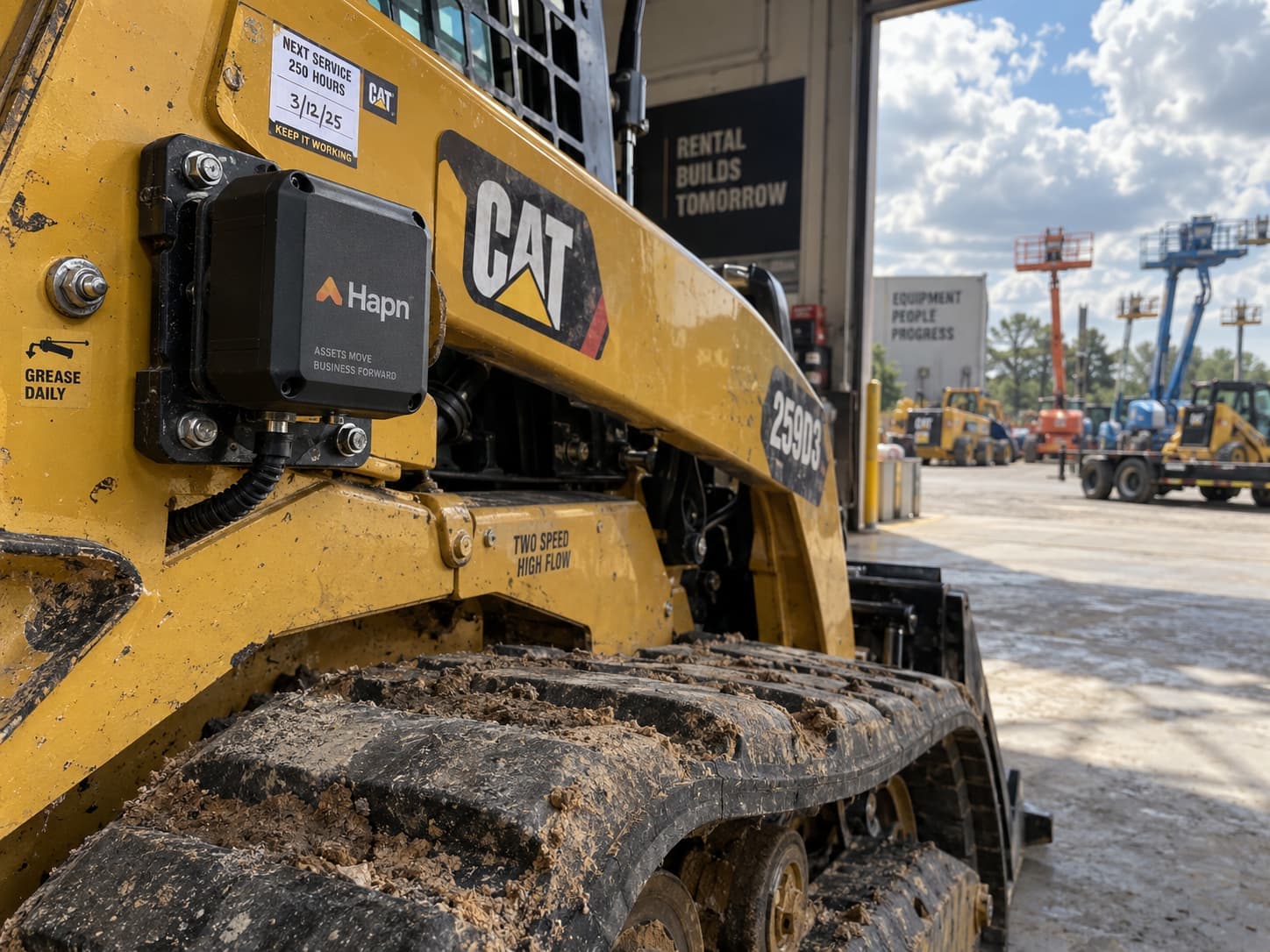
Mount it on the asset, protected. For a container you own, fix the tracker to the container where it is shielded from impact and has the clearest path to the sky, rather than loose inside. For racks and frames, mount it on the frame where forklifts and stacking won't hit it.
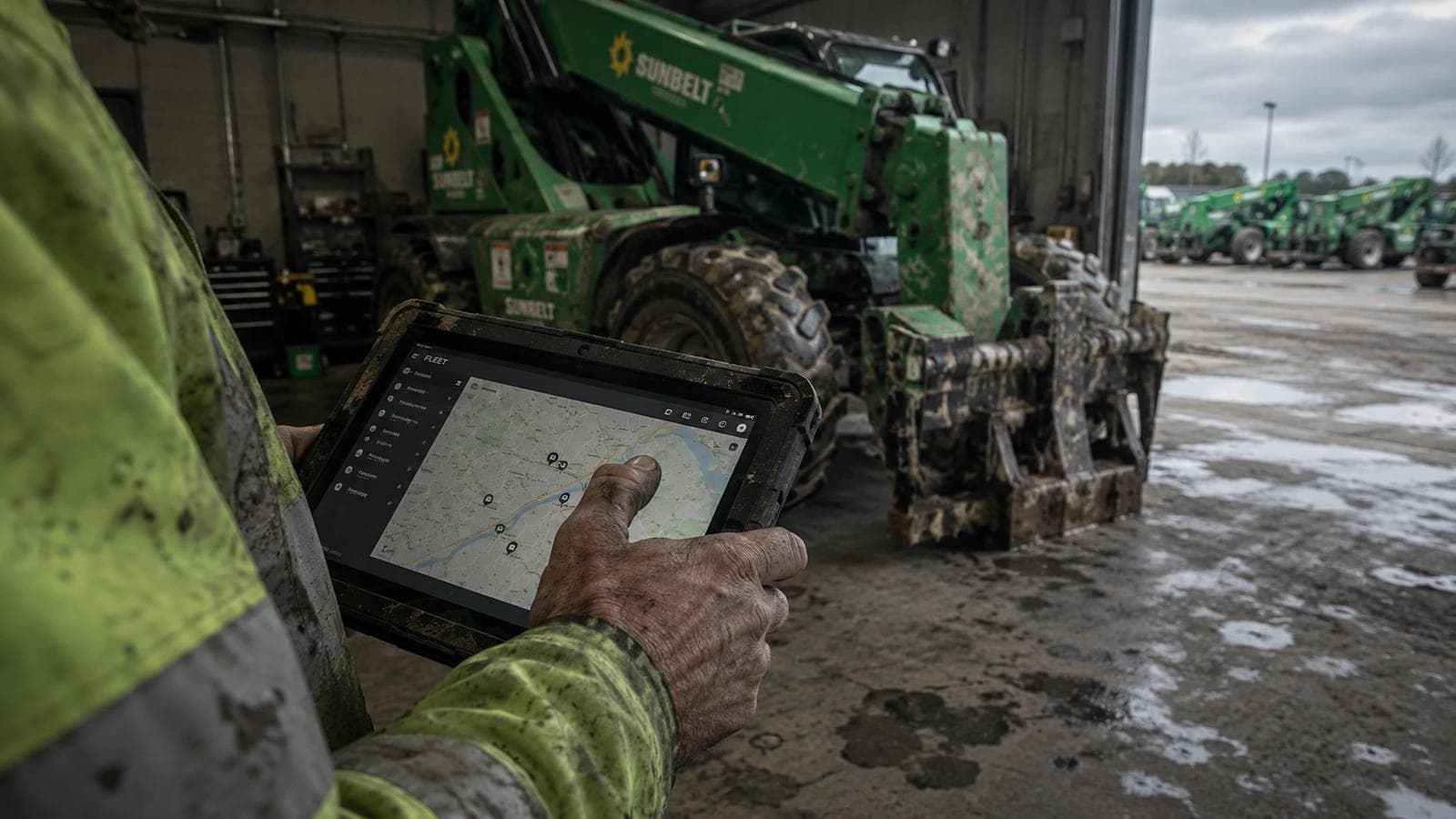
Use the alerts that match how assets go missing. Set a geofence around your yard or a customer site and get alerted when an asset leaves it. Then review which units haven't moved in weeks; those are usually sitting forgotten at a customer. Hapn's asset tracking shows each unit's location and movement history alongside the rest of your trackers in one app.
And if the question is which aisle a pallet sits in inside your own warehouse, that is a job for barcode, RFID or Bluetooth inventory systems, not GPS.
Before you buy: five questions
- Which of the three jobs is it? One-way freight, returnable assets, or warehouse inventory. Mixing them up is the costliest mistake.
- How long is the longest trip, door to door? Pick the reporting setting that covers it with margin.
- What do you need to prove, and to whom? Arrival time for claims, route compliance for high-value loads, or live ETAs for the receiver.
- Do you need condition data? If temperature or humidity records are required, as with pharma or cold chain, you need a condition-monitoring tracker. Our Tive alternatives guide covers when that applies.
- How does it perform on your lane? Run a test, especially in containers, before rolling out.
Theft is the other reason to track below the truck. CargoNet estimated nearly $725 million in cargo theft losses in 2025, up 60% from 2024 (CCJ, reporting CargoNet data). A tracker in the load with a route-deviation alert is what catches a pallet or container misdirected after pickup; our cargo theft prevention playbook covers the other controls.
For how carriers, brokers and 3PLs use shipment tracking alongside the systems they already run, see Hapn for freight and logistics, or read how GLOVIS America works with Hapn. Data can also flow into your own systems through Hapn's API.
About the author
TJ Chasteen is a Product Manager at Hapn, where he works with carriers, logistics teams and equipment operators on tracking, alerts and proof-of-delivery workflows.
Frequently asked questions
What is a pallet tracker?
A pallet tracker is a device on or inside a pallet that reports its location. GPS pallet trackers report over cellular wherever the pallet goes, which suits freight in transit and returnable pallets that leave your sites. Barcode, RFID and Bluetooth tags suit tracking pallets inside a warehouse.
Do GPS trackers work inside shipping containers?
They can, but steel weakens GPS and cellular signal, so reports may be less frequent while the container is sealed or stacked. Place the tracker near the doors and high in the load, and run a test shipment on the lane to see how often it reports before rolling out.
Should a container tracker go inside or outside the container?
It depends on what you are tracking. To follow your cargo in someone else's container, the tracker goes inside the load, near the doors, so it stays with the freight after unloading. To track a container you own across many trips, mount a reusable tracker on the container itself, where it is protected and has the clearest signal path.
How long does a container tracker battery need to last?
Long enough for the full door-to-door trip plus margin. Flexport measured about 38 days from cargo-ready date to US port departure for China to the US West Coast, and about 66 days for the East Coast, in August 2026. On ocean lanes, a 3-hour reporting setting stretches Hapn's shipment tracker to about 4 months.
How much does it cost to track a pallet or container?
With Hapn, a one-way pallet or container load costs one price per shipment, from $40, covering the disposable tracker and the software for that trip. Returnable pallets, racks and containers you own are tracked per asset, from $10 per month. Volume pricing is available for both.
Know where every pallet and container is
Tell us whether you are tracking shipments or assets you own, and we'll price it, usually within one business day.
Get Hapn pricing →Last Updated: November 20, 2026
Explore Hapn on a live equipment fleet
Click around the real platform — a live mixed fleet with dummy data. No sales call, takes a few minutes.

Get the latest news straight to your inbox.
Share Article
