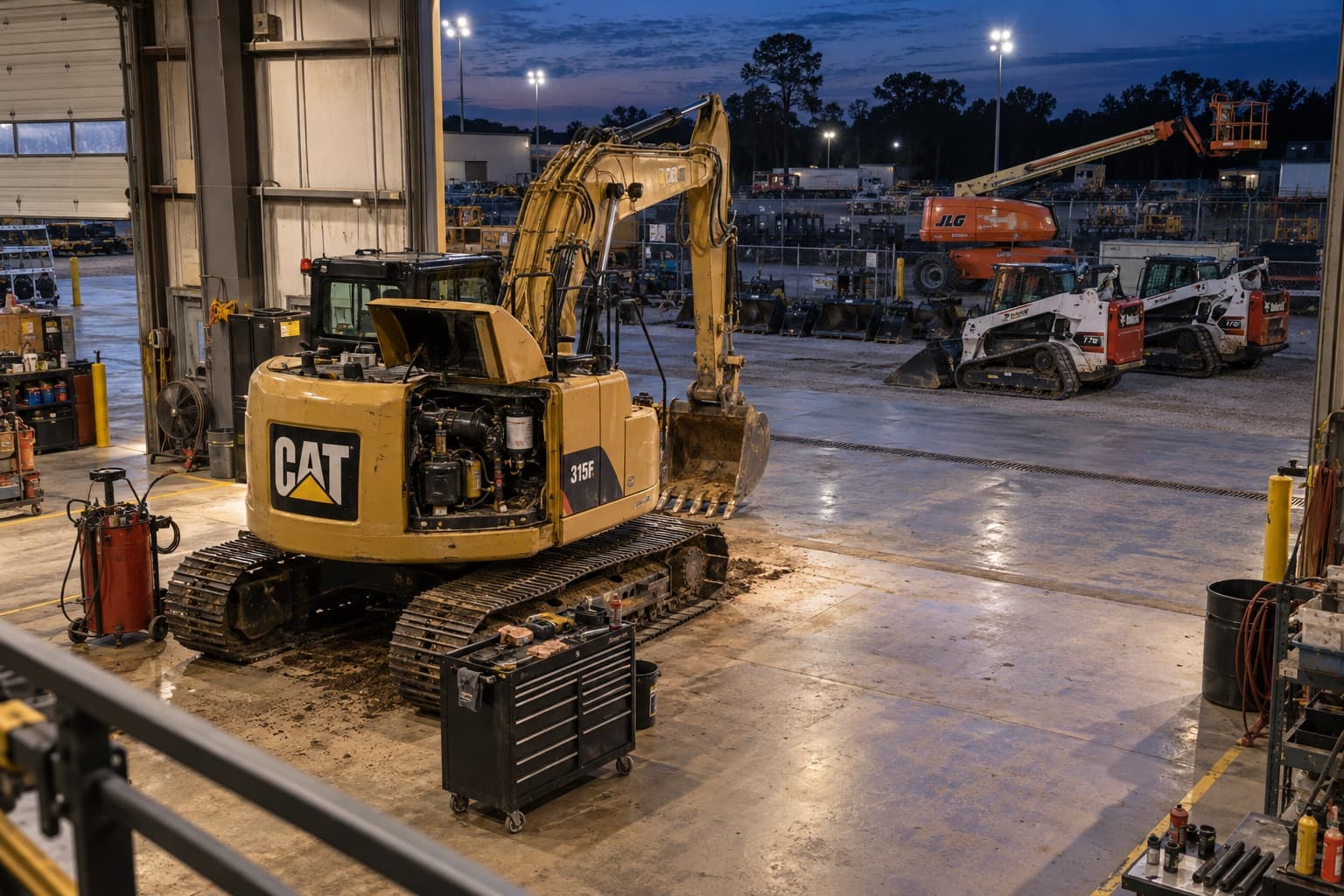
A heavy equipment maintenance schedule lists every service each machine needs and the point it comes due: daily checks by the operator, then larger services at engine-hour intervals set by the manufacturer, commonly in steps such as 250, 500, 1,000 and 2,000 hours. The maintenance log is the record that proves each service happened. For a rental fleet, add two checks most owner-operator schedules skip: a pre-delivery inspection before every dispatch and a check-in inspection at every return. Below is a schedule template, a daily inspection checklist and a maintenance log template you can copy into a spreadsheet today, plus what changes when the machines are out on rent.
Key Takeaways
- Write the schedule in engine hours for anything with an engine, in miles for road vehicles, and in days only for assets with no meter or for annual inspections.
- At the 176-hour standard monthly rental basis, a 250-hour service comes due about every 6 weeks of steady rental, usually while the unit is on a customer's site.
- A useful maintenance log has 10 columns: date, asset ID, hours at service, service level, work done, parts, cost, who did it, next due, and sign-off.
- Rental fleets need 2 extra inspections per contract: pre-delivery and check-in. They catch damage while you still know which customer had the machine.
- A spreadsheet schedule is only as current as the last meter reading. Hapn reads hours from the machine on its $13 and $18 tiers and generates the work orders itself.
What goes into a heavy equipment maintenance schedule
Every schedule answers the same four questions for each machine: what service is due, at what point, who does it, and how you know it was done. The first two come from the operator's manual. Manufacturers write powered-equipment service as a ladder of engine-hour intervals, where each larger service includes the tasks of the smaller ones. The last two are yours to decide, and they are where most schedules break down.
Service interval
The number of engine hours, miles or days between two services of the same level. "Every 250 hours" means the next service is due 250 hours after the last one was done, not at fixed points on the meter.
Check-in inspection
The inspection a rental yard does when a unit comes back off rent: hour meter, fuel, damage, missing attachments and any service now due. It closes out the contract and decides whether the machine goes back on the ready line or into the shop.
Heavy equipment maintenance schedule template
This template shows the structure most fleets use. The intervals and tasks are illustrative. Replace each one with what the manufacturer specifies for that make and model, and tighten them where your own failure history says to.
| Level | When | Typical tasks (check the manual) | Who |
|---|---|---|---|
| Daily | Start of every shift | Walkaround, fluid levels, leaks, tracks or tires, lights and alarms, controls, daily grease points | Operator |
| Pre-delivery | Before every dispatch | Daily checks plus hour meter, fuel, attachments, photos, confirm no service falls due mid-rental | Yard / shop |
| Check-in | Every return | Hour meter, fuel, damage and photos, attachments, clean, flag any service now due | Yard / shop |
| Level 1 | About every 250 hours | Commonly engine oil and filter, full grease, air filter check, belts, battery, hose inspection | Shop or field tech |
| Level 2 | About every 500 hours | Level 1 plus fuel filters, coolant test, undercarriage or tire wear check, fluid sampling where used | Shop |
| Level 3 | About every 1,000 hours | Level 2 plus hydraulic filters and drivetrain oils as specified | Shop |
| Level 4 | About every 2,000 hours | Level 3 plus major fluid changes and a full inspection | Shop or dealer |
| Annual | Every 12 months | Inspections required by date regardless of hours, such as periodic inspections on aerial lifts | Qualified inspector |
Two rules keep the template honest. Hours win over the calendar for anything with an engine, because wear follows runtime; we lay out that case in engine hour-based maintenance, and when miles make more sense in engine hours vs odometer. And date-based items stay on the schedule even for machines that barely ran, since some inspections are owed by date, not by use. The compliance side of those inspections is covered in our OSHA compliance checklist for heavy-equipment rentals.
Daily heavy equipment inspection checklist
The daily check is the cheapest maintenance you will ever do, and it is the one that catches a leaking hose before it becomes a hydraulic pump. Keep it short enough that operators finish it every shift:
- Walk around the machine for leaks, damage, loose or missing parts, and anything caught in tracks or tires.
- Check fluid levels: engine oil, hydraulic oil, coolant and fuel.
- Tracks or tires: tension, wear, cuts and inflation.
- Attachments and pins: secure, greased where the manual calls for daily grease, no cracked welds.
- Lights, horn and backup alarm working.
- Seat belt, ROPS and steps intact; cab glass clear.
- Start up and test the controls, brakes and any safety interlocks; watch the gauges and warning lights.
- Record the hour meter and sign the sheet. Anything that fails gets tagged out and reported before the machine works.
For rental units, the customer's operator does this check on site. Your equipment rental agreement is where you require it, along with access to the machine for service on long rentals.
Equipment maintenance log template
The maintenance log is the history of every service on every machine. It answers the warranty claim, the resale buyer, the auditor and your own keep-or-sell question. Set up one row per service with these 10 columns:
| Date | Asset ID | Hours at service | Service level | Work done | Parts | Cost | Done by | Next due | Sign-off |
|---|---|---|---|---|---|---|---|---|---|
| 03/14 | SSL-014 | 1,250 | Level 1 | Oil and filter, full grease, air filter checked | Oil filter, 3 gal oil | $142 | Shop (R.M.) | 1,500 h | R.M. |
The example row is illustrative. Three habits make the log worth keeping. Record hours at service, not just the date, so the next interval starts from the right place. Write "next due" in the same unit as the interval. And log cost every time: maintenance cost per asset, set against what the machine earns, is half of the decision on when to sell it. Our fleet utilization benchmarks cover the earning side.
Let the machines fill in the hours
Hapn reads engine hours from the tracker and turns your schedule into work orders. Maintenance is included with tracking.
What changes when the fleet is on rent
A contractor's own loader comes back to the same yard most nights, so the hour meter is easy to read. A rental unit leaves on a contract and the shop may not see it for a month. That changes the schedule in three ways.
- Service comes due off-site. On a standard monthly rental the time basis is about 176 hours a month (the industry basis described by EquipmentWatch). At that pace a 250-hour interval comes due about every 6 weeks and a 500-hour interval about every 12 (illustrative math: 250 ÷ 176 is about 1.4 months). A unit that left with 200 hours of margin can pass its service before the contract ends.
- Usage swings by contract. One machine idles on a slow site; the next runs double shifts. A calendar schedule over-services the first and under-services the second.
- The return is your one guaranteed look. The check-in inspection is when you record hours, photograph damage and decide whether the unit is ready to rent. Done well, it also ties damage to the right contract; see rental equipment damage tracking.
The pre-delivery inspection is where you act on the first point: before a unit goes out, compare its hours to the next service and the expected length of the rental. If the service will fall due on site, do it now or plan a field visit.
From spreadsheet to automatic schedule
A spreadsheet schedule works for a handful of machines in one yard. It stops working when hours have to be collected from machines spread across job sites, because the schedule is only as current as the last reading someone typed in. That is the gap maintenance software fills; we compare the options in equipment maintenance software for rental fleets.
In Hapn, the same schedule and log run inside the tracking platform:
- Recurring schedules by engine hours, miles or days, starting from the reading at the last service. One schedule covers a whole category, so a new machine inherits it.
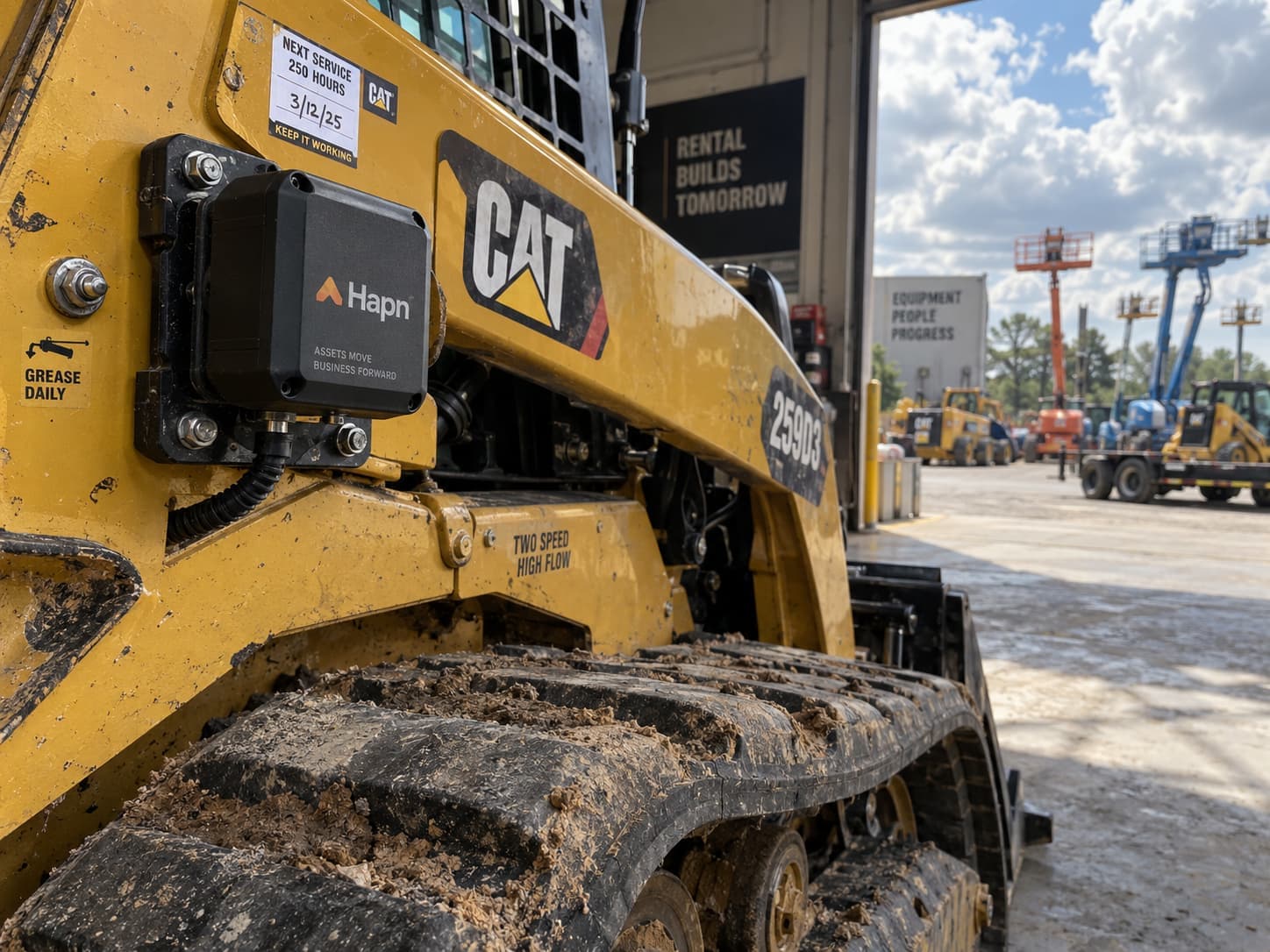
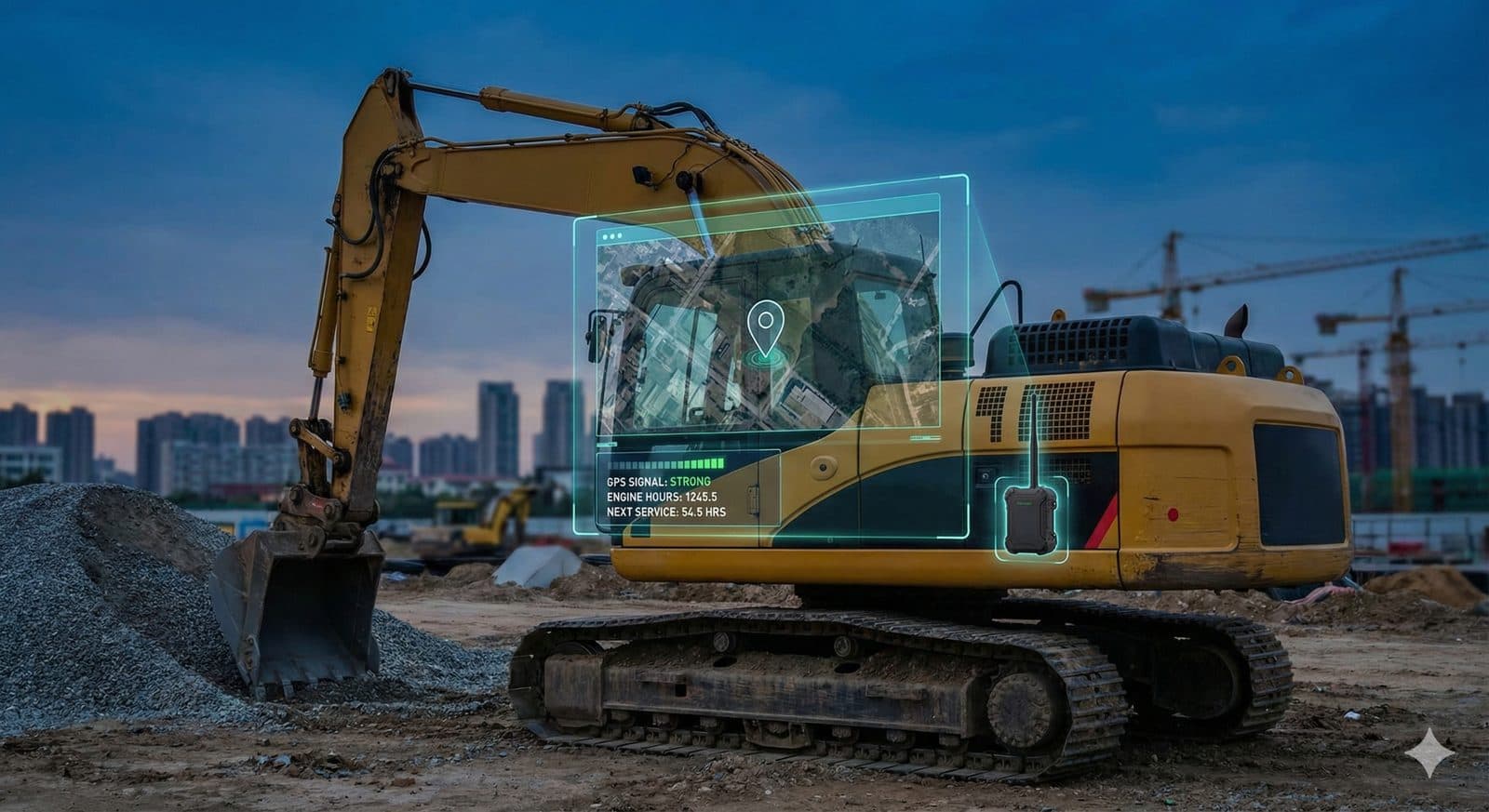
- Hours from the tracker. Engine hours come from the device on the machine, so the schedule advances while the unit is on rent. Engine-hour schedules run on the $13 equipment tracking tier and the $18 telematics tier.
- Work orders to staff or any email address, so an outside shop or field tech gets the job without a Hapn login, with reminders and past-due alerts.
- The log keeps itself. Cost is recorded when a work order is completed, and work orders and schedules export to CSV.
If your rental management system already runs shop work orders, keep them there and feed it live hours instead; Hapn does this for Point of Rental and Quipli. Setup steps are in the help center article on scheduling maintenance by mileage or engine hours.
Tracking is priced per asset, not per yard: $10 per month for asset and vehicle tracking, $13 for equipment tracking with engine hours and $18 for full equipment telematics. Hardware is included at no upfront cost on a 3-year agreement, or purchased at cost on a 1-year agreement. Current rates are on the pricing page, and the full rental platform is on Hapn for equipment rental.
About the author
TJ Chasteen is the product manager for Hapn's enterprise platform, including maintenance and its rental management software integrations. He works directly with rental operators and dealers on how tracking data should flow into service, contracts and billing. Hapn builds GPS tracking and telematics for equipment rental businesses, multi-yard dealers and equipment financing companies, and publishes per-asset pricing.
Frequently asked questions
How often should heavy equipment be serviced?
Follow the manufacturer's intervals for each model, which are usually written in engine hours, commonly in steps such as 250, 500, 1,000 and 2,000 hours, with each larger service including the smaller ones. Add a daily operator check every shift and any inspections that are due by date regardless of hours. Tighten intervals for machines that run in severe conditions or show repeat failures.
What should an equipment maintenance log include?
One row per service with the date, asset ID, engine hours at service, service level, work performed, parts used, cost, who did the work, when the next service is due, and a sign-off. Recording hours at service is the most important field, because the next interval is counted from it.
What is on a daily heavy equipment inspection checklist?
A walkaround for leaks and damage, fluid levels, tracks or tires, attachments and pins, lights and backup alarm, seat belt and ROPS, a start-up test of controls and brakes, and the hour meter reading with a signature. Anything that fails is tagged out and reported before the machine works.
How do you keep a maintenance schedule current on rented equipment?
Check the next service against the expected rental length at the pre-delivery inspection, record hours at every check-in, and use tracking that reports engine hours from the machine so service due points are visible while the unit is on rent. Without live hours, a rental unit can pass its service interval on a customer's site without anyone knowing.
Can Hapn keep the maintenance schedule and log automatically?
Yes. Hapn includes maintenance with tracking: recurring schedules by engine hours, miles or days, work orders assigned to staff or an outside shop by email, reminders and past-due alerts, cost recorded at completion and CSV export. Engine hours come from the tracker on the $13 equipment tracking and $18 telematics tiers.
Never miss a service on a rented machine
Hour-based schedules, work orders and a maintenance log that fills itself in, included with Hapn tracking.
Last Updated: October 9, 2026
Explore Hapn on a live equipment fleet
Click around the real platform — a live mixed fleet with dummy data. No sales call, takes a few minutes.
Get the latest news straight to your inbox.
Share Article
