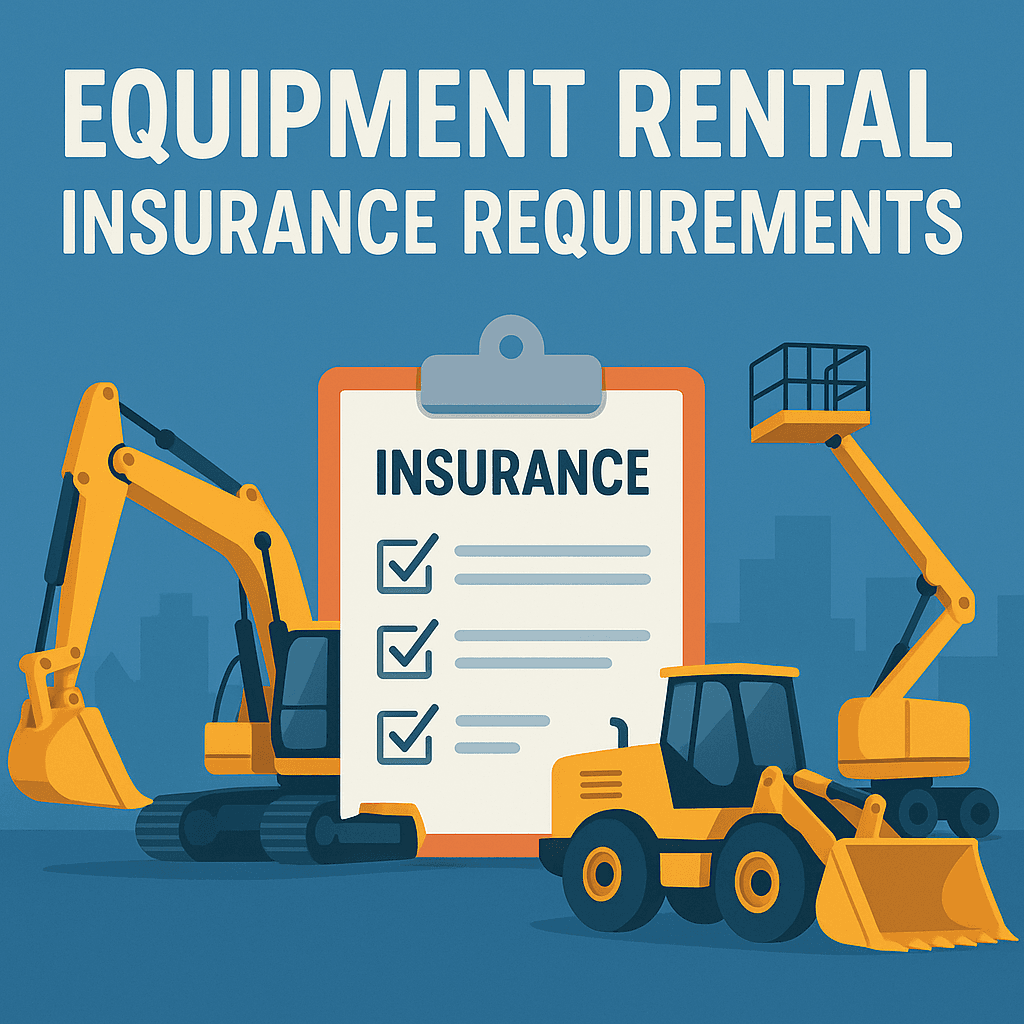
Equipment rental insurance for an operator is a different problem than insurance for a renter. If you own the fleet, you carry inland marine coverage on equipment that spends its life on other people's job sites, general liability for your yard and your people, and you spend a meaningful part of every week verifying that your customers' certificates are real. This guide is written for that side of the counter: what your rental business carries, what you require from renters, and where your tracking data does the work when a claim happens.
Key Takeaways
- $1,000,000 per occurrence is the industry-standard liability limit rental operators require from renters, with the rental company named as additional insured.
- A damage waiver typically runs 10–15% of the rental rate — real revenue, but it is not insurance and it does not cover third-party liability.
- Construction equipment theft costs the industry over $1 billion a year, and fewer than 25% of stolen machines are recovered (National Insurance Crime Bureau).
- Most rental-operator claims fail on evidence, not coverage — nobody can prove when the damage happened or who had the machine.
- Tracking runs $10–$18 per asset per month depending on tier, which is the scale most operators should compare against a single uncovered loss.
The coverage your rental business carries
Your exposure is structurally different from a contractor's. Your assets are almost never in your possession, they are operated by people you have never trained, and they move between sites without telling you.
Inland Marine
Despite the name, inland marine covers movable property away from your premises. For a rental operation it is the core policy — the one that covers a machine sitting on a customer's site rather than in your yard.
Inland marine / rental equipment floater. Covers your fleet wherever it is: on a customer site, in transit, staged at a branch. Written on a scheduled basis for high-value units or a blanket limit for the rest. This is the policy that responds when a renter drops a machine off a trailer.
Commercial general liability. Covers your operation — your yard, your delivery drivers, your service techs — for third-party injury and property damage. It does not cover the renter's operation of the machine; that is what you require from them.
Commercial auto. Your delivery trucks, trailers and any road-legal units in the fleet. Underrated exposure: most rental operators put more miles on public roads than they think once you count the delivery fleet.
Excess / umbrella liability. Sits above the primary limits. Operators with cranes, aerial work platforms or anything that lifts people usually carry it, because the severity tail on those categories is long.
Commercial crime. Covers employee theft and certain fraud schemes — including the fraudulent-rental pattern where a machine is rented on falsified credentials and never comes back.
Where these policies sit relative to each other matters more than any single limit. A loss on a customer site can plausibly land on your inland marine, on the renter's policy, or on their damage waiver, and which one pays is usually settled by documentation rather than by argument.
What to require from every renter
Certificate of Insurance (COI)
A one-page document from the renter's insurer confirming coverage is in force. It is evidence of a policy, not the policy itself — a COI can be accurate the day it is issued and worthless a week later if the policy lapses.
The standard package rental operators require:
- General liability at $1,000,000 per occurrence, with your company named as additional insured. Some operators accept $500,000 for light equipment; $1M is the norm for anything heavy.
- Physical damage coverage at full replacement value, with your company named as loss payee — so the insurer pays you directly rather than paying your customer.
- Auto liability where the unit is road-legal or the renter is hauling it themselves.
- Workers' compensation, where the renter has employees operating the machine.
- Certificate dated to cover the full rental period, including extensions. This is the one that quietly fails: the rental rolls over, the certificate does not.
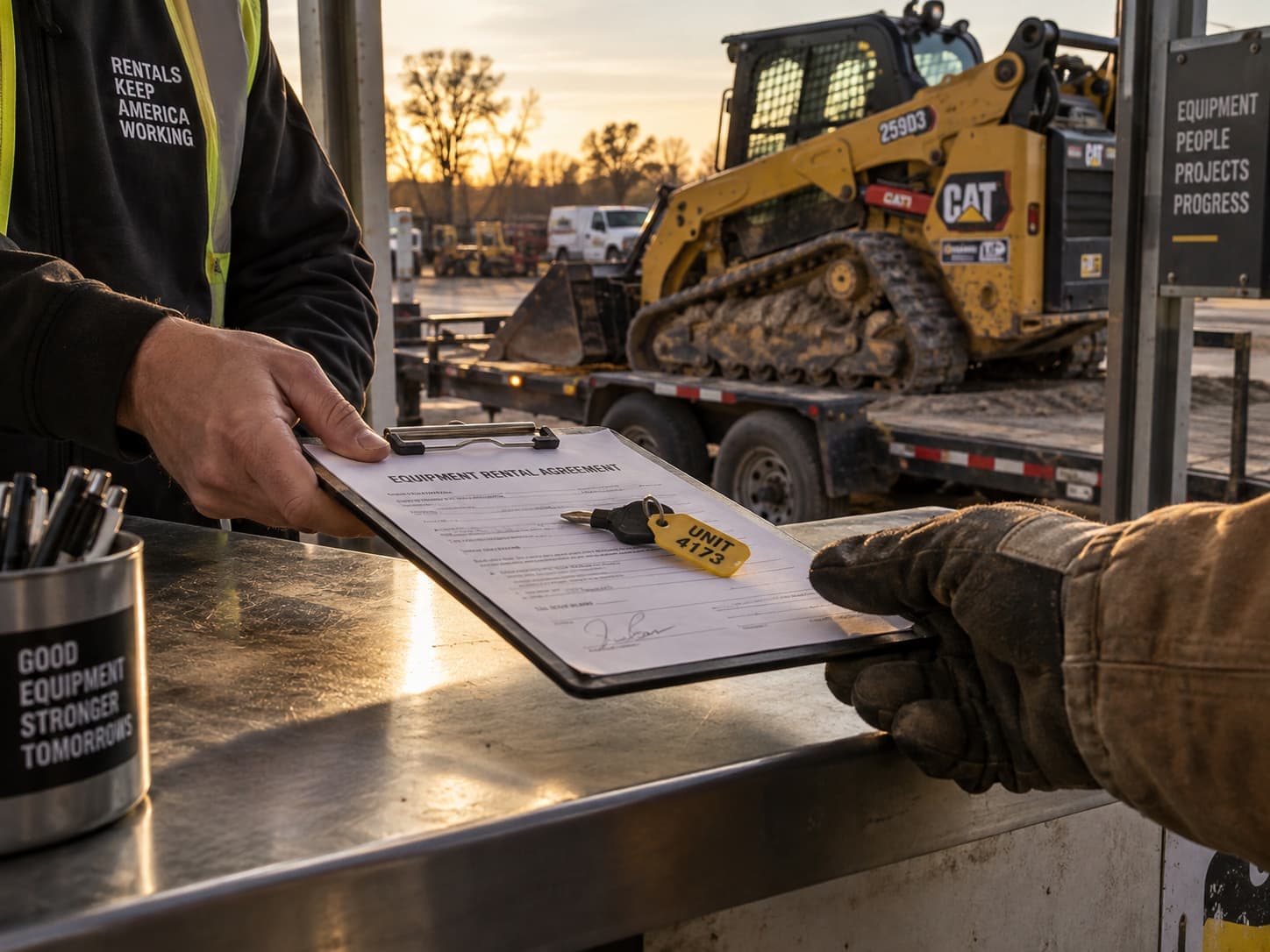
The operational problem is not knowing what to ask for — it is enforcement at the counter, on a Friday afternoon, when a good customer wants a machine now and the certificate is stale. Every rental business has a version of that conversation, and the ones that hold the line are the ones with a documented process rather than a policy nobody applies.
Damage waivers: revenue, and its limits
A damage waiver is not insurance. It is a contractual agreement that you will waive certain recovery rights against the renter, sold as a percentage of the rental rate — commonly 10–15%. For many operators it is a meaningful margin line.
Two things worth being precise about with customers, because misunderstanding them is where disputes start:
- A waiver covers your equipment. It does not cover third-party injury or property damage caused by the renter's operation. If a machine tips onto a car, the waiver is irrelevant.
- Waivers almost always carve out misuse, neglect, unauthorized operation, operation outside the agreed site, and theft where the renter left the machine unsecured. Those carve-outs are the whole game — and every one of them is an evidentiary question.
Where tracking data changes the claim
Most rental-operator claims that go badly do not fail because the coverage was wrong. They fail because nobody can establish what happened. The renter says the machine was already damaged. You believe it was not. Neither of you has a record.
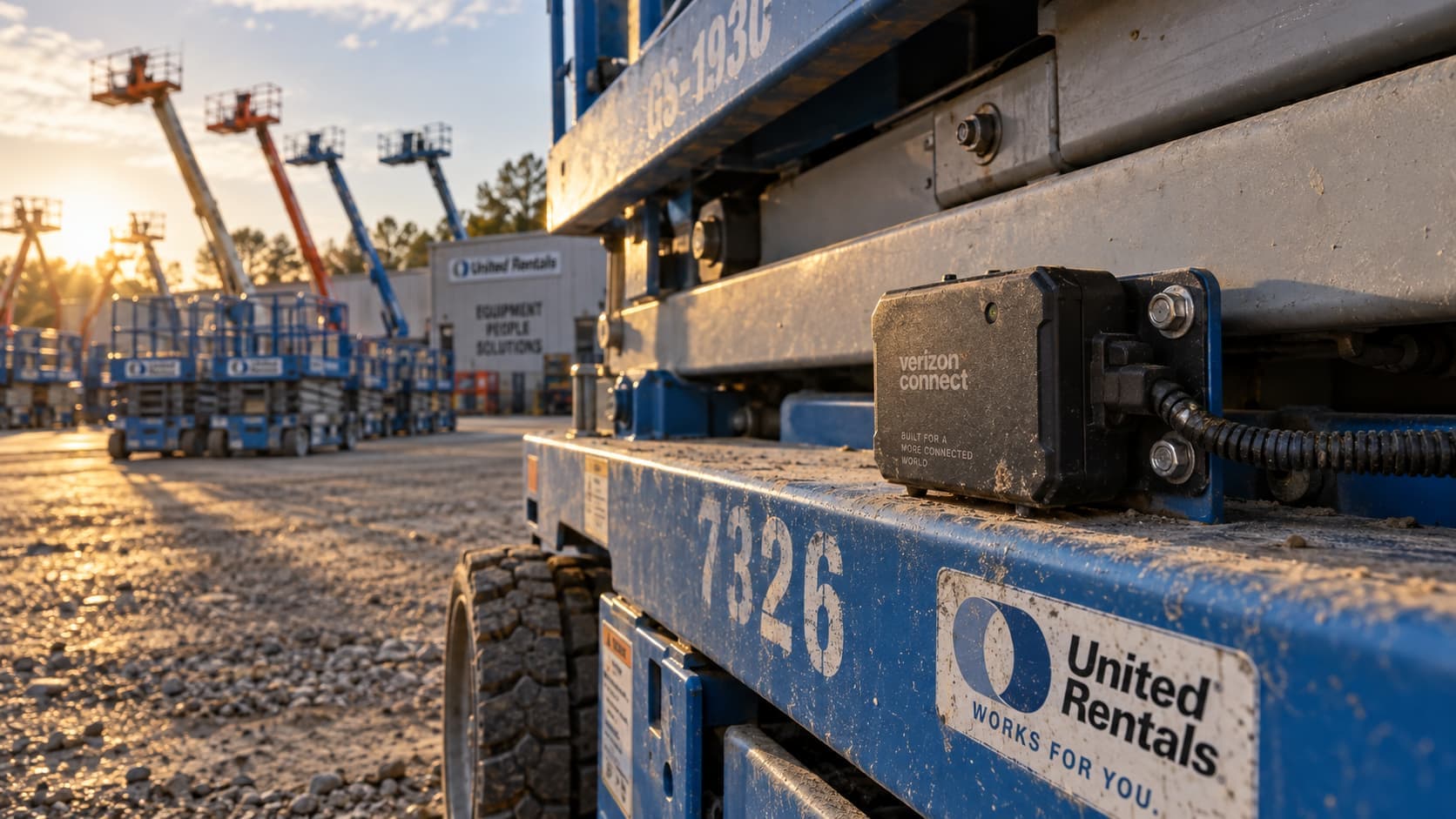
Telematics does not detect a dent. What it produces is a timestamped record that turns a disagreement into a documented fact:
- Theft and recovery. With over $1 billion a year in construction equipment theft and under a quarter of machines recovered, location history is often the difference between a recovery and a total-loss claim — and a recovery is better than a paid claim for your loss history.
- Proving abuse. Engine hours beyond the contracted period, after-hours running, and movement off the agreed site are exactly the carve-outs your waiver relies on. We cover the mechanics of building that record in rental equipment damage tracking.
- Establishing custody. Geofence entry and exit timestamps show when a unit arrived and left, which resolves the "it was already like that" dispute without anyone's word against anyone else's.
- Verifying the fleet. Underwriters price what you can substantiate. An accurate schedule of what you own, where it is and what condition it is in is worth having before renewal — talk to your broker about whether documented tracking affects your program, because credits vary by carrier and none of them are automatic.
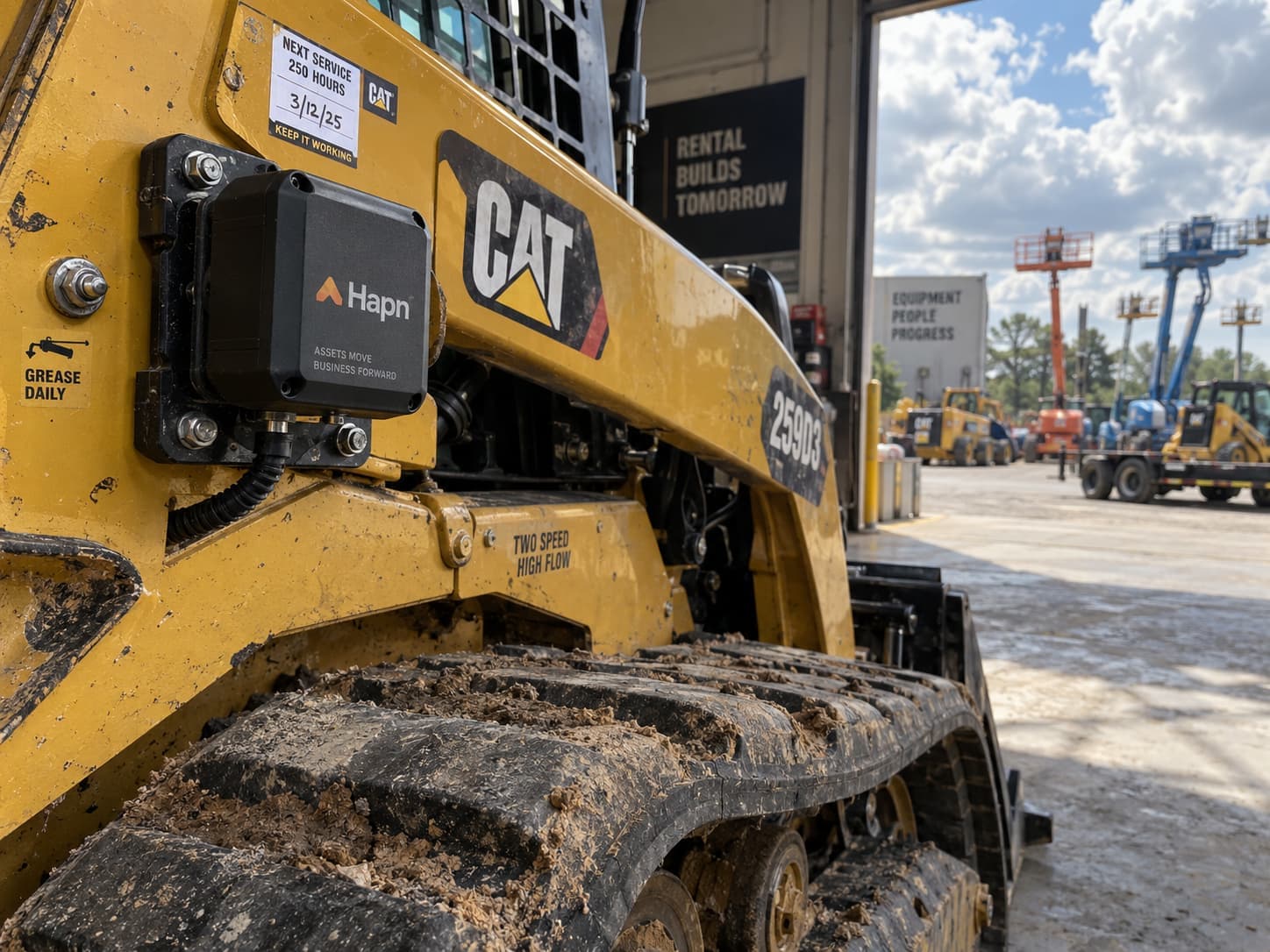
Assets that sit indoors or in covered yards — attachments, tooling, smaller units in a service bay — go dark on GPS alone. Hapn Zones uses BLE to keep those visible without a WiFi build-out, which matters when the thing you need to prove is that a unit never left your yard.
Know where every unit is before the claim, not after
Per-asset pricing, volume discounts, and a quote back in about a day.
Get Hapn pricing →Running the numbers on a single loss
Illustrative worked example — for shape, not a quoted figure. Take a yard of 60 units. Tracking at the $10 asset tier for unpowered items and the $13 equipment tier for powered ones lands roughly in the $700–$800 a month range for the yard. One mid-size skid steer written off and not recovered, at replacement value, will exceed a full year of that. That is the comparison worth running — not tracking against nothing, but tracking against your deductible and your loss history.
Hapn bills per asset. Most rental and dealer software — Quipli, Point of Rental, Renterra — bills per site, which means opening a second yard multiplies the bill. A per-asset line does not care how many yards you run, which is the economics that matter once you are past one location. If you are working through the wider cost picture, the total cost of ownership breakdown for equipment rental covers the rest of the line items, and the equipment rental platform overview shows how the tiers map to a mixed yard.
For a look at how this plays out on a distributed, financed installed base, C3 Rentals is the closest published example.
A practical renewal checklist
- Reconcile your scheduled equipment list against what you actually own — most operators find units that were sold or written off still on the schedule.
- Confirm inland marine limits still reflect replacement cost, not the price you paid.
- Audit a sample of active COIs for lapsed dates and missing additional-insured wording.
- Pull your loss runs and separate theft from damage — they argue for different fixes.
- Check that your rental agreement's waiver carve-outs match what you can actually evidence. A carve-out you cannot prove is not a carve-out. OSHA compliance for heavy-equipment rentals covers the adjacent documentation you likely already keep.
Written by the Hapn Team
Hapn is a GPS equipment and asset tracking platform for equipment rental businesses, multi-yard dealers and equipment financing companies — per-asset pricing, GPS and BLE coverage, and an open API that feeds the rental software you already run.
This article is general information for equipment rental operators, not insurance or legal advice. Coverage terms, limits and availability vary by carrier and jurisdiction — confirm specifics with your broker.
Frequently Asked Questions
What insurance does an equipment rental company need?
A rental operation typically carries inland marine (a rental equipment floater) on the fleet itself, commercial general liability for the yard and staff, commercial auto for the delivery fleet, excess or umbrella liability above the primary limits, and commercial crime for employee theft and fraudulent-rental schemes. Inland marine is the core policy, because it covers equipment away from your premises — which is where a rental fleet lives.
How much liability insurance should I require from renters?
$1,000,000 per occurrence is the industry standard for heavy equipment, with your company named as additional insured on the renter's general liability policy and as loss payee on their physical damage coverage. Some operators accept $500,000 for light equipment. The certificate must be dated to cover the full rental period, including any extension.
Is a damage waiver the same as insurance for my rental business?
No. A damage waiver is a contractual agreement that you will waive certain recovery rights against the renter, sold at commonly 10–15% of the rental rate. It applies only to your equipment, never to third-party injury or property damage, and it carves out misuse, unauthorized operation, off-site movement and unsecured theft — all of which you have to be able to evidence.
Does GPS tracking lower equipment rental insurance premiums?
Some carriers offer credits for documented telematics on scheduled equipment, but this varies by carrier and program and is never automatic — ask your broker directly. The more reliable effect is indirect: location history improves recovery rates on theft, and recovered equipment is a smaller loss than a paid total-loss claim, which is what actually shapes your loss history at renewal.
How do I prove a renter damaged my equipment?
Documentation beats argument. Condition photos at check-out and check-in establish the baseline; telematics supplies the timestamped record in between — engine hours against the contracted period, after-hours running, and geofence entry and exit showing when the unit arrived on site and when it left. Together those turn "it was already like that" into a dated sequence of events.
Build the record before you need it
See what per-asset tracking costs for a yard your size.
Get Hapn pricing →Last Updated: August 28, 2026
Explore Hapn on a live equipment fleet
Click around the real platform — a live mixed fleet with dummy data. No sales call, takes a few minutes.
Get the latest news straight to your inbox.
Share Article
