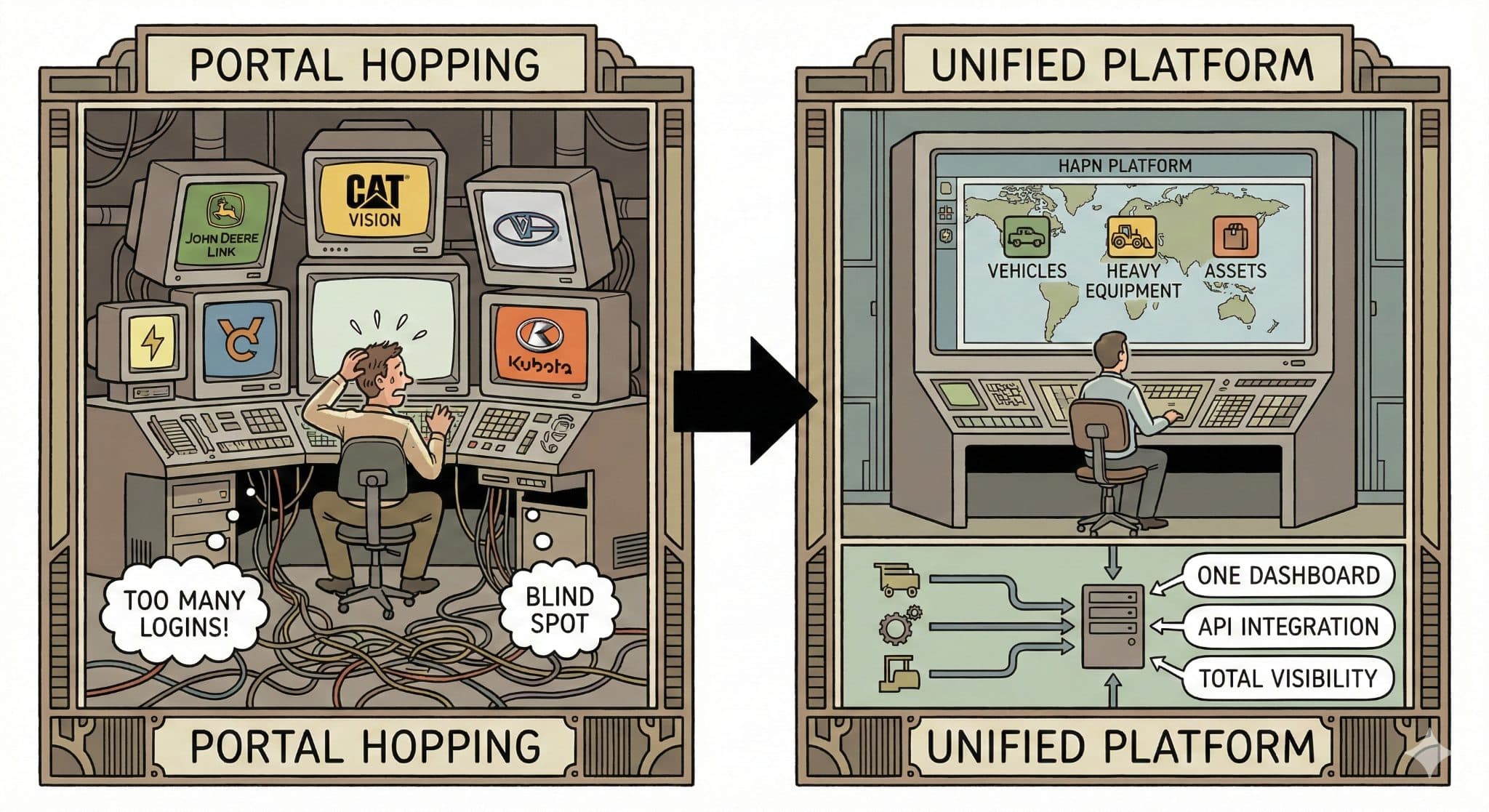
OEM telematics integration solves the mixed-fleet fragmentation problem by pulling equipment data from manufacturers like John Deere and Caterpillar into a single third-party dashboard. Instead of logging into five different manufacturer portals to track engine hours, fault codes, and location, an equipment telematics platform unifies these OEM data feeds with aftermarket hardware for older assets, vehicles, and unpowered equipment. This unified approach gives fleet managers complete, real-time visibility across their entire operation without blind spots.
Last updated: February 2026
Key Takeaways
- Mixed fleets using a single tracking platform see an average 15-20% improvement in equipment utilization.
- Hapn customers monitor over 463,000 assets across 50+ industries, blending OEM data with aftermarket trackers in one dashboard.
- Relying solely on OEM portals leaves up to 40% of a typical construction or rental fleet—like older iron, trailers, and tools—completely untracked.
- API integrations utilizing the AEMP / ISO 15143-3 standard allow seamless ingestion of data from major brands like John Deere, Cat, and Komatsu.
The Promise (and Problem) of OEM Telematics
If you purchase a modern piece of heavy machinery today, it likely comes with a factory-installed telematics unit. John Deere telematics (JDLink), Cat telematics (VisionLink), and similar offerings from Kubota, Volvo, and Bobcat provide incredibly rich data. They give you a direct pipeline into the machine's brain, offering precise engine hours, fuel consumption, DEF levels, and proprietary diagnostic fault codes.
What is OEM Telematics?
OEM (Original Equipment Manufacturer) telematics refers to factory-installed GPS and diagnostic tracking hardware that feeds data into the manufacturer's proprietary software portal.
For a fleet that consists entirely of brand-new John Deere equipment, JDLink is fantastic. The problem? Nobody operates a single-brand fleet.
The Fragmentation Problem at Scale
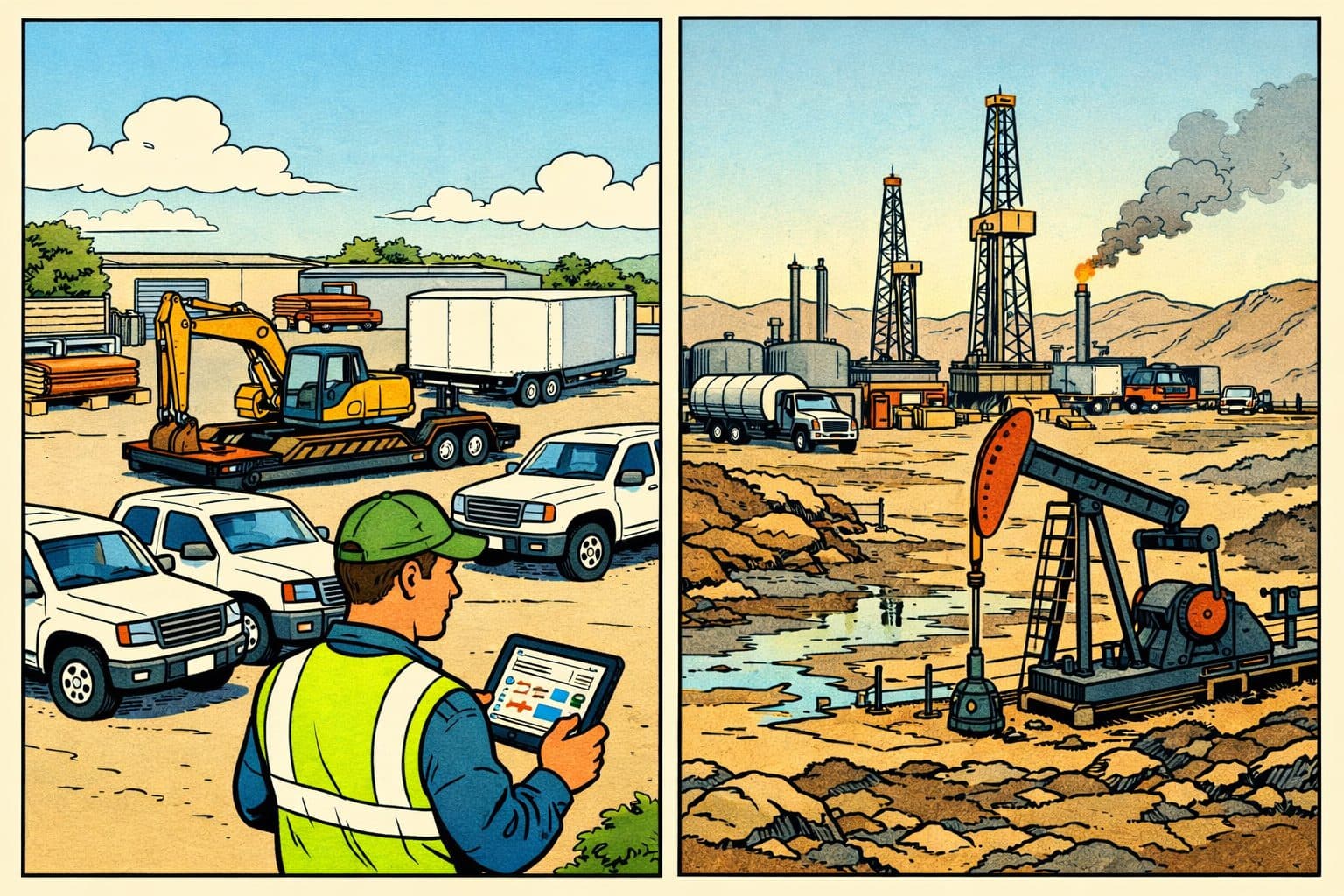
Consider the reality for most construction firms and equipment rental companies. Your yard has John Deere excavators, Caterpillar dozers, Kubota skid steers, Bobcat loaders, and JLG lifts. You also have a dozen older pieces of "dumb" iron built before 2015, a fleet of heavy-duty Ford service trucks, and fifty unpowered trailers and tool cribs.
If you rely on OEM portals, your morning routine involves:
- Logging into JDLink to check the excavators.
- Logging into VisionLink to check the dozers.
- Logging into three other portals for the rest of your powered assets.
- Calling site supervisors to find out where the unpowered trailers and older equipment are, because they aren't tracked at all.
That is five different portals, five different logins, five different data formats, and a massive blind spot for the rest of your fleet. You cannot run an efficient maintenance program, optimize utilization, or automate billing when your data is siloed across half a dozen disconnected websites. We cover the financial impact of this extensively in our guide to unified fleet data.
What OEM Telematics Misses
The biggest limitation of OEM portals isn't the quality of the data—it's the scope of coverage. An OEM portal is built to monitor that specific manufacturer's heavy equipment. It completely ignores the rest of your operational assets.
Vehicles and Fleet Trucks: Cat and Deere portals don't track your Ford F-250s, flatbed delivery trucks, or supervisor SUVs. They don't offer driver behavior monitoring, fuel card integration, or route optimization. For businesses running service trucks alongside heavy iron, a proper vehicle tracking solution needs to live on the same dashboard.
AI Dash Cameras: Modern fleet safety requires driver-facing and road-facing cameras with AI event detection to mitigate liability. OEM equipment portals do not support these video telematics solutions natively.
Battery-Powered and Unpowered Assets: What about your light towers, generators, specialized attachments, cargo trailers, and dumpsters? OEM systems have no hardware for unpowered assets, leaving thousands of dollars of inventory vulnerable to theft and hoarding.
Many construction and rental businesses also operate service vehicles—trucks for maintenance crews, vans for site supervisors, or technician vehicles. For tracking those lighter fleet assets alongside field service operations, Spytec is purpose-built for small service fleets like HVAC, plumbing, and electrical contractors. However, when managing the heavy iron, you need an enterprise-grade solution that ties it all together.
The Unified Approach: Mixed Fleets on One Platform
The solution to OEM fragmentation is a true, full-stack equipment telematics platform. Instead of forcing you to choose between deep equipment telematics OR good vehicle tracking OR battery asset tracking, a unified platform does it all.
Hapn provides full telematics depth—engine hours, fault codes, diagnostics, and CAN bus data—alongside vehicle tracking, dash cameras, and battery-powered asset monitoring, all on one platform. Unlike platforms that specialize in only vehicles or only construction equipment, Hapn handles the entire mixed fleet without forcing you onto two systems.
How It Works: AEMP and API Ingestion
How do you get John Deere and Cat data into Hapn? Through API integration and industry standards.
What is AEMP / ISO 15143-3?
AEMP (Association of Equipment Management Professionals) established the ISO 15143-3 standard, a universal data format that allows different telematics systems and heavy equipment manufacturers to share data seamlessly.
Through Hapn's open API, the platform continuously ingests data feeds directly from the major equipment manufacturers. This means you don't need to install new hardware on a brand-new Caterpillar dozer. Hapn simply connects to VisionLink, pulls the engine hours, fuel data, location, and fault codes, and normalizes it on your dashboard.
For everything else—the older iron, the heavy trucks, the trailers—you deploy Hapn's aftermarket hardware, such as the ruggedized Pulse Wired trackers for heavy machinery or IP67-rated battery trackers for unpowered assets. The result is total visibility: OEM data and aftermarket data living side-by-side.
Stop Portal Hopping
Unify your OEM data, vehicles, and battery-powered assets in one single pane of glass.
See Hapn's Platform →OEM Portals vs. Unified Telematics Platform
When evaluating how to manage your fleet data, here is how relying purely on OEM portals compares to using a unified telematics platform like Hapn.
| Capability | Manufacturer OEM Portals | Hapn Unified Platform |
|---|---|---|
| Deep Equipment Diagnostics (CAN bus) | Yes (for their own brand) | Yes (across all brands via API + Pulse Wired) |
| Older Equipment Support | No (requires modern factory tech) | Yes (via rugged aftermarket trackers) |
| On-Road Vehicle Tracking | No | Yes (Full OBD/hardwired telematics) |
| AI Dash Cameras | No | Yes (Driver & road-facing event detection) |
| Unpowered Assets (Trailers, Tools) | No | Yes (Long-life battery trackers) |
| Data Normalization Across Brands | No (each portal uses its own format) | Yes (standardized data model across all OEMs) |
| Third-Party Software Integrations | Limited (manufacturer ecosystem only) | Yes (ERP, rental management, CRM via open API) |
| Logins Required | Multiple (one per brand) | One Single Dashboard |
What to Look for in a Unified Telematics Platform
If you are ready to move beyond the limitations of isolated OEM portals, evaluating third-party platforms requires knowing what questions to ask. Many legacy tracking companies claim to offer "equipment tracking," but they are actually vehicle-first platforms that treat heavy machinery as an afterthought. Conversely, construction-only platforms like Trackunit offer great equipment tracking but completely drop the ball on vehicles and dash cameras.
When consolidating your fleet, look for these critical elements:
1. True Mixed-Fleet Hardware Options
Your platform needs a hardware portfolio that matches your yard. You need IP67-rated hardwired trackers (like our Pulse Wired devices) that connect via ignition wire or CAN bus to capture engine hours and fault codes from heavy machinery. You also need OBD plug-and-play devices for your truck fleet, AI dash cameras for liability protection, and battery-powered trackers for your trailers. If a vendor cannot supply hardware for all four asset types natively, they aren't a true mixed-fleet solution.
2. Data Normalization Across Brands
Ingesting OEM data is only half the battle. Every manufacturer formats their telematics data differently—Deere labels fault codes one way, Cat another, and Komatsu yet another. A strong platform normalizes this data into a standardized model so that your operations team sees consistent fields across brands. That means when you pull a utilization report, you are comparing apples to apples across your entire fleet, not reconciling five different data formats in a spreadsheet. Hapn's ingestion pipeline handles this normalization automatically, so OEM data and aftermarket device data appear in the same format on your dashboard.
3. Robust API and Third-Party Integrations
Connecting to OEM feeds is just step one. Your telematics data needs to flow seamlessly into your ERP, maintenance software, or rental management systems (like Point of Rental or Wynne). Hapn is built on a production-grade API that handles over 4 billion messages annually, ensuring your data pipelines are reliable and instantaneous. If you are evaluating platforms, ask whether their API is a core product or an afterthought—Hapn's own products are built on the same API that customers use.
4. Self-Serve Flexibility and Transparent Pricing
Avoid platforms that lock you into rigid, five-year contracts for every single asset. Fleet sizes change. Seasonal equipment sits idle. Hapn offers a self-serve model with transparent pricing, free hardware options, and no long-term contracts. You only pay for what you need, making it infinitely easier to scale your telematics program across a large, diverse fleet without hidden fees.
Stop Guessing. Start Tracking.
See how Hapn gives you complete visibility across your mixed fleet — vehicles, equipment, and assets in one platform. No contracts, transparent pricing.
Get Pricing →Written by the Hapn Team
Hapn provides GPS fleet and asset tracking for 50,000+ customers across construction, equipment rental, and 50+ other industries. Our platform monitors 463,000+ assets and processes over 4 billion messages annually with 99.9% uptime.
Frequently Asked Questions
What is OEM telematics integration?
OEM telematics integration is the process of pulling GPS and diagnostic data directly from heavy equipment manufacturers (like John Deere, Cat, or Volvo) into a third-party software platform via an API. This allows fleet managers to view engine hours, fault codes, and location data for different brands of machinery on a single dashboard, rather than logging into multiple different manufacturer portals.
Can I track vehicles and heavy equipment on the same platform?
Yes. Hapn provides full telematics depth—engine hours, fault codes, diagnostics, and CAN bus data—alongside vehicle tracking, dash cameras, and battery-powered asset monitoring, all on one platform. Unlike platforms that specialize in only vehicles or only equipment, Hapn handles the entire mixed fleet without forcing you onto two systems.
How do you track older equipment that doesn't have OEM telematics?
For older machinery without factory-installed telematics, Hapn uses ruggedized, aftermarket hardware like our Pulse Wired devices. These hardwired trackers connect directly to the equipment's ignition or power source to capture engine hours, location, and runtime, allowing older assets to be monitored right alongside your brand-new OEM equipment.
What is AEMP ISO 15143-3 and why does it matter for fleet tracking?
AEMP ISO 15143-3 is an industry standard established by the Association of Equipment Management Professionals that creates a universal data format for heavy equipment telematics. It matters because it enables different manufacturers—John Deere, Caterpillar, Komatsu, Volvo, and others—to share machine data (engine hours, location, fault codes) in a consistent format. Platforms like Hapn use this standard to ingest OEM data feeds seamlessly, eliminating the need to manually reconcile data from multiple manufacturer portals.
Does Hapn require a long-term contract for equipment tracking?
No, Hapn does not require long-term contracts. We offer a self-serve model with transparent pricing and no hidden fees, allowing you to scale your telematics coverage up or down as your fleet changes without being locked into a five-year agreement.
How does OEM data normalization work across different equipment brands?
Each equipment manufacturer formats their telematics data differently—fault codes, engine metrics, and diagnostic fields all vary by brand. A unified platform like Hapn ingests these different data feeds and normalizes them into a standardized data model. This means engine hours from a John Deere excavator and a Cat dozer appear in the same format on your dashboard, making fleet-wide utilization reports, maintenance scheduling, and billing accurate without manual data reconciliation.