What is Real-Time Asset Tracking?
Articles
Real-time asset tracking uses IoT- and GPS-enabled tags (often with Bluetooth, RFID, and motion sensors) attached to movable business assets—such as IT equipment, devices, vehicles, and other high-value items—to continuously report their live location, status, and usage into centralized software. This gives businesses instant visibility and control over where assets are, how they're being used, and when they need maintenance, enabling cost reduction, higher productivity, and better decision-making.
For small businesses, the main benefits include:
- Streamlined asset management: Real-time visibility into asset location and status, easier lifecycle planning, and scheduling work based on asset availability.
- Better asset location and recovery: One person can monitor hundreds of assets via GPS software, reducing labor costs and improving recovery of lost or stolen items.
- Lower maintenance costs: Usage data and automated alerts help schedule maintenance only when needed, preventing breakdowns and avoiding unnecessary service.
- Regulatory compliance: Accurate, time-stamped asset records support internal and external audits in regulated industries (pharma, financial, medical, alcohol distribution, dietary supplements, etc.).
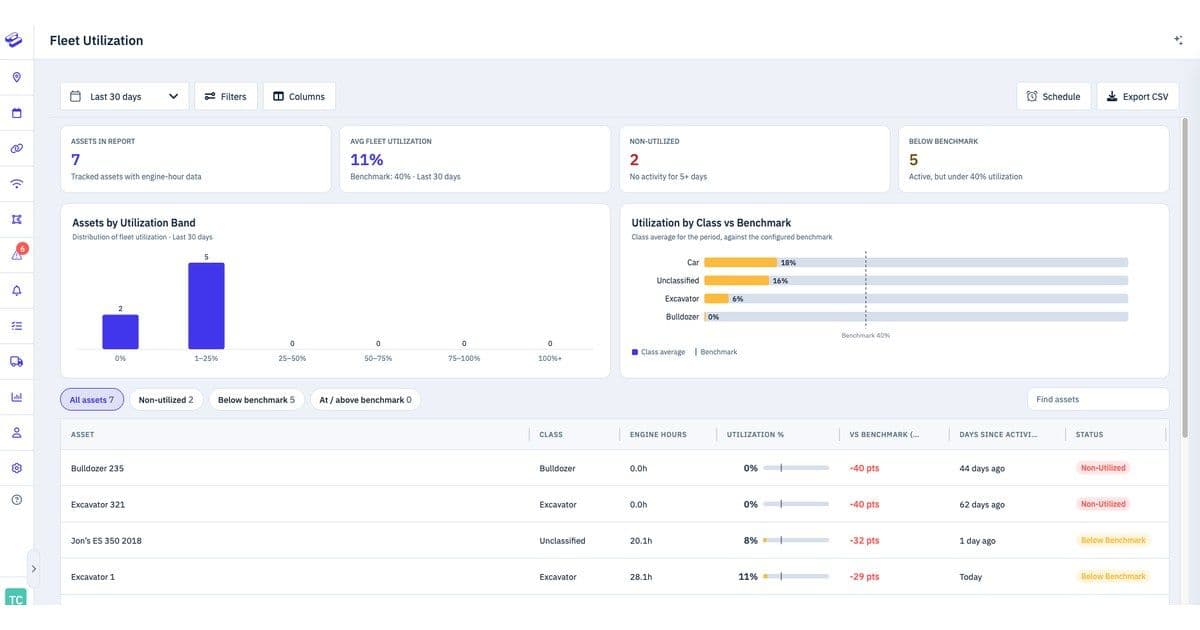
- Easier audits: Centralized dashboards replace manual checks, helping identify ghost licenses, stray assets, and under-utilized equipment.
The market for real-time asset tracking is growing rapidly, with a projected CAGR of 13.45% and an expected size of $34.82 billion by 2026. This growth is driven by cheaper IoT/GPS hardware, more advanced software analytics, and the need for tighter operational control.
Hapn's (formerly Spytec) real-time asset tracking solution is positioned for small businesses and emphasizes:
- Cost: Devices and service plans priced to be accessible for startups and growing companies.
- Speed: High-frequency location updates with negligible lag, far more frequent than trackers that only update every few hours.
- Technology: Primarily GPS-based for reliability over wide/remote areas, with Bluetooth support to combine the strengths of both technologies. For deeper understanding, explore how asset tracking works and different asset tracking types for professional services.
- Quality: Durable hardware and robust software designed to outlast the assets they track, backed by educational resources. For fleet and rental operations, understanding 3 key insights from real-time GPS tracking helps you maximize ROI.
- Customer service: Help center and 24/7 support to guide businesses through setup, adoption, and ongoing use.
Overall, real-time asset tracking is framed as an investment that can pay for itself through reduced loss and theft, lower maintenance and labor costs, improved asset utilization, and stronger compliance. Hapn encourages businesses to request pricing and a walkthrough to see how the platform can support fleets and assets in construction, rental, and field service operations.
See what tracking your fleet costs
Tell us what you're tracking and how many assets. We'll build a custom quote with volume pricing — usually within 24 hours. No contracts.
Get Your Custom Quote →Volume discounts • No 3-year contracts • Quote in ~24 hours