Last updated: March 2026
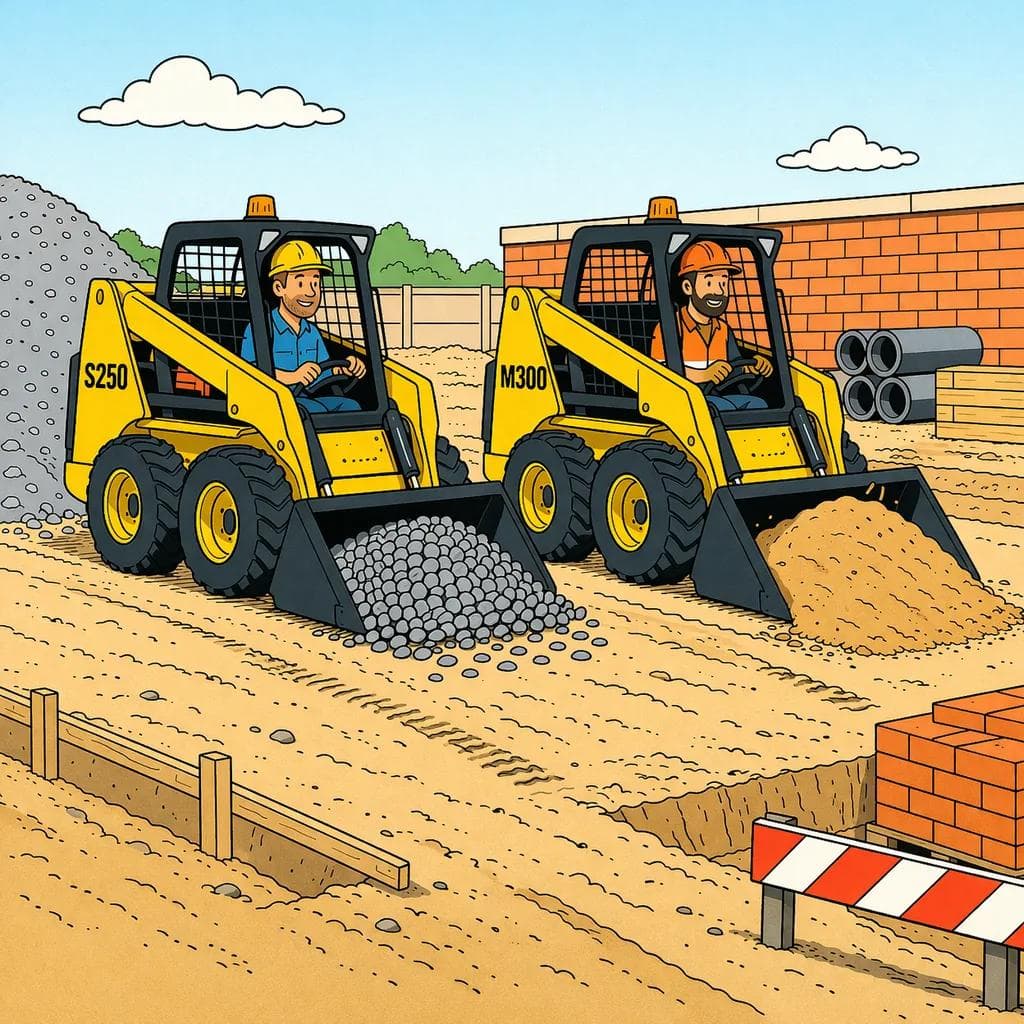
Skid steers are the single easiest category of heavy equipment to steal. They're compact enough to load onto a standard utility trailer, most older models can be hotwired in under 60 seconds, and their generic appearance makes them nearly impossible to identify once a serial number is removed. Skid steer GPS tracking is the most effective countermeasure — but theft prevention is just the entry point. The real payoff is in operator accountability, utilization visibility, and maintenance data that extends the life of machines that take an extraordinary amount of abuse on the job site.
Key Takeaways
- Skid steers are among the top 3 most-stolen equipment types, with compact size making them easy targets for trailer theft.
- Operator abuse is the #1 cost driver on skid steers — GPS monitoring of harsh operation events reduces repair costs by 15–25%.
- Engine hour tracking enables tire/track replacement scheduling at optimal intervals (typically every 400–800 hours depending on surface conditions).
- Average skid steer utilization in rental fleets is 45–55% — GPS data reveals which units are earning and which are deadstock.
- Hapn tracks 463,000+ assets on a single platform with no contracts and transparent pricing.
Why Skid Steers Are a Unique Tracking Challenge
Skid steers don't behave like any other equipment in your fleet. They're the Swiss Army knife of construction — used for grading, trenching, demolition, snow removal, material handling, and dozens of other tasks depending on which attachment is mounted. This versatility creates tracking complications that generic equipment GPS doesn't address.
First, skid steers move constantly within a job site but rarely travel between sites under their own power (they're trailered). A tracker that only reports when the machine moves above 5 mph will miss virtually all on-site activity. You need ignition-based tracking that reports whenever the engine is running, regardless of ground speed.
Second, skid steers endure more operator abuse than almost any other machine on a job site. Inexperienced operators slam into curbs, overload buckets, and run the hydraulics at full pressure for hours. This abuse is invisible to a fleet manager unless you're capturing harsh-use event data — sudden impacts, excessive RPM, and continuous high-load operation.
What is Operator Monitoring on Skid Steers?
GPS-based operator monitoring tracks ignition events, engine hours per operator (when combined with key assignment), harsh-use events (sudden stops, impacts), and idle time. This data lets fleet managers identify which operators are running machines hardest and correlate that with maintenance costs — often revealing that 20% of operators cause 80% of repair bills.
Skid Steer Tracking Options
Hardwired GPS: The Standard for Skid Steer Fleets
A hardwired tracker connected to the skid steer's ignition circuit is the go-to solution for most fleet operators. The installation is straightforward — most Bobcat, CAT, Deere, CASE, and Kubota skid steers have accessible wiring under the cab. This gives you engine hours (accurate to within minutes), ignition on/off events, real-time location when running, geofence alerts for theft and unauthorized site departure, and after-hours use detection.
For rental companies, this data directly feeds billing accuracy. When a customer disputes a rental invoice claiming the skid steer sat unused for two days, you have timestamped engine hour data proving otherwise.
Telematics: For Newer Models With CAN Bus
Modern skid steers from Bobcat (T-series and S-series, 2018+), CAT (200 series), and Deere (300G series) support J1939 CAN bus connections. A telematics device connected here provides everything hardwired does plus fault codes and DTCs, hydraulic pressure monitoring, coolant and oil temperature, fuel consumption data, and DPF (diesel particulate filter) regeneration status — a critical alert on Tier 4 skid steers where a failed regen can damage a $5,000+ aftertreatment system.
This level of data is most valuable for fleet owners managing 10+ skid steers where predictive maintenance and fuel optimization at scale produce meaningful cost savings.
Battery-Powered: The Anti-Theft Backup
Given how frequently skid steers are stolen, a hidden battery-powered tracker is strongly recommended as a secondary device. Common hiding spots include inside the engine compartment cowling, under the operator seat frame, behind removable side panels, and bolted inside the lift arm channel.
A battery tracker checks in 1–2 times daily during normal operation and switches to real-time reporting if it detects movement during off-hours. This is the backup that reports even after a thief removes the obvious hardwired unit.
| Skid Steer Challenge | How GPS Tracking Solves It | Required Tracker Type |
|---|---|---|
| Theft (trailer-loaded in minutes) | Geofence + after-hours alerts + Ghost backup | Hardwired + Battery |
| Operator abuse / harsh use | Impact events, excessive RPM, idle time logging | Telematics (CAN bus) |
| Billing disputes on rentals | Timestamped engine hour records | Hardwired (minimum) |
| Tire/track wear scheduling | Engine hour-based maintenance triggers | Hardwired or Telematics |
| Low utilization / fleet right-sizing | Utilization % by unit over time | Hardwired or Telematics |
Skid Steer Theft: The Numbers and the Fix
According to the National Equipment Register and National Insurance Crime Bureau, skid steers consistently rank in the top 3 most-stolen equipment types alongside excavators and utility trailers. The reasons are simple: they're compact (most weigh 3,000–9,000 lbs), they fit on any trailer, older models have minimal security, and they all look similar once repainted.
The recovery rate for untracked stolen equipment is below 21%. With GPS tracking, that number jumps dramatically. Hapn has helped recover over $720M in stolen assets, and skid steers are among the most frequently recovered categories because the Ghost strategy works particularly well — the compact size of modern battery trackers means they can be hidden in spots that thieves would need to completely disassemble the machine to find.
For specific security strategies beyond GPS, see our deep dive on modern security tactics for skid steer loaders.
Protect Your Skid Steers Today
Hapn tracks your skid steers alongside every other asset in your fleet — trucks, excavators, trailers, attachments — on one platform. Theft alerts, engine hours, and operator data. No contracts.
Get Pricing →Maintenance Scheduling by Engine Hours
Skid steers have aggressive maintenance intervals because of how hard they work. Unlike a truck that cruises at highway speed, a skid steer is constantly under load — pushing material, lifting, pivoting. This means engine oil degrades faster, hydraulic fluid gets contaminated sooner, and wear items (tires, tracks, cutting edges) need replacement more frequently.
Typical engine hour-based intervals for skid steers include oil and filter changes every 250–500 hours, hydraulic fluid and filter every 1,000–2,000 hours, tire or track replacement every 400–800 hours (varies dramatically by surface — concrete wears rubber tires 3x faster than dirt), and drive chain/sprocket inspection every 500 hours on tracked models.
Without GPS-based engine hour tracking, fleet managers typically default to calendar-based schedules (e.g., every 3 months). This leads to over-servicing machines that sit idle and under-servicing machines that run heavy hours — both of which cost money. As we covered in our engine hour-based maintenance guide, switching to runtime-based scheduling reduces unplanned downtime by 20–30%.
Utilization: The Hidden ROI of Skid Steer Tracking
Most fleet operators don't know their actual skid steer utilization rate. They know which machines are "out" on jobs, but not how many hours those machines actually run versus sit idle on site. GPS data reveals this gap.
Industry benchmarks suggest that average skid steer utilization in rental fleets is 45–55%. That means nearly half of your fleet's capacity is sitting unused. GPS data lets you identify consistently underutilized units (candidates to sell or redeploy), peak demand periods where you need more capacity, and specific job sites where machines sit idle for days — a sign that the job doesn't actually need that unit.
For fleet utilization benchmarks and how to measure them, see our 2026 fleet utilization guide. Tracking all your skid steers alongside the rest of your mixed fleet on a unified visibility platform is what makes this data actionable at the fleet level.
Written by the Hapn Team
Hapn provides GPS fleet and asset tracking for 50,000+ customers across construction, equipment rental, and 50+ other industries. Our platform monitors 463,000+ assets and processes over 4 billion messages annually with 99.9% uptime.
Frequently Asked Questions
What is the best GPS tracker for a skid steer?
For most operations, a hardwired GPS tracker that monitors engine hours and ignition status is the best starting point. If you have newer Bobcat, CAT, or Deere skid steers with CAN bus access, a telematics device adds fault codes and fuel monitoring. For theft protection, always add a hidden battery-powered backup tracker — skid steers are among the most-stolen equipment types.
How do I prevent my skid steer from being stolen?
Layered security is the answer: GPS tracking with geofence alerts, a hidden battery-powered backup tracker (Ghost strategy), physical deterrents (wheel locks, fuel shutoff), and after-hours ignition alerts. GPS is the most effective single measure because it enables real-time recovery. Physical locks slow thieves down but don't help you find the machine once it's gone.
Can GPS tracking monitor skid steer operator behavior?
Yes. Telematics-equipped trackers capture harsh-use events (impacts, sudden stops), idle time, and RPM data. Combined with operator assignment records, this data reveals which operators are running machines hardest — which directly correlates with higher maintenance costs. Many fleet managers use this data for operator training and accountability.
How accurate are engine hours from a GPS tracker on a skid steer?
Hardwired trackers monitor ignition state changes and typically provide accuracy within minutes. CAN bus telematics pull the hour meter reading directly from the machine's ECU for exact synchronization. Both methods are accurate enough for warranty compliance, rental billing, and maintenance scheduling.
Should I track skid steer attachments separately?
Yes, if the attachments have significant value. Buckets, augers, trenchers, and brush cutters worth $2,000–$15,000+ are frequently stolen separately from the machine. A small battery-powered asset tracker hidden on the attachment provides location check-ins and theft alerts independently of the skid steer it's mounted on.
Can I track my skid steers and trucks on the same platform?
Yes. Hapn tracks skid steers, excavators, trucks, trailers, and attachments on a single platform — one dashboard, one invoice, one API. This eliminates the data silos that come from using separate systems for different equipment types and simplifies dispatch, billing, and maintenance workflows.
Stop Guessing. Start Tracking.
See how Hapn gives you complete visibility across your mixed fleet — vehicles, equipment, and assets in one platform. No contracts, transparent pricing.
Get Pricing →