Last updated: March 2026
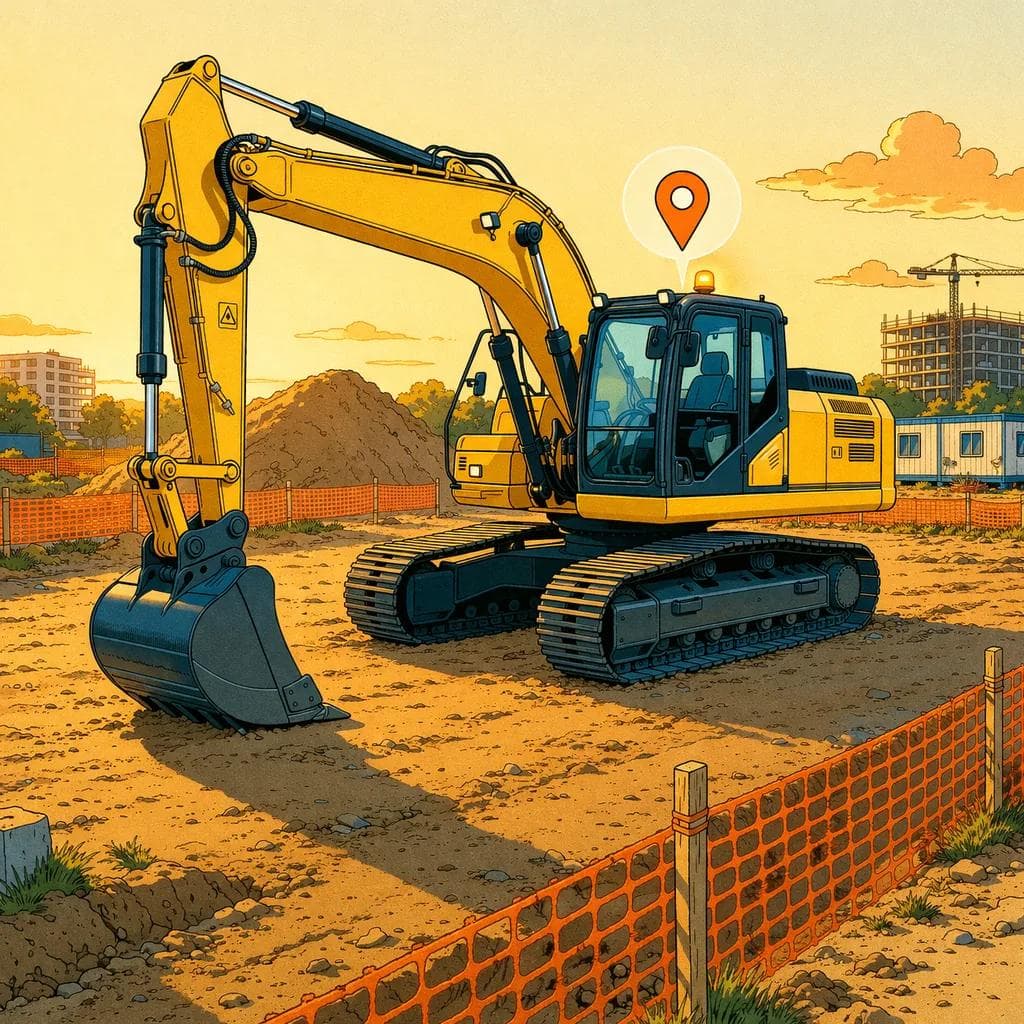
Excavators are the single most targeted category of heavy equipment theft in North America, accounting for roughly 25% of all stolen construction equipment according to the National Equipment Register. With average replacement costs ranging from $80,000 for a compact excavator to over $500,000 for a full-size model, a single unrecovered theft can wipe out a quarter's profit. Excavator GPS tracking solves this — but theft prevention is only the starting point. The real value is in engine hour monitoring, utilization data, and maintenance scheduling that keeps your excavators productive instead of sitting in a shop.
Key Takeaways
- Excavators represent ~25% of all heavy equipment thefts, with less than 21% of stolen units ever recovered without GPS.
- Engine hour tracking on excavators enables maintenance scheduling that reduces unplanned downtime by 20–30% vs. calendar-based methods.
- Utilization data from GPS-tracked excavators typically reveals 15–25% idle time that can be recaptured through better dispatch.
- A "Ghost" tracking strategy (visible hardwired unit + hidden battery tracker) is the standard for excavator theft recovery.
- Hapn tracks 463,000+ assets across 50+ industries with no contracts and transparent pricing.
Why Excavators Need Dedicated GPS Tracking
Excavators present unique tracking challenges that generic vehicle GPS doesn't address. They move slowly between job sites (usually on a flatbed), operate in fixed positions for days or weeks, and generate most of their wear through hydraulic cycles rather than miles driven. A standard vehicle tracker that measures odometer and speed is nearly useless on an excavator.
What you actually need from an excavator tracking system is engine hour monitoring (for maintenance triggers), ignition status (for utilization and billing verification), geofencing (for theft and unauthorized use detection), and — for newer Tier 4 machines — fault code diagnostics through the CAN bus.
What is CAN Bus Telematics?
The Controller Area Network (CAN) bus is the internal communication system in modern excavators (CAT, Komatsu, Deere, Volvo, etc.). A telematics device connected to the CAN bus reads the machine's own diagnostic data — engine hours, fault codes, hydraulic pressure, coolant temperature — rather than estimating from external sensors.
Three Tracking Approaches for Excavators
1. Hardwired GPS (Engine Hours + Location)
The most common setup for excavators. A 3-wire installation (power, ground, ignition sense) gives you real-time location when running, accurate engine hours from ignition state changes, and after-hours movement alerts. This covers 80% of what most fleet operators need: proof of service for billing, maintenance scheduling based on actual runtime, and basic theft protection.
Best for: Compact excavators (mini-ex), older hydraulic excavators without CAN bus access, and rental fleets where simplicity and volume matter.
2. Telematics (Full Diagnostics)
For newer excavators with J1939 CAN bus ports (most Tier 4 machines from CAT, Komatsu, Deere, Volvo, Hitachi, and Kobelco), a telematics device provides everything a hardwired unit does plus fault codes and diagnostic trouble codes (DTCs), hydraulic system pressure and temperature, fuel level and consumption rate, and idle time vs. working time breakdowns.
This data is critical for fleets running excavators worth $200K+ where an undetected hydraulic leak or overheating engine can cause $20,000–$50,000 in repair costs.
Best for: High-value excavators (20-ton+), fleets with in-house mechanics, and operations where fuel cost optimization matters.
3. Battery-Powered Asset Tracker (Theft Backup)
A self-contained, magnetic or bolt-on tracker hidden deep in the excavator's frame or counterweight. No wires to trace, no connection to the machine's electrical system. It checks in once or twice daily and switches to real-time mode if movement is detected outside of set hours.
This is the "Ghost" unit — the backup that keeps reporting after a thief finds and removes your primary hardwired tracker. For excavators specifically, the counterweight cavity and inside the boom arm are common hiding spots that survive even a thorough sweep. Learn more about layered protection in our theft recovery guide.
| Tracking Method | Data You Get | Best Excavator Use Case | Typical Cost |
|---|---|---|---|
| Hardwired GPS | Location, engine hours, ignition | Rental fleets, billing verification | $50–$150 + $15–$30/mo |
| CAN Bus Telematics | Fault codes, fuel, hydraulics, temps | High-value excavators, predictive maintenance | $150–$400 + $25–$50/mo |
| Battery-Powered | Location (periodic check-in) | Theft backup, stored/idle equipment | $75–$200 + $10–$20/mo |
Excavator-Specific Tracking Challenges
Hydraulic System Monitoring
Unlike trucks where engine health is the primary concern, excavators fail most often through hydraulic system breakdowns. A blown hydraulic hose on a 30-ton excavator doesn't just stop work — it dumps 40–60 gallons of hydraulic fluid, creates an environmental cleanup obligation, and can sideline the machine for days waiting on parts. CAN bus telematics that monitor hydraulic pressure trends can flag declining performance before a catastrophic failure.
Undercarriage Wear and Engine Hours
Excavator undercarriage components (tracks, rollers, idlers, sprockets) are the single most expensive maintenance item, often running $15,000–$40,000 for a full replacement on a mid-size machine. These components wear based on operating hours and ground conditions, not calendar time. Accurate engine hour tracking from GPS allows you to schedule inspections at the right intervals — typically every 500 hours for track tension checks and every 2,000 hours for full undercarriage assessment.
Multi-Site Dispatch
Excavators frequently move between job sites on lowboys. Without GPS, fleet managers rely on phone calls and driver check-ins to know which excavator is where. Real-time location eliminates this — dispatch can see every excavator's current site, check if it's running or idle, and make informed decisions about which machine to move for the next job. For operations managing excavators alongside trucks and other assets, a unified platform that shows everything on one map is essential.
Track Every Excavator on One Dashboard
Hapn monitors excavators alongside your trucks, trailers, and attachments — all on a single platform. Engine hours, location, theft alerts, and diagnostics. No contracts.
Get Pricing →Excavator Theft: Why GPS Is Non-Negotiable
Excavators are targeted disproportionately because of their resale value and the ease of disguising them. Unlike vehicles with VINs on the dashboard, excavators have serial numbers stamped on the frame that can be ground off in minutes. Once an excavator is repainted and the serial number is gone, it's virtually impossible to identify without a GPS tracker reporting its location.
The standard approach for excavator theft prevention combines geofencing (automatic alerts if the machine leaves a defined perimeter), after-hours movement detection (alerts if the ignition turns on outside of work hours), and the Ghost strategy (redundant battery tracker hidden as a backup). Hapn has helped recover over $720M in stolen assets across all equipment types, with excavators being one of the most commonly recovered categories due to their high value and the effectiveness of layered GPS protection.
Choosing the Right Tracker by Excavator Size
Mini/Compact Excavators (1–8 tons)
Mini excavators are the most theft-prone subcategory because they fit on a standard trailer. A hardwired GPS tracker is the minimum — and adding a hidden battery unit is strongly recommended given the ease of theft. Compact excavators typically lack CAN bus access on older models, so hardwired is often your only option anyway.
Mid-Size Excavators (8–25 tons)
The sweet spot for full telematics. Most modern mid-size excavators from CAT (313–325 series), Komatsu (PC200–PC290), Deere (210G–350G), and Volvo (EC200–EC300) have accessible J1939 ports. Telematics integration here gives you the best ROI because these machines are expensive enough to justify the investment but common enough to generate meaningful fleet-wide data.
Large Excavators (25+ tons)
For excavators in the $300K–$500K+ range, full telematics is a given. The cost of a $400 telematics device and $50/month service is trivial against the asset value. At this tier, you should also consider AI dash cameras on the service trucks that transport these machines — capturing load/unload events and transit conditions to document any transport damage.
Integrating Excavator Data With Your Fleet
The biggest operational gain from excavator GPS tracking comes when you unify that data with the rest of your fleet. If your excavators report to one system, trucks to another, and trailers to a third, your dispatcher is toggling between three dashboards and your accountant is reconciling three invoices.
Hapn's approach is a single platform for vehicles, equipment, and battery-powered assets. One dashboard. One invoice. One API feed into your ERP or rental management system (Point of Rental, Wynne, etc.). For operations where excavators sit in rental yards between jobs, this integration also feeds utilization data directly into your fleet planning — showing you which excavators are earning and which are costing you money sitting idle.
Written by the Hapn Team
Hapn provides GPS fleet and asset tracking for 50,000+ customers across construction, equipment rental, and 50+ other industries. Our platform monitors 463,000+ assets and processes over 4 billion messages annually with 99.9% uptime.
Frequently Asked Questions
What is the best GPS tracker for an excavator?
It depends on the data you need. For most fleet operators, a hardwired GPS tracker that monitors engine hours, ignition status, and location is the best starting point. For newer Tier 4 excavators where you want fault codes and fuel data, a CAN bus telematics device is the better investment. For theft protection, combine either option with a hidden battery-powered backup tracker.
How do you hide a GPS tracker on an excavator?
The most effective hiding spots on an excavator are inside the counterweight cavity, within the boom arm, under the cab floor panels, or inside the engine compartment housing. Battery-powered trackers with magnetic mounts work best for this — no wires to trace. The goal is to create a secondary layer of protection that survives even if a thief finds your primary hardwired unit.
Can GPS tracking tell me exactly how many hours my excavator has been running?
Yes. Hardwired trackers monitor ignition state changes to calculate engine hours with accuracy within minutes. CAN bus telematics devices pull the hour meter reading directly from the excavator's ECU, giving you exact synchronization with the machine's internal records. Both methods are accurate enough for warranty compliance, billing verification, and maintenance scheduling.
Do I need GPS tracking if my excavator already has factory telematics like JDLink or Komtrax?
Factory telematics systems are manufacturer-specific. If your fleet includes excavators from multiple brands — say CAT, Komatsu, and Deere — you end up with three separate portals. A third-party platform like Hapn consolidates everything into one dashboard, often adding better alerting, API integration, and vehicle/trailer tracking that OEM systems don't cover. Read our guide on eliminating portal hopping with AEMP-standard data unification.
How much does it cost to GPS-track an excavator?
Hardware ranges from $50–$150 for a basic hardwired tracker to $150–$400 for a full telematics device. Monthly service fees run $15–$50 depending on the data tier. For a mid-size excavator worth $150,000+, the annual tracking cost ($400–$800) is less than 0.5% of the asset value — and one prevented theft or avoided breakdown pays for years of service.
Can I track excavators and trucks on the same platform?
Yes — and you should. Managing excavators, service trucks, trailers, and attachments on separate systems creates data silos. Hapn tracks all asset types on a single platform with one dashboard and one API, which simplifies dispatch, billing, and maintenance management for mixed fleets.
Stop Guessing. Start Tracking.
See how Hapn gives you complete visibility across your mixed fleet — vehicles, equipment, and assets in one platform. No contracts, transparent pricing.
Get Pricing →More Equipment Tracking Guides
Explore GPS tracking guides for other equipment in your fleet: