Last updated: February 2026
Key Takeaways
- AirTags use Bluetooth mesh networks and require iPhones within 33 feet for location updates; GPS devices use satellites and cellular networks for continuous tracking
- GPS trackers provide superior data collection—maintenance records, uptime, historical movement, and fuel usage that AirTags cannot match
- AirTags have hard limits (max 16 per account) and cannot support geofencing, shared location alerts, or business-critical features
- GPS is essential for field deployments; AirTags work best for warehouse inventory and indoor asset management
- GPS offers longer battery life, wired power options, specialized software, and multi-user access critical for rental businesses
Choosing the most suitable equipment tracking device for your rental business can be tough but vital. I can guarantee that Apple's AirTags will come onto your radar at some point during your search. They are quickly becoming a near-ubiquitous solution for finding things, but can they work for a rental company tracking large equipment all over? Can they replace a dedicated GPS solution? Let's find out.
Tech: AirTags vs. GPS Devices
What makes an AirTag tick? What makes a GPS device tick? Why does this matter?
AirTags are Bluetooth tracking devices that emit a signal. This signal can connect to other devices connected to Apple's "Find My" network. The location is then calculated by the strength of the AirTags signal, according to those devices. A stronger signal means the AirTag is close; weaker means further away.
That calculated position is then uploaded to the cloud and pinned to a map for location. You can then use an iPhone 11 or newer to locate the tag. Or, you can request that the tag makes a beeping alarm, allowing you to find the tag.
This type of locating relies on three things.
- The AirTag must be active and emitting a signal.
- An iPhone to locate the tag must be present.
- The AirTag must be within 33 feet of an iPhone or other device currently connected to the "Find My" network to register its location.
The third point is the key one we will circle back to.
GPS devices use similar tech but at a more independent scale. GPS devices connect to the satellite network and compare their internal clock to the satellites. This allows the device to learn its current longitude and latitude, giving it its location. It will then send that data back to a server to the user as part of a software solution. Our trackers use cellular networks to transmit this data; most trackers do this. Some specialized trackers use satellites to transmit, but they are not the norm.
GPS trackers also require three things to work, the satellite network, a cellular connection, and a powered tracker.
Which should I use to track my equipment?
When trying to find an equipment tracking device, the thing that stands out to me is the AirTags reliance on Apple-connected devices being within 33 feet of the AirTag to be able to calculate its location. That is tricky to be sure of when the equipment may be on remote or unattended sites. When the staff leaves, it is arguably more important to have an accurate location, and the AirTag will struggle there.
GPS can provide that location, even when the device is left unattended. The negative for GPS devices is the reliance on cellular connectivity. This does limit the effectiveness in specific locations, no matter how broad or advanced the network connectivity may be.
Another spec to consider is battery life; AirTags usually last one year with 4 location updates per day. GPS devices can be wired directly to the equipment, eliminating the need for battery maintenance.
The third main thing is most GPS devices’ specialized software. AirTags are great for finding things like keys, or other small lost items that remain in your orbit. You do not need any more data than the primary location.
When tracking heavy rental equipment, you need to see more data points than that. You might need to review uptime, maintenance data, historical movement, fuel usage, etc. GPS tracking solutions can collect these data points. Include the ability to set alarms and notifications based on data collected by GPS devices, and you start to see the advantages GPS can provide. AirTags cannot even work with geofences, which allow you to designate areas of interest such as job sites and receive alerts when a tracker enters or leaves that location. This eliminates the need to constantly monitor a live map to avoid missing important updates.
Another issue with AirTags vs GPS trackers, is that you cannot share an AirTags location with others, even family members. This makes AirTags very problematic to use in a business or team setting.
There is one last limitation that could potentially be the most problematic with Airtags: a hard limit of 16 Airtags per account. If you need to track more than 16 pieces of equipment, then Airtags are clearly not a viable solution for you.
Both certainly have their uses.
See How Hapn Works for Your Fleet
Compare costs and capabilities to optimize your equipment tracking. Get a personalized walkthrough today.
Get Pricing →AirTags, beyond basic things like wallets, purses, and keys, can be used for applications that GPS struggles with. I specifically mean indoor applications with limited or no line of sight to the GPS satellites orbiting the Earth. If you rent a large amount of smaller equipment like tools, or things stored in a warehouse, it may make sense to use AirTags to track them when they are in storage. This will let you manage the inventory effectively and quickly find the item a renter wants.Please note that while some limitations of AirTags, such as the 16 device limit, are absent in other Bluetooth trackers, the size of Apple’s mesh network, due to the proliferation of Apple customers, makes AirTags a much more accurate Bluetooth tracker.
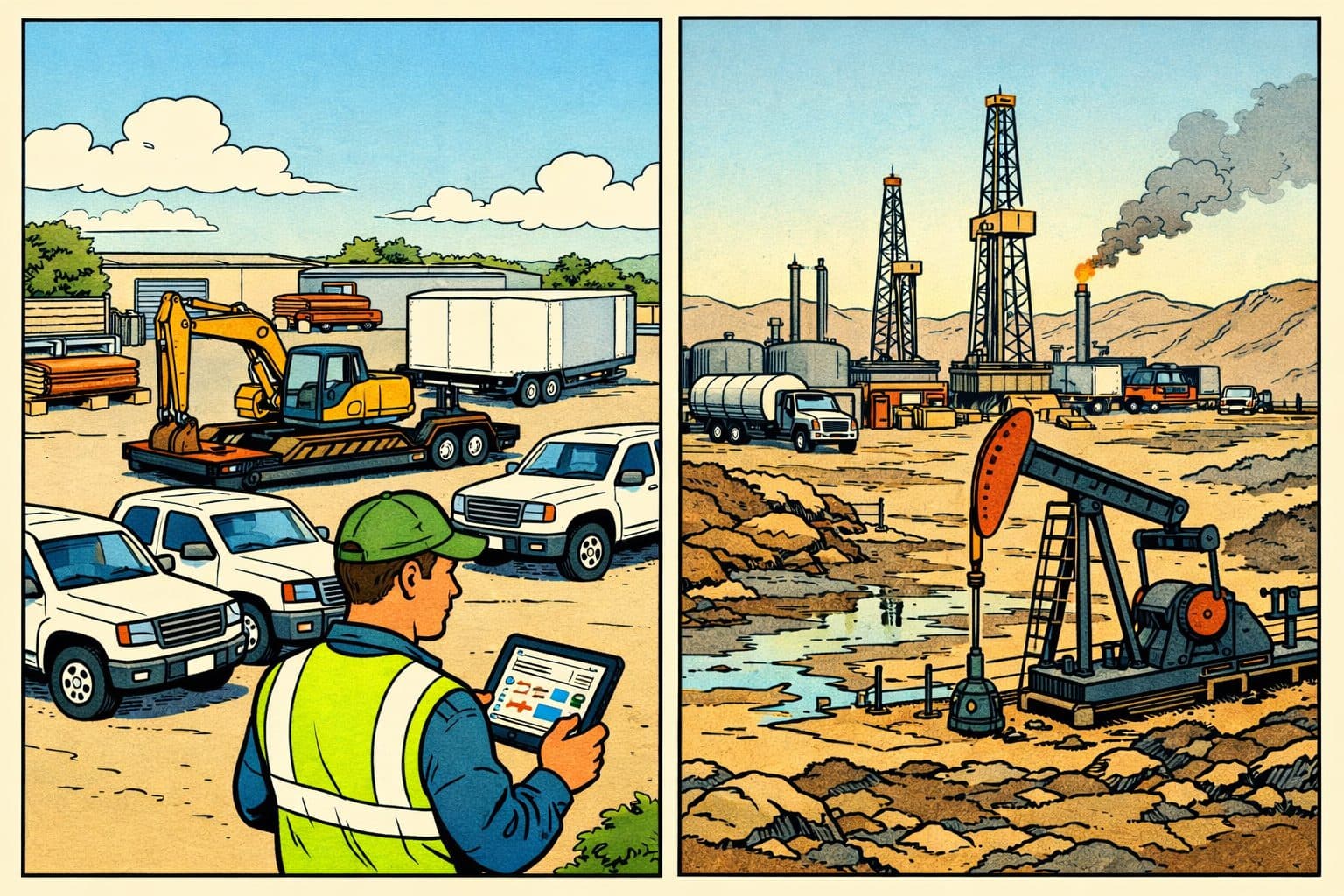
GPS devices are for in-field deployments. Situations when equipment is leaving your vicinity, and you need visibility into their locations. Any rented equipment that leaves your HQ should be equipped with a GPS device, especially if you want to integrate the location of that asset into your existing GPS software. GPS is also a clear choice if you want more data than the primary location. When considering dynamic pricing strategies for rental equipment, GPS data becomes invaluable for understanding utilization patterns.
In short, they both have uses, but GPS devices’ effectiveness and increased capabilities make them a far better choice than AirTags for tracking equipment.
Frequently Asked Questions
Can AirTags replace GPS trackers for fleet management?
No. While AirTags work well for small item location, they lack critical fleet features: the 16-device limit, no geofencing, no shared access, and no advanced data collection. GPS trackers are purpose-built for equipment tracking and provide continuous visibility.
What's the main advantage of GPS over AirTags?
GPS provides continuous, independent location tracking without requiring nearby Apple devices. It also captures operational data (uptime, fuel, maintenance) that AirTags cannot, making it essential for equipment rental and fleet management.
Where would AirTags be useful for a rental business?
AirTags excel at warehouse and indoor inventory management, helping you locate tools and smaller equipment in storage. Their low cost and long battery life make them practical for non-critical tracking of items that stay within your facility.
Why is data collection important in equipment tracking?
Beyond location, GPS systems collect maintenance schedules, equipment uptime, fuel consumption, and historical movement patterns. This data helps optimize utilization, forecast repairs, and improve profitability—capabilities AirTags simply don't offer.
Can you use both AirTags and GPS together?
Yes. A hybrid approach works: GPS for in-field equipment tracking and AirTags for warehouse inventory management. This gives you the best of both worlds at different price points and for different use cases.
Written by the Hapn Team — Hapn provides full-stack fleet and asset telematics for construction, rental, and field service companies. Learn more →
Ready to Take Control of Your Fleet?
Join hundreds of construction and rental companies tracking smarter with Hapn.
Get Your Custom Quote →