Last updated: March 2026
Generators are the silent workhorse of construction, events, and emergency power — and they're also one of the most frequently stolen and hardest-to-track assets in any fleet. Unlike excavators and trucks that move visibly, generators sit stationary and unattended for days or weeks, often on remote job sites, event venues, or temporary power locations with minimal security. Generator GPS tracking solves the theft problem, but the real ROI is in runtime monitoring that transforms how you bill customers, schedule maintenance, and manage fuel.
Key Takeaways
- Portable generators ($5K–$50K) and towable generators ($20K–$200K+) are high-theft targets due to stationary, unattended deployment.
- Runtime-based billing eliminates disputes: GPS provides timestamped proof of exactly when and how long a generator ran.
- Oil change intervals on generators are typically every 200–500 hours — calendar-based scheduling misses this by an average of 30% in either direction.
- Fuel theft on generators costs the construction industry an estimated $1–3 per engine hour in unaccounted losses.
- Hapn tracks 463,000+ assets across 50+ industries with no contracts and transparent pricing.
Why Generators Are Different From Other Tracked Equipment
Generator tracking has fundamentally different requirements than vehicle or equipment tracking. Generators don't drive anywhere — they sit still and run. This means the traditional GPS metrics (speed, route history, trip distance) are irrelevant. What matters is whether the generator is running or off, how many hours it has accumulated since the last service, when it was delivered and picked up (for rental billing), and whether it has moved from its authorized location (theft indicator).
The stationary nature of generators also creates a unique power management challenge for trackers. A generator that runs 8 hours during the day and shuts off at night presents intermittent power — a hardwired tracker needs to handle these on/off cycles gracefully without losing data during off periods.
What is Runtime Monitoring?
Runtime monitoring uses GPS ignition detection or vibration sensing to track exactly when a generator is running and for how long. Unlike a traditional hour meter on the machine itself, GPS-based runtime data is transmitted in real time, enabling remote monitoring, automated maintenance alerts, and verifiable billing records — no one needs to physically walk up to the generator to read the meter.
Generator Tracking Options
Hardwired GPS: Best for Towable and Large Stationary Generators
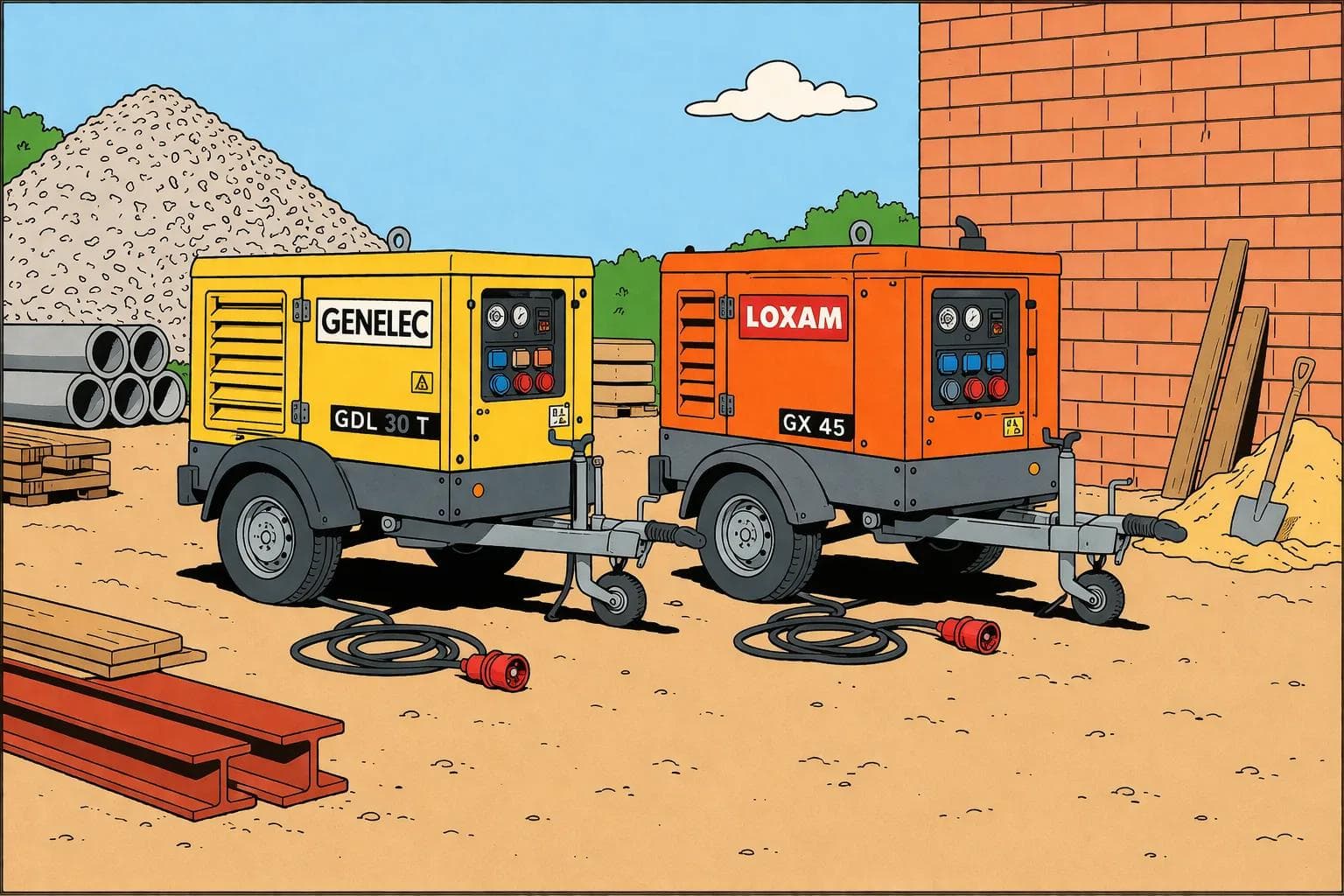
For towable generators (20kW+) and large standby units, a hardwired GPS tracker connected to the generator's electrical system is the standard. These generators have 12V or 24V DC systems that provide consistent power for the tracker. The installation connects to power, ground, and an ignition sense wire that detects when the engine is running.
This setup gives you accurate runtime hours (critical for both billing and maintenance), real-time location with movement alerts, geofence boundaries around authorized deployment sites, and engine start/stop event logs with timestamps.
Best for: Equipment rental companies with towable generator fleets, construction firms deploying generators across multiple job sites, and event rental companies managing temporary power.
Battery-Powered Tracker: Best for Portable Generators and Theft Backup
Portable generators (2kW–15kW) often lack a convenient 12V DC tap for hardwired installation. A battery-powered asset tracker bolted or magnetically mounted to the frame is the practical solution. It checks in periodically (1–4 times daily) and sends immediate alerts if the generator moves outside its geofence.
Battery trackers are also the ideal Ghost backup on larger generators — hidden inside the frame or enclosure as a secondary theft recovery device that operates independently of the generator's power.
Best for: Portable generator fleets, high-theft environments, and as a secondary tracker on valuable towable units.
Telematics: For Generators With ECU Access
Larger industrial generators (100kW+) from manufacturers like Caterpillar, Cummins, and Kohler often have ECU ports that support telematics connections. This provides fault codes and engine diagnostics, fuel level and consumption rate, load percentage (how much of the generator's capacity is being used), and coolant temperature and oil pressure.
Load percentage data is particularly valuable: a 200kW generator running at 20% load is massively oversized for its deployment, burning fuel inefficiently. This data helps you right-size generator assignments and reduce fuel waste.
| Generator Type | Recommended Tracker | Key Data Points | Primary Value |
|---|---|---|---|
| Portable (2–15kW) | Battery-powered | Location, movement alerts | Theft recovery |
| Towable (20–100kW) | Hardwired + battery backup | Runtime, engine hours, location | Billing accuracy + theft |
| Industrial (100kW+) | Telematics (ECU) + battery backup | Fault codes, fuel, load %, diagnostics | Predictive maintenance + fuel optimization |
Billing Accuracy: The Killer Use Case for Generator Tracking
For rental companies and contractors who bill customers for generator usage, accurate runtime data eliminates the single biggest source of billing disputes: disagreement over how many hours the generator actually ran.
Without GPS, billing relies on one of two unreliable methods: the customer self-reporting hours (incentivized to underreport) or someone physically reading the hour meter at delivery and pickup (only captures total hours, not when it ran). GPS runtime monitoring provides timestamped, verifiable records of every start/stop event. If a customer disputes an invoice for 120 hours of runtime, you have the data showing exactly when the generator started and stopped each day.
This data also feeds directly into your ERP or rental management system through Hapn's open API, automating the billing workflow and eliminating manual hour meter reads entirely. For a rental fleet running 50+ generators, this can save 10–15 hours per week of admin time.
Automate Generator Billing With Runtime Data
Hapn tracks generator runtime, engine hours, and location — and feeds it directly into your billing system via API. No contracts, transparent pricing.
Get Pricing →Generator Theft: A Growing Problem
Generators are stolen more often than most fleet operators realize. They sit in remote, unattended locations (often overnight or over weekends), they have high resale value on secondary markets, portable units can be carried off by two people, and even towable units just need a truck with a hitch. The combination of value, accessibility, and minimal supervision makes generators one of the highest-theft categories after excavators and trailers.
GPS tracking with geofencing is the most effective countermeasure. When a generator leaves its authorized zone — or when an after-hours movement alert fires — you get a real-time notification with the unit's current location. Hapn has helped recover over $720M in stolen assets, and generators are among the most common recoveries. For a deeper look at the broader construction theft problem, see our analysis of the $1 billion construction equipment theft epidemic.
Fuel Management and Generator Efficiency
Fuel is the largest ongoing cost of operating a generator fleet. A 60kW diesel generator running at 75% load burns roughly 4–5 gallons per hour. Over a 10-hour workday, that's $40–$70 in diesel per day per unit. Across a fleet of 20 generators running for months, fuel costs can exceed the capital cost of the generators themselves.
GPS telematics that monitor fuel consumption and load percentage reveal two common efficiency problems. First, oversized deployment: a 100kW generator running at 30% load is burning fuel to maintain capacity it doesn't need. Second, fuel theft: construction site fuel theft is rampant, and comparing GPS-reported runtime against fuel consumption can flag anomalies where fuel is being siphoned.
For rental companies, providing customers with fuel consumption data also opens a value-added service opportunity — helping them right-size their generator rental to reduce fuel costs, which builds trust and repeat business.
Maintenance: Why Runtime Hours Trump Calendar Dates
Generator maintenance schedules should be driven by engine hours, not calendar dates. A generator that runs 24/7 on a construction site accumulates 720 hours per month. A backup generator that runs during weekly tests accumulates maybe 4 hours per month. Servicing both on the same quarterly schedule means one is dramatically overdue and the other is wastefully over-serviced.
Typical generator maintenance intervals by engine hours include oil and filter changes every 200–500 hours (varies by manufacturer and load), air filter inspection every 500 hours, coolant system service every 1,000–1,500 hours, fuel filter replacement every 500–1,000 hours, and full overhaul assessment every 10,000–15,000 hours.
GPS-based engine hour tracking sends automated alerts when these thresholds are reached, ensuring each generator is serviced at the right time regardless of how heavily or lightly it's been used. As we covered in our engine hour-based maintenance guide, this approach reduces unplanned downtime by 20–30% compared to calendar-based methods.
Integrating Generators Into Your Fleet Platform
Generators rarely operate in isolation. On a construction site, they're deployed alongside excavators, trucks, trailers, and light towers. In a rental fleet, generators are one of dozens of equipment categories. Managing them on a separate tracking system creates the same data silo problem that plagues mixed fleets.
Hapn's unified platform tracks generators alongside every other asset type on a single dashboard. One map shows your generators, heavy equipment, vehicles, and battery-tracked assets. One API feeds runtime, location, and maintenance data into your ERP. One invoice covers your entire fleet — no separate tracking contracts for each equipment category.
For rental operations managing generators that move between your yard and customer sites, this platform integration also supports the full rental lifecycle: delivery tracking, on-site runtime monitoring, pickup coordination, and billing reconciliation.
Written by the Hapn Team
Hapn provides GPS fleet and asset tracking for 50,000+ customers across construction, equipment rental, and 50+ other industries. Our platform monitors 463,000+ assets and processes over 4 billion messages annually with 99.9% uptime.
Frequently Asked Questions
What is the best GPS tracker for a generator?
For towable generators (20kW+), a hardwired GPS tracker connected to the generator's 12V system provides runtime monitoring, engine hours, and theft alerts. For portable generators, a battery-powered asset tracker is more practical since there's no convenient DC power tap. For high-value industrial generators, telematics with ECU access adds fuel monitoring and fault code diagnostics.
Can GPS tracking tell me exactly when my generator was running?
Yes. Hardwired GPS trackers detect engine ignition state and log every start/stop event with timestamps. This creates a verifiable runtime record that's accessible remotely — no one needs to walk up to the generator and read the hour meter. This data is commonly used for customer billing, maintenance scheduling, and utilization analysis.
How do I track a portable generator that doesn't have a 12V battery?
Use a battery-powered asset tracker. These self-contained devices attach magnetically or via bolt mount to the generator's frame and check in 1–4 times daily using their own internal battery (lasting 3–5 years). They send immediate alerts if the generator moves from its authorized location.
Can generator GPS data integrate with my rental management software?
Yes. Hapn offers an open API that pushes runtime hours, location data, and maintenance alerts into rental management systems (Point of Rental, Wynne, etc.) and ERPs. This automates billing calculations and eliminates manual hour meter reads at delivery and pickup.
How does GPS help with generator fuel theft?
Telematics devices that monitor fuel consumption can flag anomalies between reported runtime and fuel usage. If a generator's fuel consumption doesn't match its hours of operation, it may indicate siphoning. GPS location data also shows if a generator was accessed during unusual hours, correlating with potential theft events.
Can I track generators and other equipment on the same platform?
Yes. Hapn tracks generators alongside excavators, trucks, trailers, and all other asset types on a single platform with one dashboard and one API. This eliminates the need for separate tracking systems and simplifies billing, maintenance, and fleet management across your entire operation.
Stop Guessing. Start Tracking.
See how Hapn gives you complete visibility across your mixed fleet — vehicles, equipment, and assets in one platform. No contracts, transparent pricing.
Get Pricing →