Last updated: March 2026
Forklifts are the most dangerous powered industrial vehicle in most operations — OSHA reports roughly 85 forklift-related fatalities and 34,900 serious injuries annually in the U.S. They're also among the hardest assets to track because they operate indoors, outdoors, and in transition zones between the two, where traditional GPS loses signal. Forklift GPS tracking combined with indoor zone technology solves this by providing real-time location across warehouses and yards, operator accountability data for safety compliance, and utilization metrics that reveal whether your fleet is right-sized.
Key Takeaways
- OSHA reports ~85 forklift fatalities and 34,900 serious injuries per year — GPS operator tracking supports compliance with 29 CFR 1910.178.
- Average forklift utilization in warehouse operations is 35–55% — GPS data identifies idle units costing $15,000–$25,000/year each in lease and maintenance.
- Indoor forklift tracking requires BLE zone technology, not GPS alone — Hapn Zones provides this at $5–8/tag with $3–5/mo service, no WiFi required.
- Engine hour tracking on forklifts triggers service intervals every 200–250 hours for propane/diesel units, preventing $3,000–$8,000 transmission failures.
- Hapn tracks 463,000+ assets on a single platform with no contracts and transparent pricing.
The Indoor/Outdoor Problem: Why Forklifts Are Hard to Track
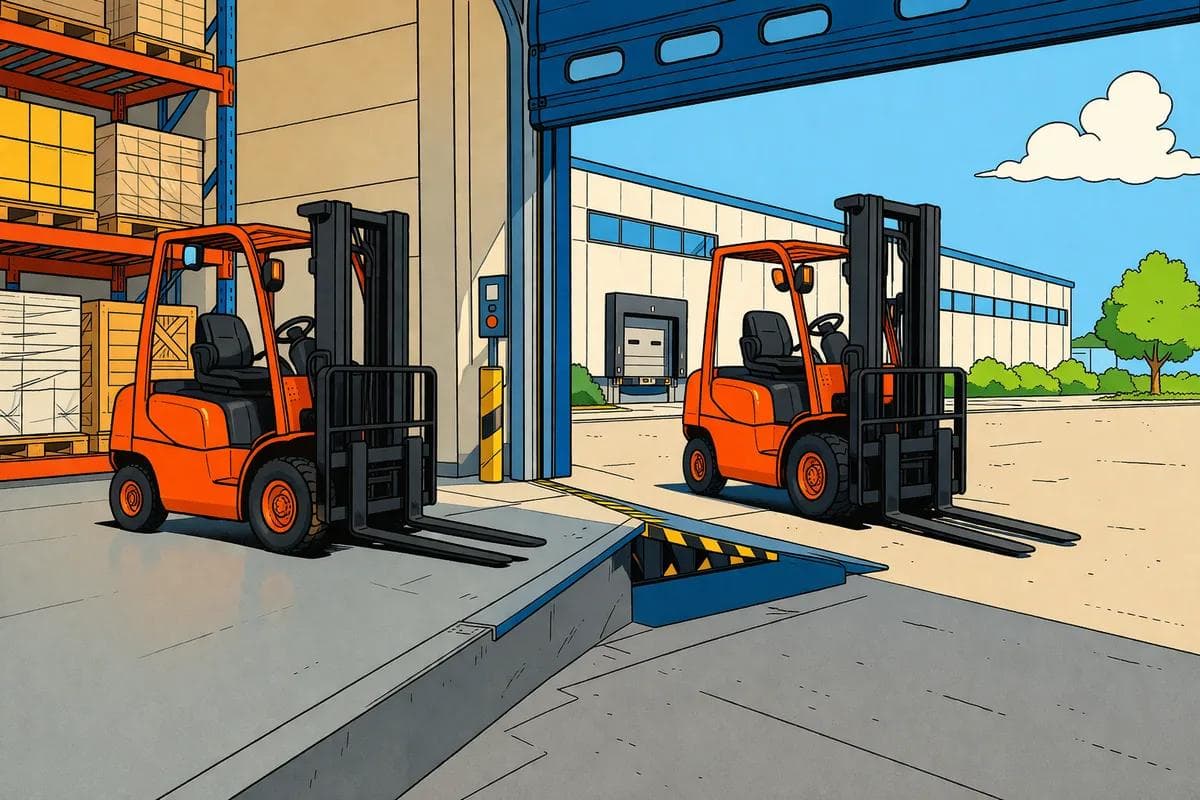
Standard GPS tracking works well for vehicles and outdoor equipment because they operate under open sky where satellite signals are strong. Forklifts break this model. A typical forklift in a distribution operation might start the shift in a warehouse, drive to a loading dock, cross a yard to a secondary building, and return — moving between GPS-viable outdoor zones and GPS-dead indoor zones dozens of times per shift.
This means a GPS-only tracker will show the forklift "disappearing" every time it enters a building and "reappearing" when it exits. You get incomplete location data, inaccurate utilization calculations, and no visibility into what's happening inside the warehouse where most of the work actually occurs.
The solution is combining GPS (for outdoor and yard tracking) with BLE-based indoor zone tracking. Hapn Zones uses low-cost BLE tags on forklifts and dedicated cellular gateways in buildings to provide zone-level indoor location without requiring WiFi infrastructure. At $5–8 per tag and $3–5/month per tag, it's a fraction of the cost of traditional RTLS systems that run $50–100+ per tag.
What is BLE Zone Tracking?
Bluetooth Low Energy (BLE) zone tracking uses small, battery-powered tags attached to assets and fixed gateways in facilities to determine which zone an asset is in (e.g., "Warehouse A, Aisle 3" or "Loading Dock B"). Unlike GPS, BLE works indoors. Unlike WiFi RTLS, it doesn't require existing WiFi infrastructure — Hapn Zones uses dedicated cellular gateways that plug in and work immediately.
Forklift Tracking Options
GPS + BLE Zone Hybrid: The Complete Solution
For operations where forklifts move between indoor and outdoor environments, a hybrid approach is the only way to get full visibility. GPS handles yard and outdoor tracking; BLE handles warehouse and building zones. Hapn's platform merges both data streams into a single view — one map showing every forklift's location whether it's inside or outside.
This hybrid approach is ideal for distribution centers with outdoor yards, manufacturing facilities with adjacent storage areas, rental operations where forklifts move between the yard and customer sites, and construction sites with material staging in temporary structures.
GPS-Only: For Outdoor Forklift Operations
If your forklifts operate primarily outdoors — lumber yards, steel yards, container ports, outdoor construction sites — a standard hardwired GPS tracker connected to the forklift's electrical system provides location, engine hours, and movement alerts without needing indoor zone technology.
BLE Zone-Only: For Indoor-Only Warehouses
For pure warehouse operations where forklifts never leave the building, BLE zone tracking through Hapn Zones provides the location data you need without GPS hardware. Zone-level tracking shows which aisle, dock, or area each forklift is operating in.
OSHA Compliance: The Safety Case for Forklift Tracking
OSHA's powered industrial truck standard (29 CFR 1910.178) requires operator training, evaluation, and re-evaluation. While OSHA doesn't mandate GPS tracking, the data from forklift tracking directly supports compliance in several areas.
Operator identification and accountability: when combined with operator login systems (key cards, PIN pads), GPS data creates a record of who operated which forklift, when, and where. This documentation is invaluable during OSHA investigations after incidents.
Speed and impact monitoring: telematics-equipped forklifts can detect excessive speed events, hard braking, and impacts. This data identifies operators who need re-training before an incident occurs — and provides documentation that you have an active safety monitoring program.
Hour tracking for maintenance compliance: OSHA requires that forklifts be maintained in safe operating condition. Engine hour-based maintenance scheduling ensures inspections happen at manufacturer-specified intervals, and GPS creates a verifiable maintenance log. See our OSHA compliance checklist for broader equipment requirements.
Track Forklifts Indoors and Out
Hapn combines GPS outdoor tracking with Zones indoor tracking on a single platform. See every forklift, truck, and asset — no matter where it is. No contracts.
Get Pricing →Utilization: Right-Sizing Your Forklift Fleet
Most operations have more forklifts than they need. The problem is that without data, nobody knows which ones are excess. Fleet managers add forklifts when operators complain about availability, but rarely remove them when demand drops. The result is creeping fleet growth where utilization gradually falls while lease costs, maintenance, and propane/charging expenses keep climbing.
GPS and zone tracking solve this by showing actual runtime hours per forklift per shift. Industry data suggests average forklift utilization in warehouse operations is 35–55%. If you're running 20 forklifts at 40% utilization, you likely need 12–14 to cover the same workload with better scheduling. At $15,000–$25,000 per year in lease and maintenance per unit, right-sizing from 20 to 14 saves $90,000–$150,000 annually.
For fleet utilization benchmarks and measurement methodology, see our 2026 fleet utilization guide.
Maintenance: Engine Hours on Forklifts
Forklift maintenance intervals are driven by engine hours (propane and diesel units) or operating hours (electric units). Typical intervals include daily pre-shift inspections (OSHA-required), oil and filter every 200–250 hours (propane/diesel), transmission service every 1,000–1,500 hours, hydraulic system service every 2,000 hours, and battery replacement planning at 1,500–2,000 charge cycles (electric).
Without GPS hour tracking, most operations default to calendar-based maintenance or rely on operators to report hour meter readings — both unreliable methods. A forklift running two shifts per day accumulates hours twice as fast as a single-shift unit, but both get serviced on the same monthly schedule. GPS automates this with real-time hour tracking and threshold alerts. For implementation details, see our engine hour-based maintenance guide.
Theft and Unauthorized Use
Forklift theft is less common than heavy equipment theft, but unauthorized use is a significant issue. Untrained employees operating forklifts without authorization creates massive liability exposure. GPS tracking with operator identification captures every ignition event — if an unassigned operator starts a forklift at 2 AM, you get an immediate alert.
For operations with forklifts at remote job sites or outdoor yards, geofencing provides theft protection. If a forklift leaves its assigned zone, the alert fires immediately. Hapn has helped recover over $720M in stolen assets across all equipment types.
Integrating Forklifts With Your Fleet
Forklifts are rarely the only tracked asset in an operation. Distribution centers also track delivery trucks. Construction sites track forklifts alongside excavators, generators, and service vehicles. Rental companies manage forklifts as one of dozens of equipment categories.
Hapn's unified platform tracks forklifts on the same dashboard as vehicles, heavy equipment, and battery-powered assets. With Zones for indoor coverage and GPS for outdoor, you get a single view of every asset regardless of where it operates. The API feeds this data into your WMS, ERP, or maintenance system.
Written by the Hapn Team
Hapn provides GPS fleet and asset tracking for 50,000+ customers across construction, equipment rental, and 50+ other industries. Our platform monitors 463,000+ assets and processes over 4 billion messages annually with 99.9% uptime.
Frequently Asked Questions
Can you GPS track a forklift inside a warehouse?
Standard GPS doesn't work reliably indoors. For warehouse tracking, you need BLE-based zone technology like Hapn Zones, which uses Bluetooth tags and cellular gateways to provide zone-level location inside buildings. For operations that span indoor and outdoor areas, Hapn combines GPS and Zones on a single platform for complete coverage.
Does OSHA require GPS tracking on forklifts?
OSHA does not mandate GPS tracking, but the powered industrial truck standard (29 CFR 1910.178) requires operator training documentation, maintenance records, and safe operating procedures. GPS tracking data — operator identification, speed monitoring, impact events, and engine hour-based maintenance logs — directly supports these compliance requirements.
How do I reduce forklift fleet costs?
GPS utilization data is the starting point. Most warehouse operations run forklifts at 35–55% utilization, meaning significant fleet reduction is possible. Track actual runtime hours per unit, identify consistently underused forklifts, and right-size the fleet. A reduction of 3–5 units at $15,000–$25,000/year each produces substantial savings.
What data does forklift GPS tracking provide?
Depending on hardware: real-time location (outdoor via GPS, indoor via BLE zones), engine/operating hours, ignition events, speed and impact events, idle time, and geofence alerts. Telematics on electric forklifts can also track battery charge cycles and state of charge.
How much does indoor forklift tracking cost?
Hapn Zones provides BLE-based indoor tracking at $5–8 per tag and $3–5 per month per tag, with dedicated cellular gateways (no WiFi required). This is significantly less than traditional RTLS systems which can run $50–100+ per tag plus enterprise WiFi infrastructure.
Can I track forklifts and trucks on the same platform?
Yes. Hapn tracks forklifts, delivery trucks, heavy equipment, and all other asset types on a single platform. Indoor zone tracking and outdoor GPS merge into one dashboard, eliminating the need for separate systems.
Stop Guessing. Start Tracking.
See how Hapn gives you complete visibility across your mixed fleet — vehicles, equipment, and assets in one platform. No contracts, transparent pricing.
Get Pricing →