In the world of heavy equipment and mixed fleets, time is literally money. But for decades, many construction and rental companies have managed their most expensive assets using a metric that has nothing to do with actual wear and tear: the calendar. Scheduling a service every six months might seem organized, but it's a strategy that inevitably leads to one of two costly outcomes — either you are over-servicing equipment that has been sitting idle, or you are under-servicing a machine that has been running double shifts, leading to catastrophic failure on the job site.
The fix is straightforward: schedule maintenance by engine hours, not calendar days. Reactive repairs cost 3× to 4× more than preventive maintenance, and the majority of those emergency breakdowns happen because a machine hit its service interval weeks before anyone noticed. By utilizing real-time fleet visibility, you can move away from arbitrary dates and toward a data-driven maintenance strategy that protects both your margins and your equipment.
Last updated: February 2026
Key Takeaways
- Calendar-based maintenance either wastes money on idle machines or misses critical service windows on overworked ones — engine hour scheduling eliminates both problems.
- Reactive (break-fix) repairs cost 3× to 4× more than preventive maintenance and cause reputational damage when equipment fails on a customer's job site.
- A machine running 60 hours/week needs service far sooner than one running 5 hours/week — but calendar scheduling treats them identically.
- Mixed fleets (Cat, Deere, JLG, legacy iron) can be unified into a single engine hour dashboard using AEMP integrations and aftermarket hardware.
- Equipment with a documented, engine hour-based maintenance log consistently commands higher resale values at auction than machines without verified service records.
About Hapn
Hapn is a full-stack GPS fleet and asset tracking platform for midmarket and enterprise companies, providing equipment telematics, vehicle tracking, AI dash cameras, and battery-powered asset monitoring on a single dashboard — with transparent pricing and no long-term contracts.
The Fatal Flaw of Calendar-Based Maintenance
What is engine hour maintenance scheduling?
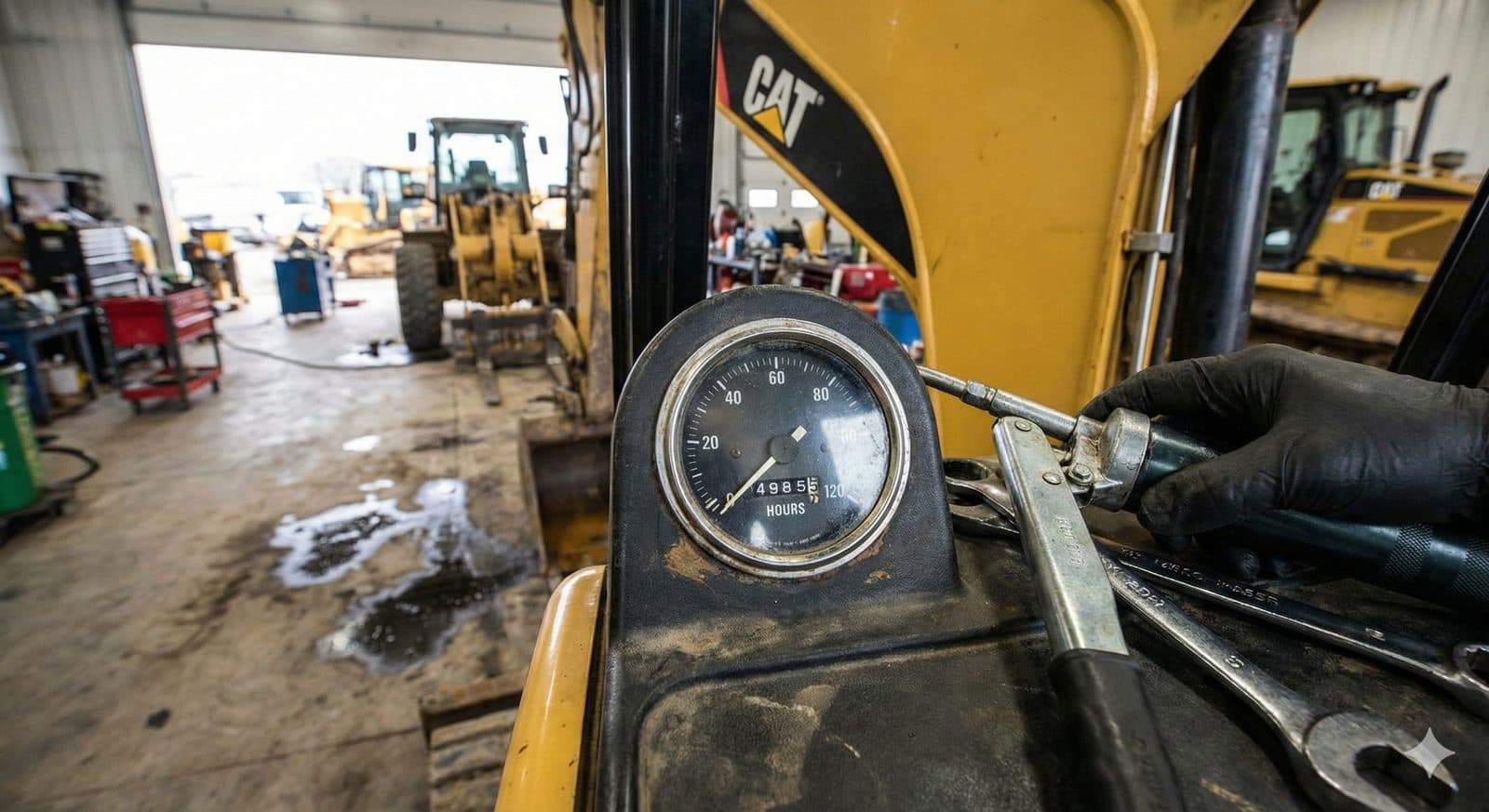
Engine hour maintenance scheduling is a strategy where equipment service intervals are determined by the actual hours a machine's engine has been running — rather than a fixed calendar date. Common intervals include 250, 500, and 1,000 hours depending on the service type and OEM recommendation.
Calendar-based maintenance assumes all machines are created equal — and used equally. It treats the skid steer that sat in the yard for three weeks the same as the one that's been digging trenches 10 hours a day since the first of the month. This creates massive inefficiencies for mixed fleet operators.
- Wasteful Over-Servicing: Changing oil or replacing components based on a date often results in discarding perfectly good fluids and parts. For a large rental fleet, this waste adds up to thousands of dollars in unnecessary "preventative" costs.
- Undetected Overworked Assets: Conversely, if a machine is being used heavily on a high-priority project, it may hit its 500-hour service interval months before the calendar says it's due. By the time the "calendar date" arrives, the engine has been running on degraded oil for weeks — a direct path to catastrophic failure.
- Logistical Nightmares: Trying to track service dates for 15 Cat excavators, 8 Deere loaders, and 20 pieces of legacy equipment manually leads to missed windows and "portal hopping" across five different OEM dashboards.
Key Comparison: Usage vs. Time
| Feature | Calendar-Based | Engine Hour-Based |
|---|---|---|
| Accuracy | Low (Guesswork) | High (Actual Usage) |
| Cost Efficiency | Poor (Frequent Waste) | Optimized |
| Breakdown Risk | High (Missed intervals on heavy-use machines) | Low (Service tied to actual wear) |
| Resale Value | Standard | Premium (Verified Logs) |
| Mixed Fleet Compatibility | Easy (Dates are universal) | Requires telematics or aftermarket hardware |
Equipment Maintenance Tracking for Mixed Fleets
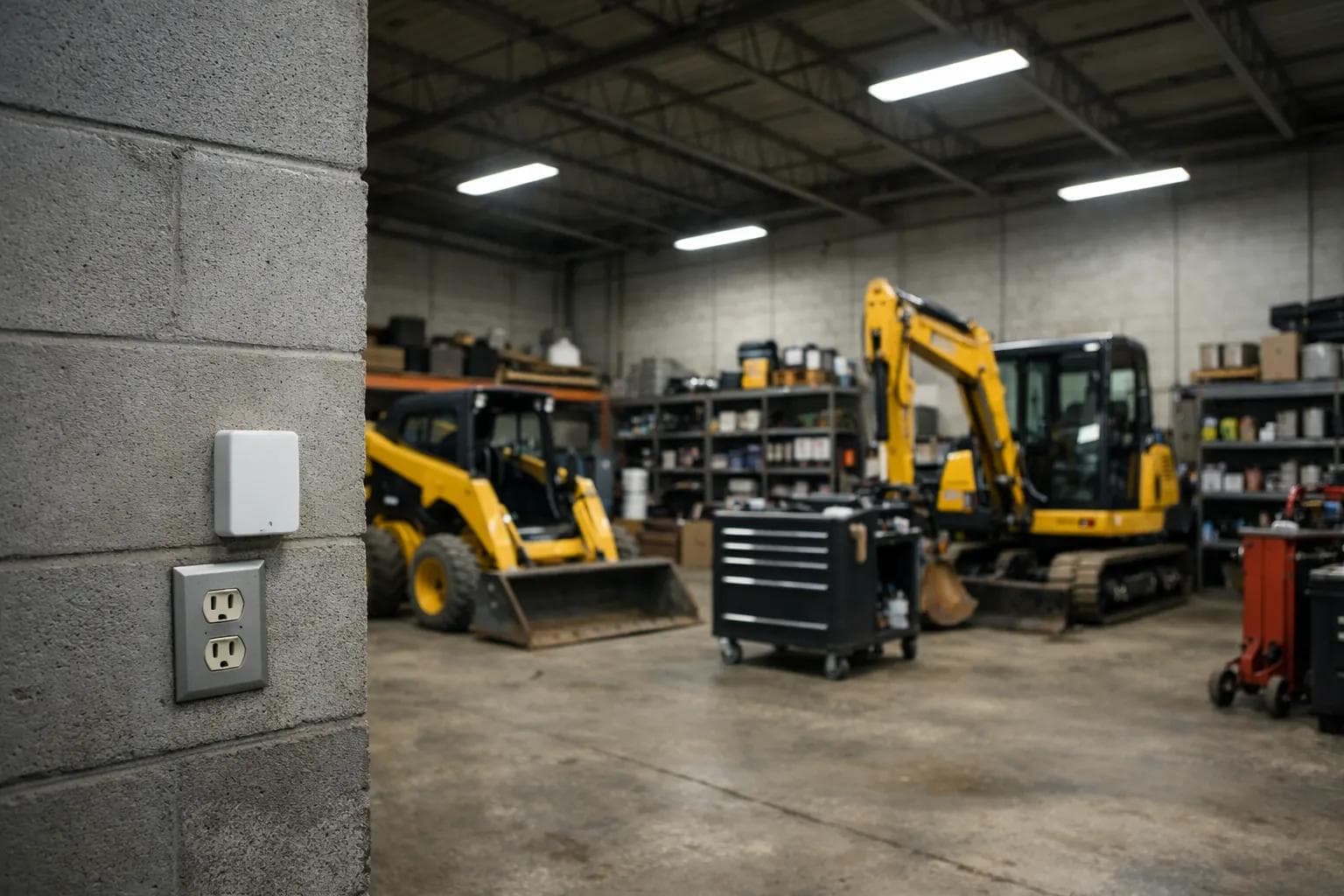
The primary hurdle for most construction and rental businesses is the "Mixed Fleet Headache." You likely have a mix of new machines with built-in OEM telematics and older "dumb" iron that doesn't report anything. Traditionally, this meant logging into a Cat portal for some machines, a Deere portal for others, and using a whiteboard for the rest.
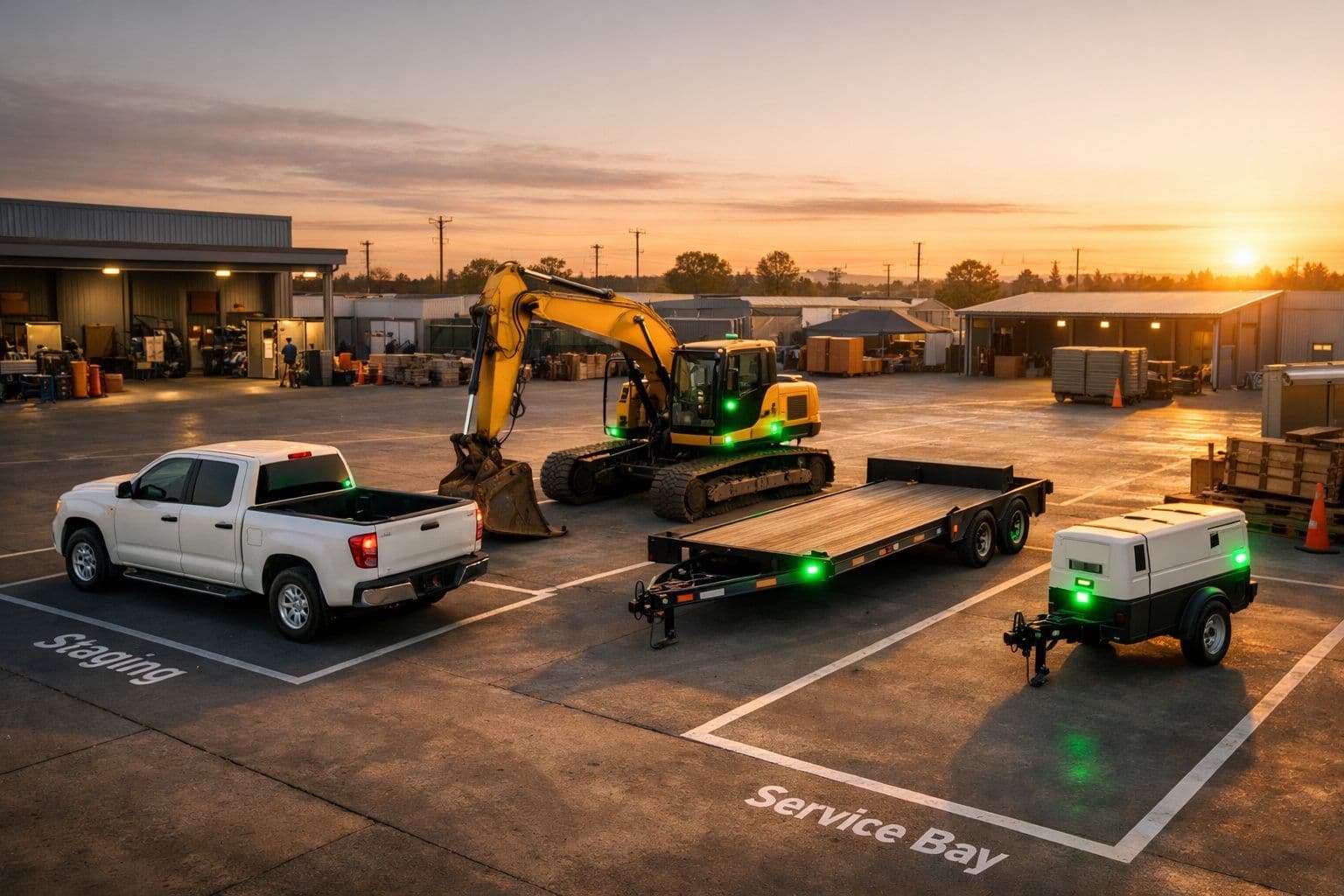
Hapn solves this by acting as the single source of truth. Our platform pulls engine hours from both Hapn hardware and direct OEM integrations — including AEMP-compliant data feeds — consolidating everything into one dashboard. Whether it's a brand-new excavator or a 15-year-old generator, you see the exact runtime for every asset in your fleet. For more on tracking all equipment types effectively, explore our guide on equipment tracking solutions for mixed fleets.
As we covered in our TCO guide, understanding exactly when to service a machine is critical to maintaining a healthy bottom line. Reactive repairs cost 3–4× more than preventive service, and every hour a machine sits in the shop is an hour it isn't generating revenue. When your maintenance alerts are based on actual usage, you can plan your shop schedule with precision, ensuring that the most-used machines are serviced first. For electric and hybrid equipment with different maintenance triggers, engine hour-based scheduling becomes even more critical for battery health and longevity. Additionally, proper maintenance management directly enables dynamic pricing strategies by ensuring equipment availability and reducing unplanned downtime.
See Engine Hours Across Your Entire Fleet
One dashboard for every machine — Cat, Deere, JLG, Genie, and legacy iron. No portal hopping. No contracts, transparent pricing.
See Equipment Tracking in Action →The Benefits of Telematics Maintenance Alerts
Implementing telematics maintenance alerts transforms your service department from a reactive cost center into a proactive efficiency machine. Here is how it impacts your daily operations:
1. Eliminate Portal Hopping
Stop wasting hours every Monday morning checking five different websites to see which machines hit their limits. With a unified platform, you get a bird's-eye view of your entire inventory. You can set a universal rule: "Alert me when any machine is within 50 hours of its next interval."
2. Smarter Rental Billing
In the equipment rental industry, knowing the engine hours isn't just about maintenance — it's about revenue. If a customer is putting double the expected hours on a machine, you need to know. This data allows for more accurate billing and helps you stay ahead of the increased maintenance needs that high-utilization rentals demand. This is a core component of optimized equipment rental operations.
3. Better Resource Allocation
When you know exactly which machines need work, you can schedule your mechanics more effectively. Instead of having five machines in the shop because "it's June," you have two in the shop because they actually need oil changes, while the other three stay on the job site generating revenue.
4. Protect Your Utilization Rate
Every unnecessary shop day is a day that machine isn't earning. As we detailed in our 2026 fleet utilization benchmarks, most equipment classes should target 65–75% time utilization. Engine hour-based scheduling keeps machines on the job site when they don't need service and gets them into the shop efficiently when they do — directly protecting your utilization targets.
How to Transition to Usage-Based Scheduling
Moving away from the calendar doesn't happen overnight, but the process is straightforward with the right tools:
- Audit Your Fleet: Identify which machines have OEM telematics and which need aftermarket equipment tracking hardware. Older "dumb" iron can be equipped with GPS hardware that reads engine hours from the ignition or power system.
- Centralize Data: Use a platform like Hapn to pull all engine hour data into one place — OEM feeds, AEMP integrations, and aftermarket hardware combined into a single dashboard.
- Set Thresholds: Establish your service intervals (e.g., 250, 500, 1,000 hours) within the system based on each manufacturer's recommendations.
- Automate Alerts: Configure SMS or email notifications to trigger before the machine hits the threshold, giving your team time to order parts and schedule the downtime.
This approach is particularly vital for construction companies who need to ensure their fleet is ready for the next bid without the risk of mid-project mechanical failure. It also directly lowers your Total Cost of Ownership by preventing the most expensive category of maintenance spend: emergency repairs.
Written by the Hapn Team
Hapn provides GPS fleet and asset tracking for 50,000+ customers across construction, equipment rental, and 50+ other industries. Our platform processes over 4 billion messages annually with 99.9% uptime.
FAQ: Engine Hour Maintenance Scheduling
What is engine hour maintenance scheduling?
Engine hour maintenance scheduling is a strategy where equipment service intervals are determined by the actual hours a machine's engine has been running — rather than a fixed calendar date such as "every 6 months." Common OEM-recommended intervals include 250 hours (minor service), 500 hours (oil and filter change), and 1,000 hours (major service). This ensures maintenance is performed based on real-world wear and tear, preventing both the waste of over-servicing idle machines and the catastrophic failures that result from under-servicing overworked ones.
Why is engine hour tracking better than calendar-based maintenance?
Calendar tracking ignores the intensity of equipment use. A machine running 60 hours per week needs service far sooner than one running 5 hours per week, but a calendar schedule treats them identically. Engine hour tracking accounts for this difference, which optimizes maintenance costs (eliminating unnecessary services on idle machines), extends equipment life (catching high-use machines before they hit failure), and produces a verified service log that increases resale value at auction.
How does Hapn track engine hours on older equipment?
For older "legacy" equipment without built-in OEM telematics, Hapn uses dedicated GPS tracking hardware that connects to the machine's ignition or power system. This allows the device to accurately report runtime hours directly to your Hapn dashboard alongside your newer OEM-connected assets — eliminating the "mixed fleet headache" of tracking some machines digitally and others on a whiteboard.
Can I integrate my existing OEM data into Hapn?
Yes. Hapn consolidates data from major OEMs including Caterpillar, John Deere, Komatsu, and other AEMP-compliant manufacturers. This eliminates portal hopping — instead of checking five different OEM dashboards every Monday, you see engine hours, location, and maintenance status for every asset in a single view.
How does engine hour scheduling affect equipment resale value?
Equipment with a documented, engine hour-based maintenance history consistently sells for more at auction than identical machines without verified records. Buyers want proof that service was performed at OEM-recommended intervals based on actual usage — not arbitrary calendar dates. A telematics platform like Hapn provides the digital log of engine hours, service events, and usage patterns that directly supports a higher resale price and a lower Total Cost of Ownership.
Stop Guessing. Start Tracking.
See engine hours, maintenance status, and utilization across your entire mixed fleet — vehicles, equipment, and assets in one platform. No contracts, transparent pricing.
Get Pricing →