Last updated: March 2026
Cranes represent the highest-value mobile assets on most construction sites. A rough-terrain crane runs $200,000–$500,000, a truck-mounted hydraulic crane $300,000–$1M, and tower cranes can exceed $2M for large models. At these price points, the cost of GPS tracking is negligible — but the consequences of operating without it are significant. Crane GPS tracking provides three layers of value: safety compliance documentation that protects you in OSHA investigations, utilization data that drives rental billing and fleet right-sizing, and theft/unauthorized movement detection for assets that are difficult to secure on open job sites.
Key Takeaways
- Crane assets typically range from $200K to $2M+ — annual GPS tracking costs ($400–$800) represent less than 0.1% of asset value.
- OSHA crane regulations (29 CFR 1926 Subpart CC) require documented inspection and maintenance records — GPS engine hour data supports compliance.
- Mobile crane utilization in rental fleets averages 35–50% — GPS data identifies idle cranes costing $500–$2,000+/day in carrying costs.
- CAN bus telematics on modern cranes provide load moment data, engine diagnostics, and hydraulic system health for predictive maintenance.
- Hapn tracks 463,000+ assets on a single platform with no contracts and transparent pricing.
Why Cranes Need Specialized GPS Tracking
Cranes are unlike any other equipment in a fleet from a tracking perspective. They combine extremely high asset value with complex operational patterns, stringent safety regulations, and unique maintenance requirements that generic equipment trackers don't address well.
Mobile cranes (rough-terrain, all-terrain, truck-mounted) travel between job sites but spend the vast majority of their time stationary and working. Their "work" is lifting — cycles of boom extension, load bearing, and retraction that stress the hydraulic system and structural components in ways that engine hours alone don't fully capture. Tower cranes are even more stationary, erected for months or years at a single site.
What you actually need from crane tracking is engine hours and runtime monitoring, location and transit tracking (for mobile cranes between sites), geofencing and unauthorized movement alerts, and — for newer cranes with CAN bus — engine diagnostics, hydraulic pressure trends, and fault codes.
What is a Load Moment Indicator (LMI)?
An LMI is a safety system on cranes that calculates the load moment (weight × distance from center of rotation) and warns the operator when approaching the crane's rated capacity. Modern LMI systems on CAN bus-equipped cranes can feed this data to telematics platforms, providing fleet managers with remote visibility into load patterns, near-overload events, and operator behavior.
Tracking Options by Crane Type
Mobile Cranes (Rough-Terrain, All-Terrain, Truck-Mounted)
Mobile cranes are the primary candidate for full telematics integration. Most modern mobile cranes from Liebherr, Tadano, Manitowoc (Grove), Link-Belt, and Terex have J1939 CAN bus ports. A telematics device connected here provides engine hours and runtime data, fault codes and diagnostic trouble codes, hydraulic system pressure and temperature, transit tracking (speed, route, ETA between job sites), and fuel consumption.
Transit tracking is especially valuable for mobile cranes because they're expensive to move. Knowing exactly where a crane is and when it will arrive at the next job site eliminates the guesswork in scheduling — and provides documentation if a crane is damaged during transport.
Tower Cranes
Tower cranes present a different tracking challenge. They're erected at a single location for the duration of a project (months to years), so location tracking has limited value during operation. The primary value of GPS on a tower crane is during transport (tracking the components between projects), theft prevention during the erection/dismantling phase when components are vulnerable, engine hour monitoring on the slewing and hoisting motors, and documentation of operational hours for rental billing and maintenance compliance.
A hardwired tracker connected to the crane's power system monitors engine runtime, while a battery-powered tracker on the boom sections or counterweights provides location tracking during transport between sites.
Crawler Cranes
Crawler cranes share tracking characteristics with both mobile cranes and heavy excavators. They self-propel on tracks (slowly), operate from a fixed position during lifting, and are transported by heavy haul between sites. Hardwired GPS with ignition sensing covers the basics; CAN bus telematics adds engine diagnostics and hydraulic monitoring for newer models.
Safety Compliance: The Regulatory Argument for Crane Tracking
OSHA's crane standards (29 CFR 1926 Subpart CC) require documented inspection programs, operator qualification verification, and maintenance records for cranes used in construction. While GPS tracking isn't explicitly required by OSHA, the data it provides directly supports compliance in several ways.
Engine hour records verify that maintenance intervals are being followed. If OSHA investigates an incident, having GPS-documented proof that the crane was serviced at the manufacturer-specified hour intervals demonstrates a proactive safety program. Without GPS, you're relying on paper logs that are easy to lose and hard to verify.
Operational hour records also document which crane was on which site, when it was operating, and for how long — data that's invaluable in accident investigations, insurance claims, and liability disputes. For a comprehensive look at regulatory obligations, see our OSHA compliance checklist for heavy equipment.
Track Every Crane Across Every Job Site
Hapn monitors cranes alongside your entire fleet — vehicles, equipment, and assets on one platform. Engine hours, location, diagnostics, and compliance documentation. No contracts.
Get Pricing →Utilization and Fleet Right-Sizing
Cranes are expensive to own, expensive to maintain, and expensive when they're idle. The daily carrying cost of a 100-ton mobile crane (depreciation, insurance, storage, inspection) can run $500–$2,000+ per day whether it's working or not. GPS utilization data answers the critical question: what percentage of time is each crane actually earning revenue?
Industry benchmarks suggest mobile crane utilization in rental and contractor fleets averages 35–50%. That means roughly half the fleet's capacity sits idle at any given time. GPS engine hour data broken down by crane, site, and time period reveals which cranes are consistently underutilized (candidates to sell or redeploy), which sites are over-craned (paying for capacity they don't need), and seasonal demand patterns that should inform fleet purchasing decisions.
For crane rental companies, this data is especially powerful. Knowing the real-time status and location of every crane in the fleet means faster dispatch, better matching of crane capacity to job requirements, and the ability to prove utilization rates to investors or lenders. For more on fleet utilization metrics, see our 2026 fleet utilization benchmarks.
Crane Theft and Unauthorized Use
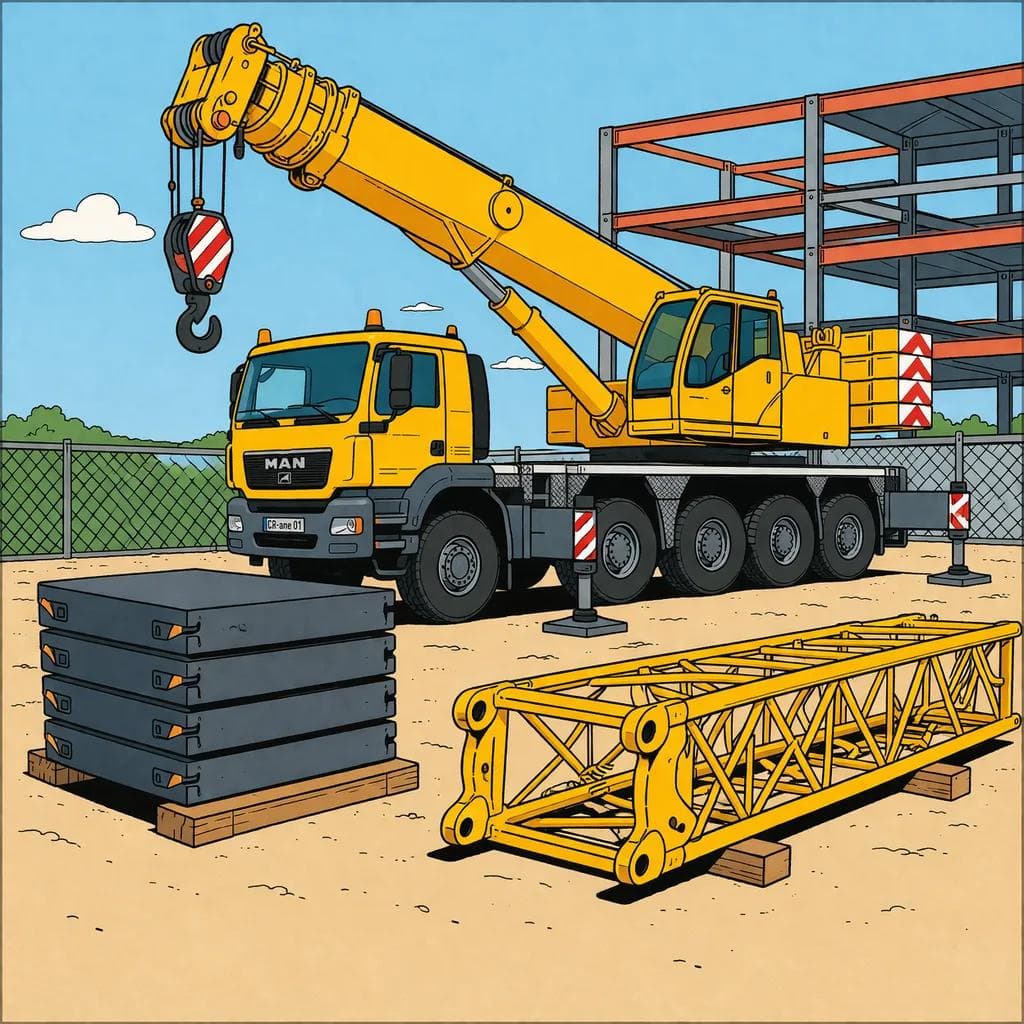
While cranes aren't stolen as frequently as skid steers or generators, crane component theft is a real problem. Counterweights (worth $5,000–$50,000+), wire rope, rigging hardware, and outrigger pads are regularly targeted from job sites. A battery-powered tracker mounted on high-value components provides movement alerts if they're removed from the site.
Unauthorized use is the more common issue. Cranes being operated after hours, on weekends, or by unqualified personnel creates liability exposure that GPS tracking documents automatically. After-hours engine start alerts flag unauthorized use in real time, giving fleet managers the ability to intervene before an incident occurs. Hapn has helped recover over $720M in stolen assets across all equipment categories.
Maintenance: Protecting High-Value Assets
Crane maintenance is among the most expensive in the equipment world. A hydraulic cylinder rebuild on a mobile crane can cost $10,000–$30,000. Wire rope replacement runs $5,000–$20,000. Engine overhauls on large cranes can exceed $50,000. Catching problems early through telematics data — falling hydraulic pressure trends, rising engine temperatures, abnormal fuel consumption — prevents these costs from escalating into emergency repairs with project-stopping downtime.
Engine hour-based maintenance scheduling ensures cranes are serviced at the manufacturer-specified intervals regardless of how actively they've been used. A crane that sits idle for two months and then runs heavy hours for three weeks needs service based on those accumulated hours, not on a calendar date. GPS automates these alerts and feeds the data into your maintenance management system via API. For implementation details, see our guide on engine hour-based maintenance scheduling.
Integrating Crane Data With Your Fleet
Crane operations don't happen in isolation. Every crane lift involves support equipment: boom trucks, flatbeds, service vehicles, rigging trailers, and the crane itself. Managing these on separate tracking systems means your dispatcher is checking multiple dashboards to coordinate a single lift operation.
Hapn's unified platform puts your cranes on the same dashboard as your trucks, equipment, and battery-tracked assets. One view shows the crane, its support vehicles, and all associated equipment. One API feeds into your ERP or construction management system. For operations that also need to track equipment in yards and staging areas, Hapn Zones provides indoor/outdoor zone-based tracking at a fraction of the cost of traditional RTLS systems.
Written by the Hapn Team
Hapn provides GPS fleet and asset tracking for 50,000+ customers across construction, equipment rental, and 50+ other industries. Our platform monitors 463,000+ assets and processes over 4 billion messages annually with 99.9% uptime.
Frequently Asked Questions
What is the best GPS tracker for a crane?
For mobile cranes with CAN bus access, a telematics device provides the most value: engine hours, fault codes, hydraulic diagnostics, and transit tracking. For tower cranes, a hardwired tracker on the power system monitors runtime, while battery-powered trackers on boom sections handle location during transport. For theft prevention on any crane type, add a hidden battery-powered backup.
Does OSHA require GPS tracking on cranes?
OSHA does not explicitly mandate GPS tracking. However, OSHA's crane standards (29 CFR 1926 Subpart CC) require documented maintenance records and inspection programs. GPS engine hour data provides verifiable maintenance documentation that supports compliance and strengthens your position in any OSHA investigation or liability dispute.
How do I track a tower crane that stays on one site for months?
The primary tracking value for tower cranes is engine hour monitoring (for maintenance and billing), operational hour documentation (for compliance and billing), and transport tracking (GPS on boom sections and components when moving between projects). A hardwired tracker on the crane's electrical system handles runtime, while battery-powered trackers on components provide transport location.
Can GPS data help with crane rental billing disputes?
Yes. GPS provides timestamped engine hour records showing exactly when the crane was running and for how long. This eliminates disputes over operating hours, standby time, and rental duration. The data feeds directly into billing systems through Hapn's API for automated invoicing.
What about tracking crane components and rigging?
Battery-powered asset trackers mounted on high-value components (counterweights, boom sections, outrigger pads) and rigging hardware provide location check-ins and theft alerts. These trackers operate independently — no connection to the crane's electrical system — and last 3–5 years on a single battery.
Can I track cranes and all other fleet equipment on one platform?
Yes. Hapn tracks cranes alongside trucks, excavators, generators, trailers, and all other asset types on a single platform — one dashboard, one API, one invoice. This is essential for crane operations where coordination between the crane and support equipment is critical.
Stop Guessing. Start Tracking.
See how Hapn gives you complete visibility across your mixed fleet — vehicles, equipment, and assets in one platform. No contracts, transparent pricing.
Get Pricing →