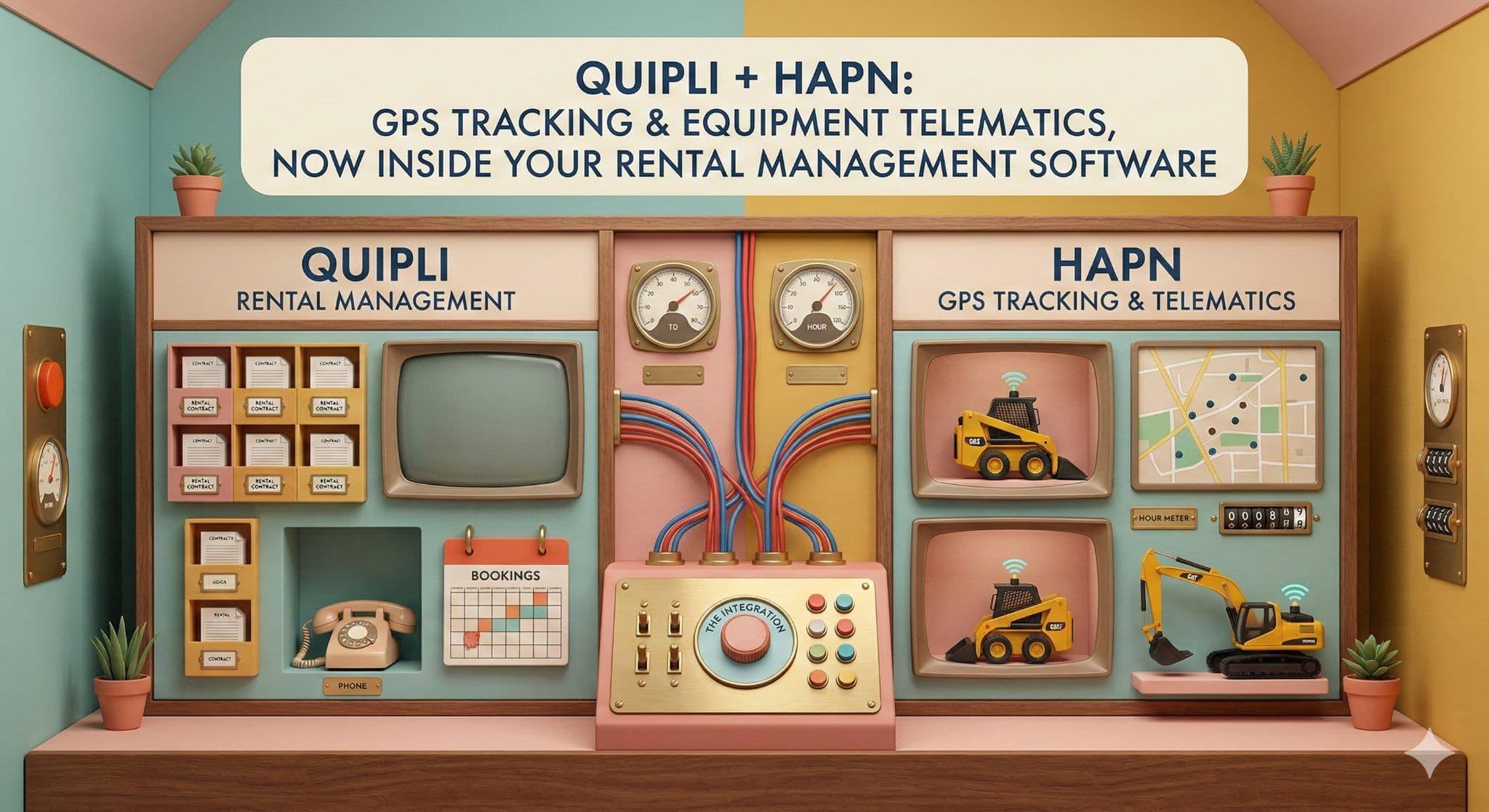
- Hapn GPS tracking and hour meter data now flow directly into the Quipli rental management platform — no tab-switching or manual data entry
- Dispatchers can see real-time equipment locations alongside rental contracts, service records, and customer info in one system
- Hour meter data feeding into your rental software means billing based on actual usage and maintenance triggered by real hours, not calendar guesses
- GPS alerts inside your rental platform give you context — not just that a machine moved, but who has it, where it should be, and whether the rental is even active
About Hapn
Hapn is a full-stack GPS fleet and asset tracking platform for midmarket and enterprise companies, providing equipment telematics, vehicle tracking, AI dash cameras, and battery-powered asset monitoring on a single dashboard — with transparent pricing and no long-term contracts.
If you run a rental operation, you probably know this routine: check your GPS platform to find a piece of equipment, flip over to your rental management system to see who has it and when it's due back, then maybe open a spreadsheet to cross-reference hour meter readings with your maintenance schedule. Three systems, none of them talking to each other, all of them holding a piece of the picture you actually need to make a decision.
It's not that any one of those tools is bad. It's that the information stays trapped in silos, and you end up doing the translation work yourself — or worse, your team just stops checking and starts guessing.
That's the problem we set out to fix with our new integration with Quipli.
What the Hapn + Quipli Integration Actually Does
Quipli is a rental management platform built specifically for equipment rental companies. It handles the full operational stack — inventory, booking, dispatch, service tracking, invoicing, payments, and more. What it didn't have was live equipment telemetry. GPS tracking was one of the most requested features from their customer base, and they were looking for the right partner to build it with.
Hapn is that partner. With this integration, Hapn GPS tracking and hour meter data now flow directly into the Quipli platform. If you're a Quipli customer running Hapn hardware on your fleet, you can see real-time equipment locations, accumulated hours, and movement history right alongside your rental contracts, service records, and dispatch schedule — all inside Quipli.
This isn't a link that opens a separate tab. The data lives in the same system where you're already managing your day-to-day operations.
Why This Matters More Than You Might Think
A map with dots on it is nice. But the real value shows up when location and telemetry data intersect with the operational context you already have in your rental management system. Here's where that starts to pay off.
Smarter Dispatch and Fewer Phone Calls
Your dispatcher needs to pick up a mini excavator and get it to the next job. In most operations today, that means calling the current customer to confirm the machine is still at the address on file, or just sending a driver and hoping for the best. With GPS data inside Quipli, your team can see exactly where that machine is sitting right now, confirm it's at the expected jobsite, and plan the most efficient pickup route — all before picking up the phone. Multiply that across a dozen pickups a day and you're saving real time and fuel.
Billing Based on Actual Usage, Not Guesswork
Hour meter data is one of those things that everyone agrees matters but nobody trusts. Customers self-report hours. Drivers eyeball the meter during pickups. Readings get scribbled on a piece of paper and maybe typed into a system later — or maybe not.
When Hapn hour meter data flows directly into Quipli, you have a reliable, automated record of how many hours a machine has actually run. If you bill based on usage, that's tighter invoicing. If you bill flat rate, you still get visibility into which assets are being worked hard versus sitting idle — and that changes how you price, how you plan, and which machines you buy next.
Maintenance Triggered by Hours, Not Calendar Dates
Every rental operator knows that a 250-hour service interval doesn't mean much if you're tracking it by calendar weeks. A skid steer running double shifts on a commercial site could hit 250 hours in a month. The same machine rented for occasional residential work might take four months. Calendar-based scheduling either services machines too early (wasting money) or too late (risking breakdowns and unhappy customers).
With hour data feeding directly into the same system that tracks your service and repair history, you can tie maintenance triggers to actual usage. The machine tells you when it's due, not a spreadsheet formula that assumes average utilization.
Asset Protection With Context
GPS tracking gives you the ability to see when equipment moves outside a geofenced area. That's useful on its own. But when that alert fires inside your rental management platform, you're not just looking at a dot on a map — you're looking at a dot on a map alongside the rental contract, the customer's contact info, the jobsite address on file, and the rental period.
Knowing a generator moved at 2 AM is concerning. Knowing it moved at 2 AM, it's rented to a specific customer, it's now 12 miles from the jobsite address in the contract, and the rental ended two days ago — that's actionable. You can make the right call faster because you have the full picture in one place.
Cleaner Returns and Better Yard Management
The end of a rental is where a lot of small inefficiencies pile up. Is the machine still on site? Is it headed back? When will it be available for the next customer? In most operations, answering those questions requires a phone call or two and some educated guessing.
When you can see real-time location inside the same platform where you manage your rental calendar, your team can plan ahead. They know what's coming back, when it's likely to arrive, and they can line up the next rental or schedule the next service without waiting on someone to confirm over the phone.
No More Manual Data Entry Between Systems
This one's simple but significant. Every time someone copies an hour reading from one platform to another, there's a chance for error — or a chance it just doesn't get done. Automated data flow between Hapn and Quipli eliminates that gap. The data is there when you need it, and it's accurate because no one had to type it in.
Why Quipli and Hapn Fit Together
Quipli has built a modern rental management platform that covers the full workflow — from booking through invoicing. Hapn has built reliable, easy-to-deploy GPS tracking hardware and a telematics platform designed for the kind of equipment rental companies depend on. Neither company is trying to be the other. Quipli manages your rental operation. Hapn tells you where your assets are and how they're being used. The integration connects those two worlds so you stop doing the translation work manually.
For rental operators who have been stitching together disconnected tools — or worse, going without GPS tracking because it meant managing yet another standalone system — this is a straightforward upgrade. Your fleet data and your operational data, in one place, working together.
Get Started
The Hapn + Quipli integration is available now to all Quipli customers who activate Hapn GPS hardware and tracking services. If you're already on Quipli and want to add GPS tracking to your fleet, or if you're evaluating rental management software and want a connected solution from the start, reach out to our team or contact Quipli directly. We'll get you set up.