Ghost Trackers: The Hidden Layer of Protection for High-Value Equipment

Articles

February 17, 2026

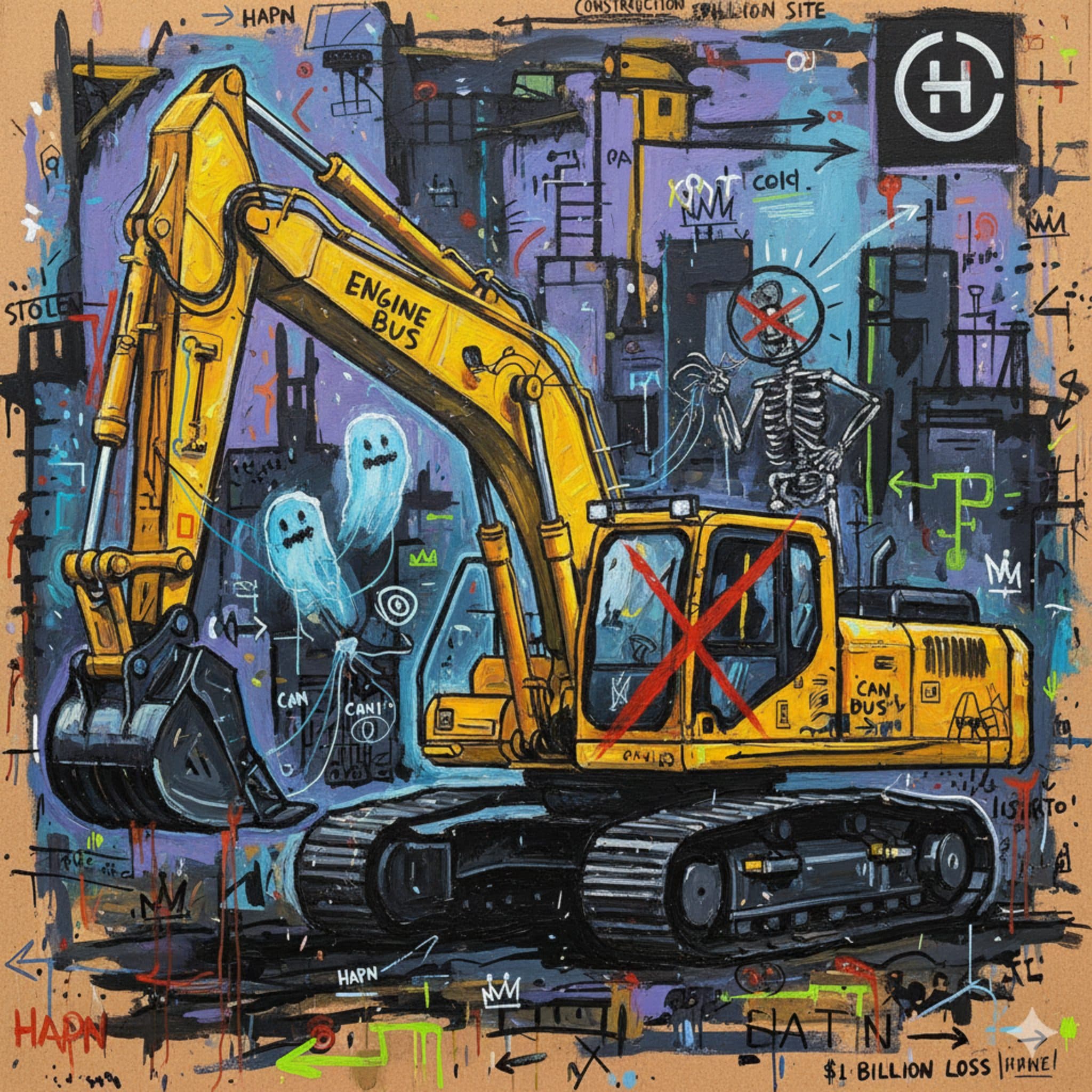
Hidden GPS ghost tracker installed inside heavy construction equipment frame for covert backup tracking and theft recovery

Last updated: February 2026

For high-value heavy equipment, a single GPS tracker is often the first thing a sophisticated thief looks for. In the professional equipment theft world—an industry that costs construction and rental firms over $1 billion annually—thieves have become experts at identifying and disabling standard hardwired telematics units within minutes of a heist. To combat this, fleet managers are moving toward a redundant security model known as Ghost Tracking.

Key Takeaways

  • Equipment theft results in over $1 billion in annual losses, with recovery rates for unprotected assets falling below 25% according to the National Equipment Register.
  • Professional theft rings typically disable a primary "visible" tracker within the first 10–15 minutes of a theft, according to industry recovery specialists.
  • The true cost of a stolen excavator or dozer often exceeds the replacement price by 2–3x when factoring in project delays, rental substitutes, and procurement lead times of 8–16 weeks.
  • Ghost trackers utilize independent, battery-powered hardware that remains dormant to avoid detection by RF scanners, with battery life spanning 3–5+ years.
  • Implementing redundant tracking can increase the probability of asset recovery by up to 80% compared to single-device setups.

What is a Ghost Tracker?

What is a Ghost Tracker?

A ghost tracker is a secondary, covert, battery-powered GPS device hidden deep within an asset. It serves as a redundant backup to the primary hardwired telematics unit, specifically designed to remain undetected if the primary system is tampered with or disabled by thieves.

The philosophy behind ghost tracking is simple: One is none, and two is one. While your primary Hapn equipment tracking solution provides deep telematics data like engine hours, CAN bus diagnostics, fault codes, and real-time runtime alerts, its physical connection to the equipment's power source makes it a visible target for experienced criminals. A "Ghost" device, however, is wireless, small, and requires no connection to the machine's electrical system, allowing it to be tucked into places a thief would never think to look.

Why Redundancy is the New Standard in Equipment Security

In the past, a single tracker was enough of a deterrent. Today, organized crime rings use signal jammers and physical inspections to "sanitize" stolen machinery before moving it to a chop shop or shipping container. If a thief clips the wires to your primary tracker, they assume the "ping" has stopped and the coast is clear. This is exactly when the ghost tracker takes over.

By using battery-powered asset tracking in tandem with hardwired units, you create a "fail-safe" layer. According to the National Equipment Register, the first 24 hours are critical—if an asset isn't located in that window, the chances of recovery drop below 25%. Redundancy ensures that even if the primary unit is destroyed, the secondary unit continues to report the location through the Hapn platform.

Feature Primary (Hardwired) Ghost (Battery)
Primary Purpose Ops, Maintenance, Hours Theft Recovery / Backup
Power Source Equipment Battery/Ignition Internal (3–5+ Year Life)
Data Depth CAN bus, Fault Codes, Idle Location, Movement, Temp
Stealth Level Moderate (Wires can be followed) High (Covert placement)
Detection Risk High (Known connection points) Very Low (Dormant between pings)
Reporting Frequency Continuous / Real-Time Scheduled (switches to real-time in Recovery Mode)

Protect Your Most Valuable Equipment

See how Hapn's dual-layer tracking—hardwired telematics plus hidden ghost devices—gives you the redundancy to recover stolen assets before they disappear.

See Theft Recovery in Action →

The True Cost of Equipment Theft: It's Not Just the Sticker Price

When a $180,000 excavator is stolen from a jobsite, the financial damage goes far beyond replacing the machine itself. Most fleet managers drastically underestimate the total cost of ownership impact that a single theft event triggers across their operation.

Replacement procurement timelines are punishing. New heavy equipment orders from major OEMs like Caterpillar, John Deere, and Komatsu routinely carry lead times of 8–16 weeks, and for specialized configurations, that window can stretch to 6 months or more. Supply chain constraints that emerged during 2021–2023 have eased but haven't fully normalized—dealer lot inventory remains tighter than pre-pandemic levels for many Tier 1 machine categories. That means when your excavator disappears on a Friday night, you're not buying a replacement Monday morning. You're looking at months without that asset.

The project delay cascade is where the real losses compound. A stolen dozer doesn't just cost you the machine—it costs you every day of production that machine was scheduled to perform. If a contractor loses a piece of equipment mid-project, the downstream effects include idle crew labor (operators and support staff who can't work without the machine), missed project milestones that trigger liquidated damages or penalty clauses, emergency rental costs at premium rates to fill the gap (often 30–50% above standard rental pricing for expedited delivery), and potential loss of follow-on contract opportunities if delivery timelines slip.

For a mid-size contractor running a $2M project, losing a critical piece of iron for even two weeks can generate $50,000–$100,000 in combined delay costs, crew reallocation expenses, and emergency rental fees—on top of the asset replacement itself.

Insurance doesn't make you whole, either. Most equipment policies carry deductibles of $5,000–$25,000, depreciate the claim to actual cash value (not replacement cost), and don't cover soft costs like project delays, rental substitutes, or the administrative burden of filing a claim. And after a theft claim, premiums often increase by 10–20% at the next renewal.

Cost Category Typical Range Often Overlooked?
Asset Replacement (ACV) $20K–$500K+ No — this is what people focus on
Procurement Lead Time 8–16 weeks (new), 2–6 weeks (used) Yes
Emergency Rental Substitute 30–50% premium over standard rates Yes
Idle Crew / Lost Production $3K–$8K per day depending on crew size Yes
Project Delay Penalties Varies — can reach $1K–$10K/day Yes
Insurance Premium Increase 10–20% at next renewal Yes
Administrative / Claims Burden 40–80 hours of staff time Yes

When you add it all up, the true cost of a stolen piece of heavy equipment routinely runs 2–3x the machine's replacement value. That's why theft recovery capability isn't a nice-to-have—it's an operational insurance policy that pays for itself the first time it prevents a loss from escalating.

Placement Strategies for Effective Concealment

The efficacy of a ghost tracker relies entirely on its placement. Because Hapn's battery-powered devices are IP67-rated and extremely compact, they can be hidden in non-traditional locations. For construction fleet tracking, we recommend these high-security placements:

  • Inside the ROPS (Roll-Over Protective Structure): Many frames are hollow, providing an excellent signal-transparent hiding spot.
  • Under Hydraulic Reservoir Plates: These areas are rarely inspected during a quick theft.
  • Within the Seat Assembly: Tucking the device into the padding or mechanical base of the operator's seat.
  • Inside Light Assemblies: Placing the tracker behind the housing of a non-functional or secondary work light.
  • Behind Cosmetic Panels or Cowlings: Many machines have removable body panels that require tools to access—an unlikely step for a thief in a hurry.

Note: Always ensure the tracker's "top" side faces toward the sky or through non-metal materials (like plastic or fiberglass) to maintain optimal signal strength. Metal housings will degrade GPS accuracy and cellular signal—stick to fiberglass, plastic, or rubber-covered cavities wherever possible.

Battery Life Management for Ghost Devices

Because a ghost tracker's entire value proposition depends on it being operational when you need it most, battery management is a critical planning consideration—not an afterthought.

Hapn's battery-powered asset trackers are designed for multi-year deployment. At standard low-power settings (1–2 location reports per day), most devices deliver 3–5+ years of battery life. But the key to ghost tracking is understanding the two operating modes and how they interact:

Dormant Mode (daily operations): The device reports on a scheduled interval—typically once or twice per day—to confirm the asset's location and confirm the device is functioning. Between reports, the device is completely silent. This is what makes it nearly invisible to RF scanners; there's simply no signal to detect during the long intervals between pings.

Recovery Mode (theft response): When an unauthorized movement alert fires—or when your security team manually triggers it through the Hapn platform—the ghost tracker switches to real-time reporting, pinging every 1–5 minutes. This burns battery significantly faster, but Recovery Mode is designed for a 48–72 hour pursuit window, which is more than sufficient for law enforcement coordination. Even in continuous Recovery Mode, Hapn's devices are engineered to last several weeks of non-stop reporting.

The practical implication is straightforward: set your ghost trackers to the lowest reasonable reporting interval for daily operations (once per day is sufficient for most assets), and trust that the battery reserve is there when Recovery Mode is activated. Hapn's platform includes battery level monitoring, so you'll receive low-battery alerts well in advance of any device going dark—giving your team time to swap or recharge the unit on a scheduled maintenance visit.

When Redundancy Pays Off: A Recovery Story

The value of ghost tracking becomes concrete when you see it work. One Hapn customer—a regional equipment rental company operating across three southeastern U.S. states—had a $175,000 Caterpillar excavator stolen overnight from an active construction site. The thieves were experienced: they cut the wiring harness to the primary hardwired tracker within minutes of loading the machine onto a flatbed, and were across state lines before the site supervisor arrived the next morning.

But the rental company had deployed a ghost tracker inside the machine's ROPS frame six months earlier. The ghost device, reporting once daily in Dormant Mode, pinged its location at 6:00 AM—placing the excavator at a rural property 140 miles from the jobsite. The company's security team triggered Recovery Mode, switching the device to real-time updates every 2 minutes, and coordinated directly with local law enforcement through Hapn's alert system.

The machine was recovered within 14 hours of the theft being discovered, before it could be repainted, re-serialized, or shipped. Without the ghost tracker, that excavator almost certainly would have become part of the 75%+ of stolen construction equipment that is never recovered. The total cost of the ghost tracker deployment? Under $200 for the year. The cost it prevented? Easily $300,000+ when factoring in the replacement machine, project delays, and insurance impact.

This isn't an isolated case. Hapn customers have recovered over $720 million in stolen assets by leveraging the real-time, redundant data the platform provides to coordinate with recovery teams and law enforcement.

Risk-Based Prioritization: Which Assets Need Redundancy?

While every asset is valuable, a ghost tracking strategy is most effective when applied to high-risk, high-value machinery. The total cost of equipment theft goes beyond the sticker price—as we covered above, the downstream losses from downtime, project delays, and rising insurance premiums can dwarf the replacement value of the machine itself.

  1. Tier 1 Assets ($100K+): Excavators, dozers, and pavers. These are prime targets for export and the domestic black market, and they warrant immediate redundant tracking. The procurement lead time alone—often 12+ weeks for a new unit—makes recovery critical.
  2. Tier 2 Assets ($20K–$100K): Skid steels, telehandlers, and generators. These have high "liquid" value because they're easy to transport and resell quickly. Skid steer loaders in particular are among the most frequently stolen equipment categories due to their size and versatility.
  3. High-Target Rentals: Equipment rental companies often face "theft by deception"—a renter provides false credentials, takes possession of a machine, and never returns it. A ghost tracker ensures that even if the renter locates and disables the primary unit, the asset can still be recovered.

How Hapn Unifies the Ghost Layer

Unlike other platforms that force you to manage different hardware types on separate screens, Hapn's unified mixed fleet platform displays your primary and ghost trackers on one map. You can group them together so that if the primary device stops reporting while the asset is outside of a geofence, the system automatically flags a high-priority "Potential Theft" alert.

This is the core of Hapn's competitive advantage: the ability to manage vehicles, powered heavy equipment, unpowered battery-tracked assets, and ghost devices all on a single dashboard with full telematics depth across every asset type. Most competitors force you to choose—you get deep equipment telematics or good vehicle tracking or battery asset tracking, but not all three on one platform. With Hapn, your primary hardwired tracker delivers CAN bus data, engine hours, fault codes, and diagnostics, while your ghost device silently stands guard—and both report into the same interface.

Hapn's open API also allows theft alerts to be fed directly into your security team's workflow, your ERP system, or local law enforcement dispatch. And because Hapn offers transparent, no-contract pricing, you can deploy ghost trackers across your fleet without locking into a multi-year commitment to find out if the strategy works.

Written by the Hapn Team

Hapn provides GPS fleet and asset tracking for 50,000+ customers across construction, equipment rental, and 50+ other industries. Our platform monitors 463,000+ assets and processes over 4 billion messages annually with 99.9% uptime.

Frequently Asked Questions

What is the best GPS tracker for construction equipment?
The best solution is a dual-layered approach: a hardwired tracker for real-time engine diagnostics, fault codes, and hours, combined with a battery-powered "ghost" tracker for theft recovery. Hapn offers both on a single platform, ensuring that if one device is found and disabled, the other remains active to guide recovery efforts. Hapn customers have recovered over $720 million in stolen assets using this redundant approach.

Can thieves find hidden GPS trackers?
Professional thieves use RF scanners to look for active cellular signals. However, Hapn's ghost trackers can be configured to "sleep" and only report once or twice a day, or only when unauthorized movement is detected. Because the device is completely silent between pings, it is nearly invisible to the scanning tools thieves use during a theft. Strategic placement inside hollow frame structures, behind panels, or within seat assemblies adds an additional layer of physical concealment.

How long does the battery last on a backup GPS tracker?
Hapn's battery-powered asset trackers typically last 3 to 5+ years in Dormant Mode, reporting location once or twice daily. When a theft is detected, the device switches to Recovery Mode with updates every 1–5 minutes—and is engineered to sustain this real-time reporting for several weeks. Hapn's platform monitors battery levels and sends alerts before a device runs low, so your team can schedule a swap during routine maintenance.

How much does it really cost when construction equipment is stolen?
The true cost of stolen construction equipment typically runs 2–3x the machine's replacement value. Beyond the asset itself, businesses face procurement lead times of 8–16 weeks for new equipment, emergency rental premiums of 30–50% above standard rates, idle crew costs of $3,000–$8,000 per day, potential project delay penalties, and insurance premium increases of 10–20% at the next renewal. A ghost tracker costing under $200 per year can prevent losses that easily reach six figures.

What is the difference between a primary tracker and a ghost tracker?
A primary tracker is a hardwired telematics device connected to the equipment's power system, providing continuous data like engine hours, CAN bus diagnostics, fault codes, and real-time location. A ghost tracker is a separate, battery-powered device hidden covertly within the asset, designed purely as a theft recovery backup. On Hapn's platform, both devices appear on the same dashboard, and the system can automatically flag a "Potential Theft" alert if the primary device goes offline while the ghost tracker detects movement.

Stop Guessing. Start Tracking.

See how Hapn gives you complete visibility across your mixed fleet — vehicles, equipment, and assets in one platform. No contracts, transparent pricing.

Get Pricing →

Related Articles